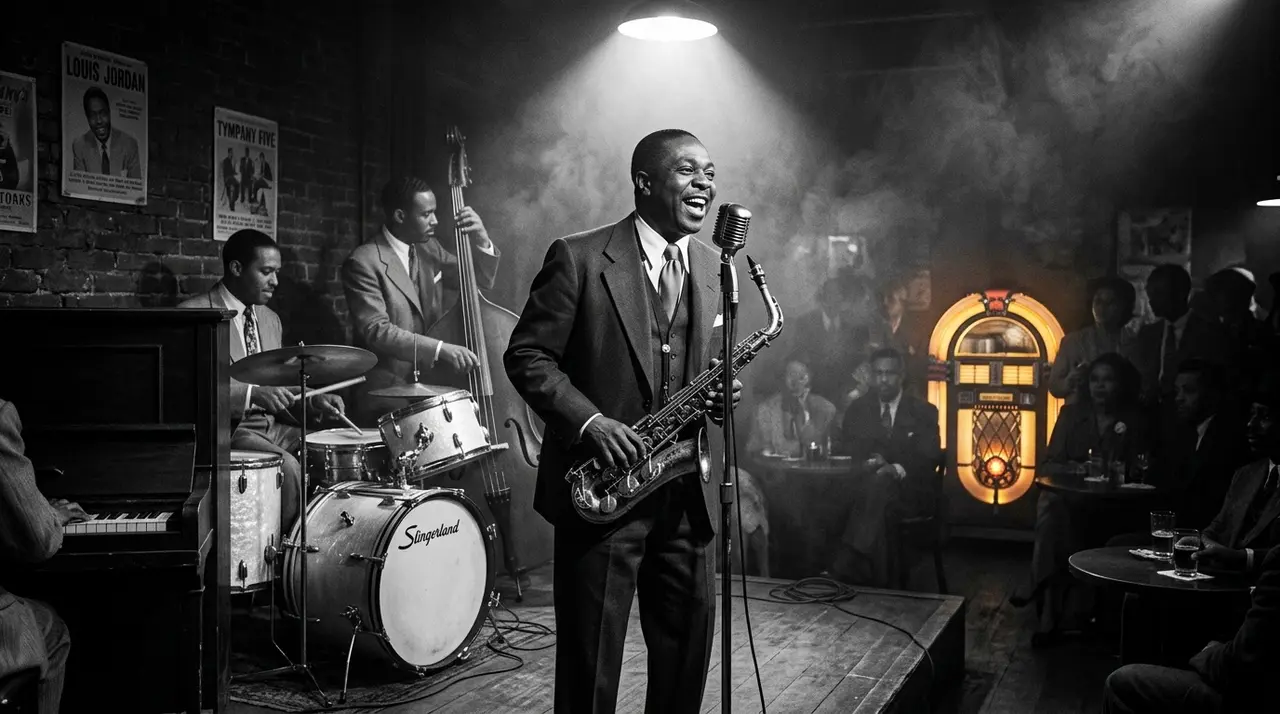

Long before the label Rock and roll stuck, the genre's sound aesthetic was already built on the backs of Blues artists of the late 1940s. Each of these five players is a defining part of the way modern music started and evolved. Swipe ahead to learn more.
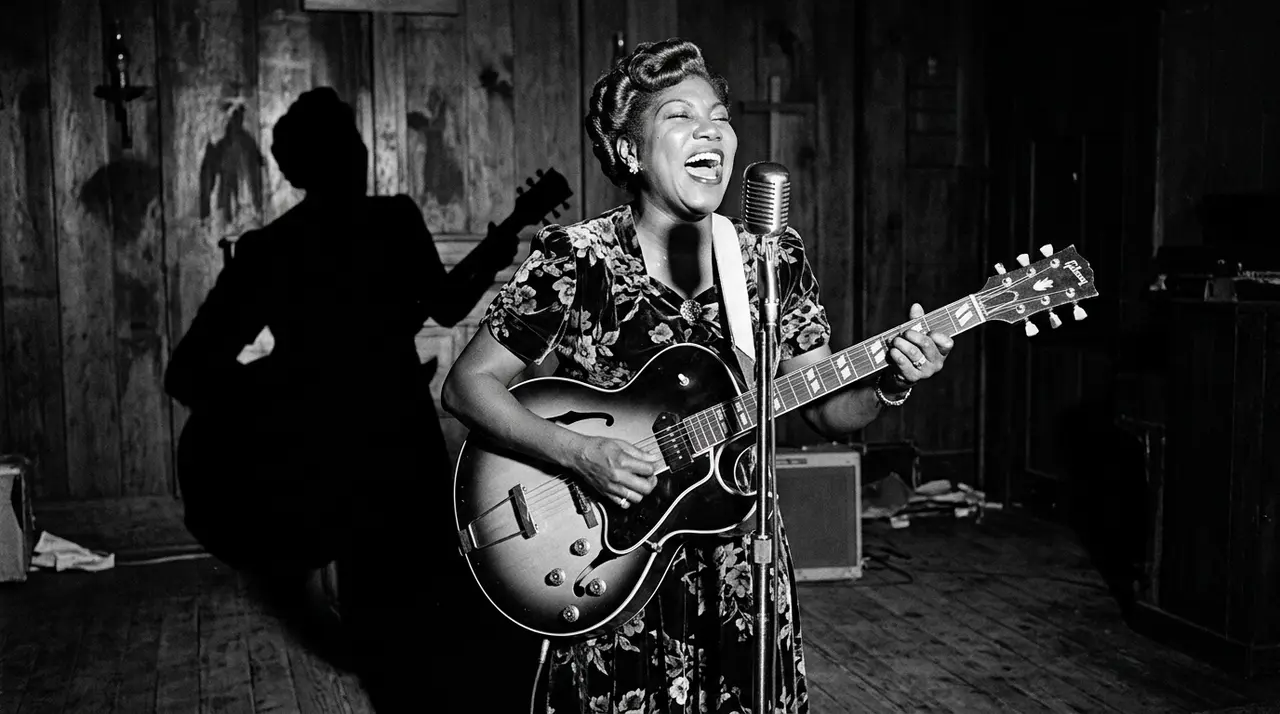
Sister Rosetta Tharpe was already playing her electric guitar with heavy distortion and feedback by the early 1940s, decades before Rock musicians made those sounds ordinary. Here's the twist — she was a gospel musician. Her song Strange Things Happening Every Day sets church lyrics over a fuzzed, driving electric guitar tone.
T-Bone Walker (born Aaron Thibeaux Walker in Linden, Texas, in 1910) was a talented musician with tricks he'd perform, like playing the guitar behind his head and with his teeth. Guitar World notes that Jimi Hendrix borrowed these moves during the 60s, while Chuck Berry's duck walk owed plenty to Walker's showmanship. He was also one of the earliest musicians to popularize the electric guitar as a lead instrument. B.B. King heard Walker's Stormy Monday Blues and called it the first electric guitar he'd heard played that way: "I knew I just had to go out and get an electric guitar."
Roy Brown wrote Good Rocking Tonight and cut it in 1947, but Wynonie Harris covered it in 1948 and turned it into a bigger jump-blues hit, per Wikipedia. The whole vibe lived in that verb, rock — a party, a backbeat, a Saturday-night promise — and the words rock and rockin' kept landing in titles because they moved records. By the time Elvis Presley recorded his own version in 1957, the phrase already had a long track record of appearing in jukeboxes.
Here's a foundational rock sound that happened entirely by accident. On the drive to a Memphis session in 1951, guitarist Willie Kizart's amplifier fell off the car and broke. Instead of throwing it away, bandleader Ike Turner stuffed paper into the damaged speaker and recorded a session on it anyway. The buzzing result is often called the first guitar distortion captured on record, according to uDiscoverMusic. That warped tone runs all through Rocket 88, a song many people point to as the first rock and roll record.
Swing bands usually traveled with a large group of a dozen musicians and a payroll to match. Louis Jordan ran the Tympany Five as a lean Jump Blues combo that played songs built around hooks instead of horn sections. It worked. Between 1943 and 1950 Jordan held the No. 1 spot on the R&B charts for 113 weeks, per Study.com, which earned him the nickname King of the Jukebox. Songs like Saturday Night Fish Fry and Ain't Nobody Here but Us Chickens were short, funny and made for replay — the template pop and rock would go on to standardize. Britannica credits him as a direct influence on Chuck Berry, Ray Charles and Bill Haley.