The Most Impressive Volcanoes in Latin America
FotoSCAPE

The Most Impressive Volcanoes in Latin America

Snow-capped giants, steaming craters, and spectacular eruptions make Latin America one of the most fascinating volcanic regions on the planet. Swipe to discover six volcanoes that continue to captivate with their beauty and activity.

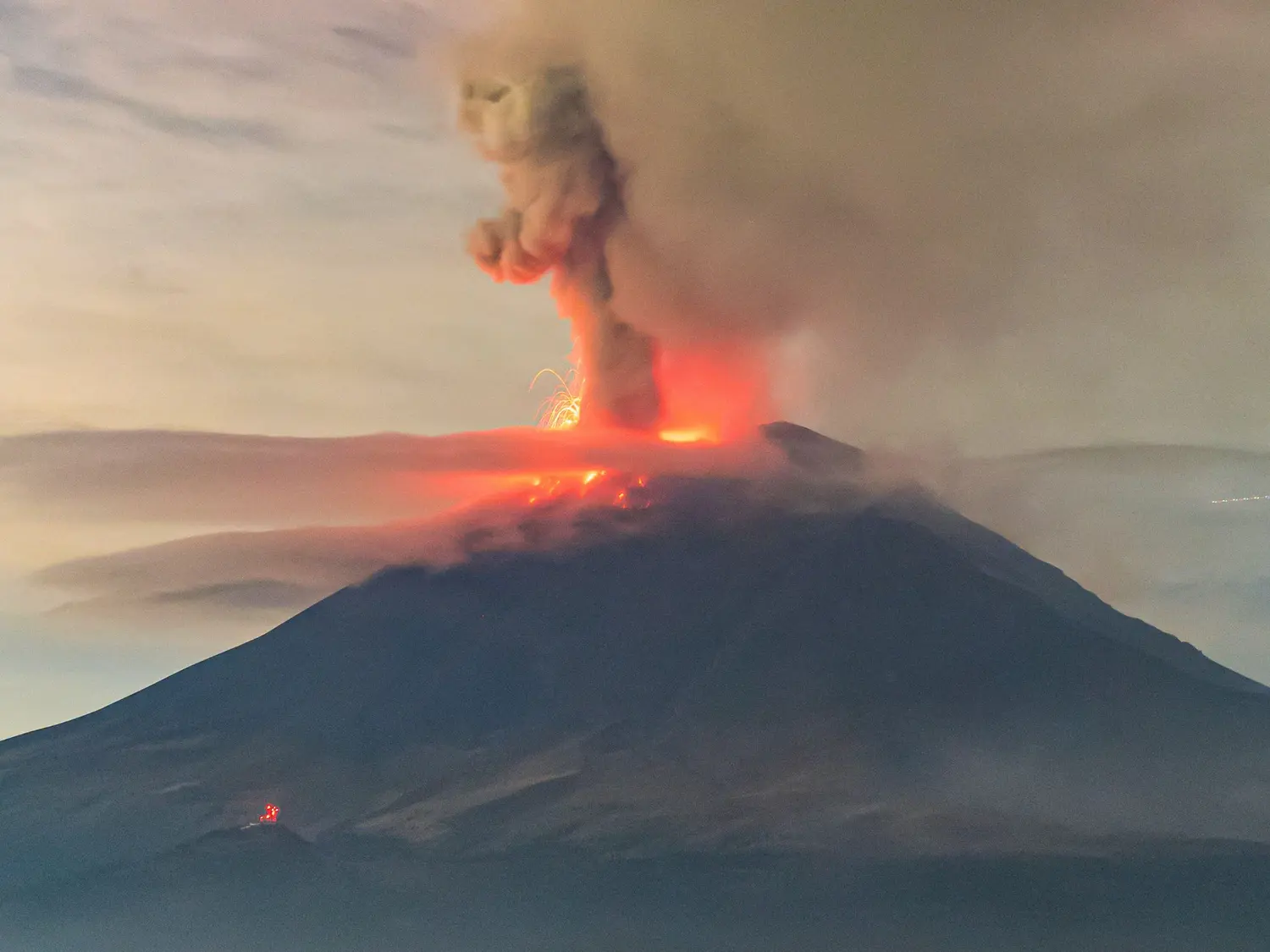
Popocatépetl, Mexico

Standing at over 5,400 meters tall, Popocatépetl is one of the most closely monitored volcanoes in the Americas. Since the 1990s, it has maintained constant activity with emissions of ash and steam that can be seen from Mexico City. Its name means "smoking mountain" in Nahuatl.

Photography: Pexels/Israel Torres

Volcano of Fire, Guatemala

Considered one of the most active volcanoes on the continent, the Fuego Volcano experiences frequent explosions that light up the night sky with lava. Its constant activity attracts photographers and adventurers from around the world.

Photography: Pexels/Diego Girón

Nevado del Ruiz, Colombia

This imposing volcano is part of Los Nevados National Natural Park and remains under constant monitoring due to its seismic activity and emissions of gas and ash. Its glacial summit creates a striking contrast between ice and fire.

Photography: Pexels/Juan Felipe Ramírez

Villarrica, Chile

Villarrica is notable for its nearly perfect cone and one of the few visible lava lakes on the planet. Its periodic eruptions and the surrounding landscape of forests and lakes make it one of the most photographed volcanoes in South America. It is also a very popular destination for mountaineering.

Photography: Pexels/ATHENEA CODJAMBASSIS ROSSITTO

Sangay, Ecuador

Located within Sangay National Park, a UNESCO World Heritage Site, this volcano has remained active for decades. It frequently produces ash plumes and lava flows that reshape its slopes. Its isolation has allowed it to preserve extraordinary biodiversity.

Photography: Instagram/The North Face

Sabancaya, Peru

Sabancaya is one of Peru's most active volcanoes and experiences frequent moderate eruptions. From its summit, at over 5,900 meters above sea level, it releases ash plumes that can rise several kilometers into the air. Its activity continues to be monitored 24 hours a day by specialists.

Photography: Wikimedia Commons/Gallery of the Ministry of Defense of Peru

Recommended For You.