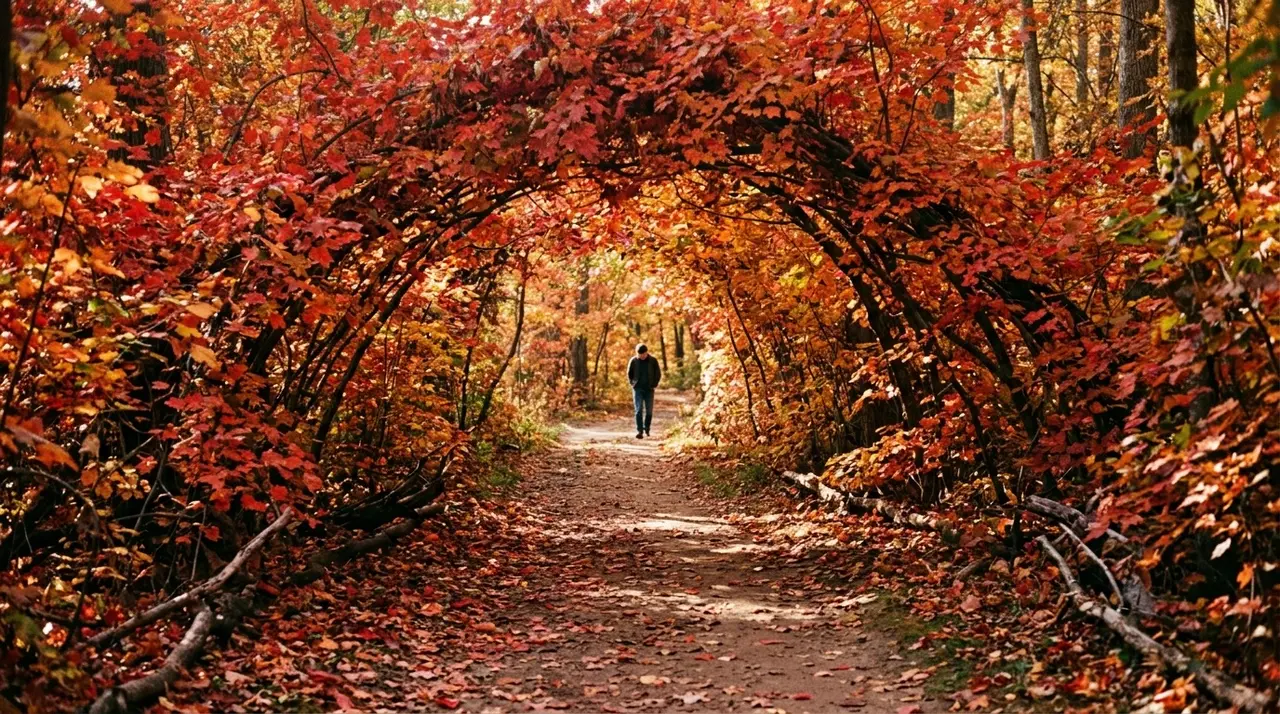

October Is South Korea's Best Kept Travel Secret
AI FOTOSCAPE

October Is South Korea's Best Kept Travel Secret

Images: Gemini

Folks in the United States wait eagerly for November's symphony of colorful maple trees to turn, but South Korea's mountain temples hit full color weeks earlier, around mid-October. Plan your next fall vacation around visiting Bulguksa's Silla-era halls near Gyeongju and Haeinsa's centuries-old woodblock library so you catch the grounds at their best before the crowds pile in. Swipe ahead to learn more.
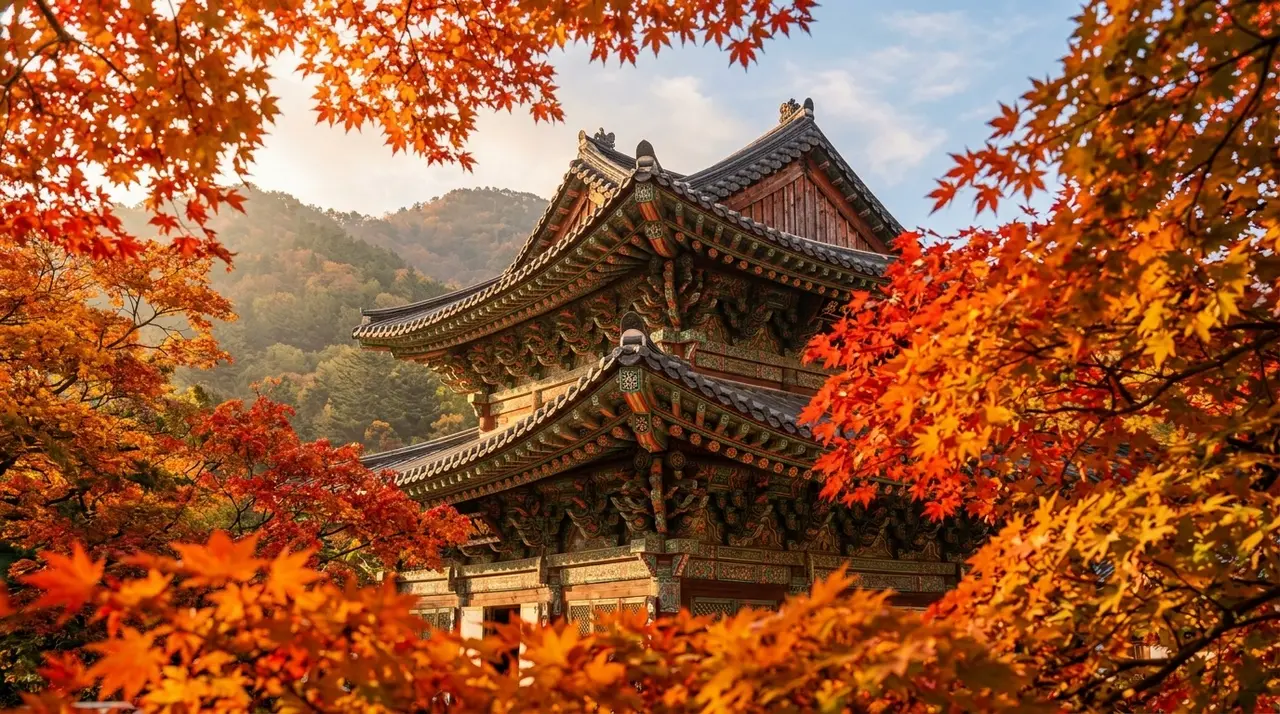
October

October is an underrated month to book a trip to South Korea. The weather turns clear, dry and comfortably cool — Seoul sits around 50 to 70 degrees and the the southern part of the country is a touch warmer. The maples and ginkgos here begin their slow change across the mountains mid-month.

Sweeping Beauty

The color travels like a wave, north-to-south and high-to-low. Northern peaks such as Seoraksan and Odaesan light up from late September into mid-October, Seoul and the central regions follow in late October, and the south holds out until early-to-mid November. For a one-week trip, late October is the sweet spot, with Seoul, Nami Island and Gyeongju all at or near peak saturation.

Here's the Catch

October is one of Korea's highest-demand travel months and during the peak-foliage weeks, tourists pack the marquee spots like Nami Island and the national parks. The temple grounds are where the season feels calmer, with the same fiery color framing centuries-old halls.

Woljeongsa

Odaesan, Gangwon

A one-kilometer path from the Iljumun Gate to Geumganggyo Bridge runs beneath more than 1,700 fir trees and glowing ginkgo, and the nine-kilometer Seonjaegil Trail carries on through the valley to Sangwonsa. Odaesan shows its first color around October 6 and peaks near October 17.

Haeinsa

Gayasan National Park

Tucked into a narrow valley under Gayasan National Park, Haeinsa has guarded the Tripitaka Koreana since 1398 — the full Buddhist canon carved onto 81,350 wooden blocks. Its storage halls earned UNESCO status in 1995 for a passive design of raised floors and tuned ventilation that keeps the wood dry with no modern climate control.

Bulguksa

Gyeongju

Commissioned in 751 under Prime Minister Kim Daeseong during the Silla reign of King Gyeongdeok, Bulguksa became a UNESCO site in 1995. The maples around its two stone pagodas, Dabotap and Seokgatap, turn orange and red in mid-to-late October.

Beopjusa

Songnisan

A 15-minute forest walk from the ticket booth brings you to a 33-meter bronze Golden Maitreya, the tallest free-standing Buddha in Korea, alongside the country's only surviving five-story wooden pagoda and three national treasures. One of the seven Sansa mountain monasteries, Beopjusa joined the UNESCO list in 2018.

Naejangsan

Baengnyangsa Temple

Naejangsan is the last big mountain to turn, peaking around Nov. 8. Its '108 Danpung Tunnel' runs beneath 108 maples — 108 being the Buddhist count of worldly desires to shed — and the densest color gathers around Baengnyangsa Temple and the trails toward Unmunam Hermitage.

Templestay

Overnight stays run about ₩50,000 to ₩100,000, include three vegetarian meals and come in experience- or relaxation-oriented formats. With 158 temples offering programs and autumn booking out fast with domestic visitors, reserve three to four weeks ahead through the official Templestay site.

Temple Food

Barugongyang is the formal monastic meal: four nested wooden bowls holding rice, soup, a side dish and water, part of a meat-free tradition tracing back more than 1,700 years. The Seon nun Jeong Kwan, with no restaurant and no formal culinary training, brought this cooking to a global audience through Netflix's Chef's Table and later a James Beard award, working out of Chunjinam Hermitage at Baengnyangsa.

Recommended For You.