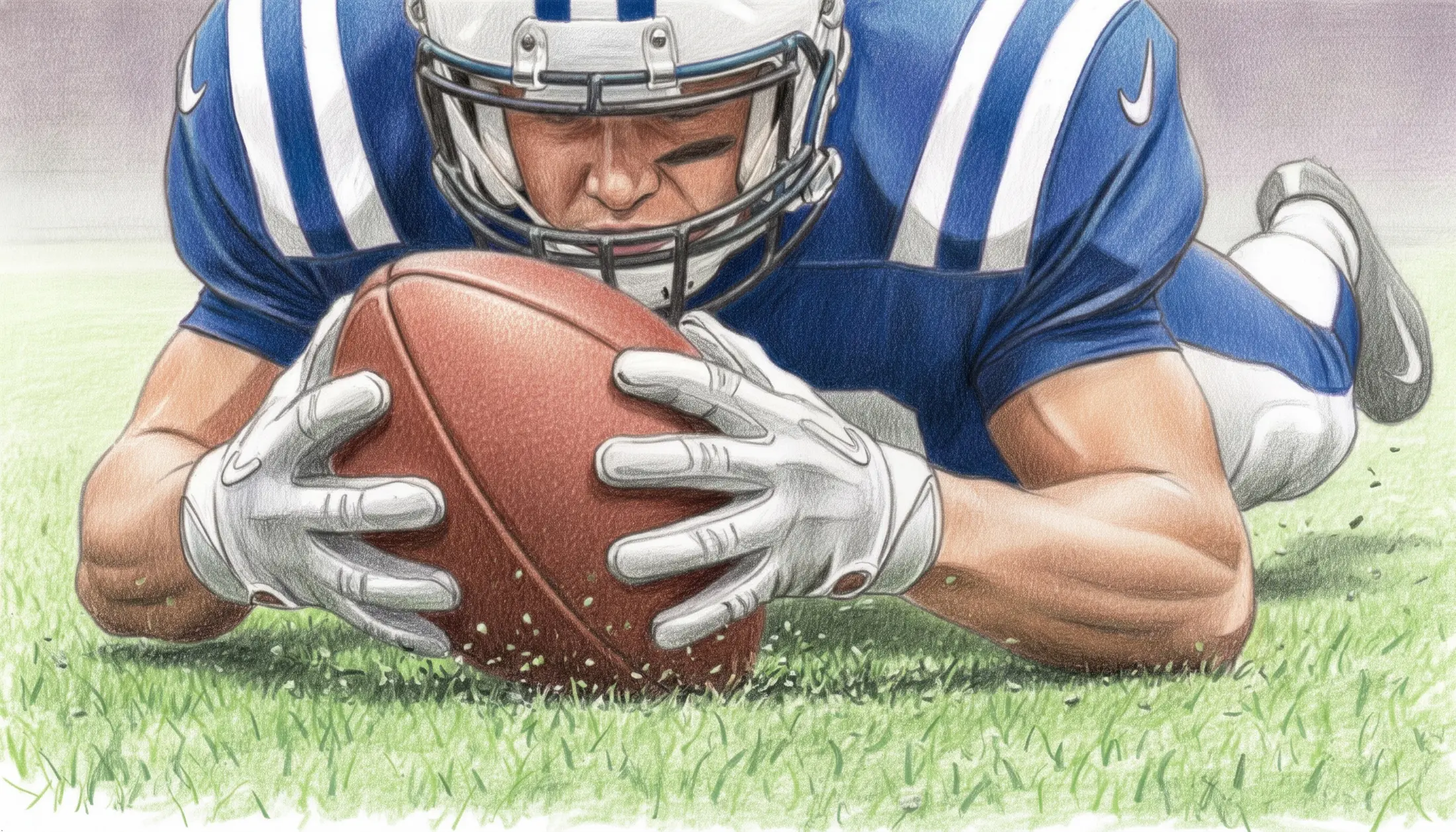

NFL rules change constantly to protect players and boost offenses. Throughout football history, single dramatic plays have forced the league to rewrite its rulebook overnight. Continue swiping to discover how legendary games permanently altered the sport.
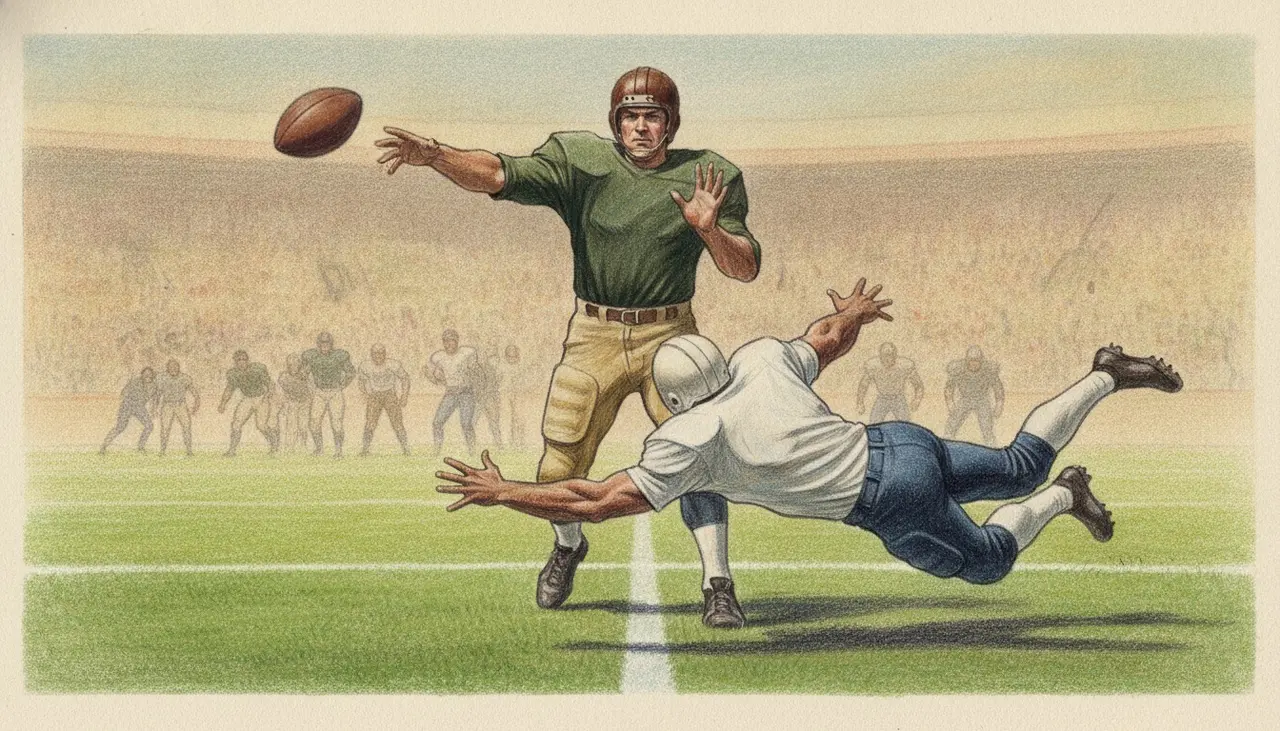
Legalizing the Forward Pass
Prior to 1933, NFL rules forced quarterbacks to throw passes from at least five yards behind the scrimmage line. This rigid restriction stifled aerial play until Bronko Nagurski threw a short touchdown pass to Red Grange during the 1932 championship game. The Portsmouth Spartans protested because Nagurski stood too close to the line. To resolve this chaos, Portsmouth coach Potsy Clark requested a rule change for the 1933 season. The league complied, permitting forward passes from anywhere behind the line of scrimmage.
Redefining End Zone Contact
During the frigid 1945 NFL Championship, a bizarre play decided the league title when Washington quarterback Sammy Baugh threw a pass from his own end zone. The ball struck the heavy wooden goalpost on the goal line, which under 1945 rules triggered an automatic safety. This odd rule gifted the Cleveland Rams two points and secured their 15-14 victory. The controversial outcome forced NFL owners to update the rulebook for the 1946 season and from then on, any pass hitting the goalposts was ruled incomplete rather than a safety.
Downfield Contact Limits
Before the landmark 1978 season, defensive players legally jammed and battered wide receivers all the way down the field, which at the time allowed physical cornerback Mel Blount of the Pittsburgh Steelers to thoroughly suffocate passing offenses. The NFL responded by instituting a strict five-yard limit on downfield contact. Surprisingly, the Steelers adjusted fastest to their own defender's namesake rule, proving even more unstoppable as Quarterback Terry Bradshaw lead the Steelers to win the next two consecutive championships by airing out deep passes to his Hall of Fame wide receivers Lynn Swann and John Stallworth.
Preventing Intentional Forward Fumbles
During a September 1978 game, Oakland Raiders quarterback Ken Stabler lost his grip on the football while facing intense defensive pressure. Running back Pete Banaszak swatted the tumbling ball forward before tight end Dave Casper kicked it into the end zone and recovered it for a touchdown. This wild play stood as a touchdown because the rules allowed any offensive player to advance a fumble. Ahead of the 1979 season, the NFL decreed that on fourth down or inside the final two minutes, only the fumbling player can recover and advance the ball. This swift adjustment preserved the integrity of late-game drives.
Defining a Completed Catch
During the 1999 NFC Championship Game, Tampa Bay receiver Bert Emanuel caught a pivotal 23-yard pass that officials overturned simply because the nose of the football scraped the turf. Although Emanuel maintained firm control throughout the entire process, the rigid rules of that era still nullified the catch. The controversial decision sparked widespread criticism and ahead of the 2000 season, NFL owners modified the rulebook to state that a pass remains complete even if the ball touches the ground, provided the receiver maintains secure possession.
Decoupling Passing from Control
In 1999, the NFL formally codified the infamous Tuck Rule to clarify exactly when a quarterback's forward arm motion constitutes a pass. The rule faced its ultimate test during the legendary Tuck Rule Game in January 2002. Oakland's Charles Woodson stripped New England quarterback Tom Brady, apparently sealing a Raiders victory. Referee Walt Coleman reviewed the play and ruled Brady's arm was moving forward, turning the result of the play from a fumble into an incomplete pass. When the league finally repealed the highly unpopular rule in 2013, the Pittsburgh Steelers cast the lone opposing vote.
Outlawing the Horse-Collar Tackle
Pro Bowl safety Roy Williams frequently utilized a highly dangerous tackling style to stop ball-carriers. He grabbed the inside collar of a runner's shoulder pads and yanked them violently backward, collapsing their legs. Williams' horse-collar tackles directly caused four major injuries to stars like Terrell Owens and Steve Smith. In response, NFL owners voted 27-5 to ban the tackle in 2005. Citing concerns over officiating clarity, Dallas Cowboys owner Jerry Jones joined just four others in voting against the historic ban.