
ARLINGTON, Texas — Ronald Koeman’s last match with the Netherlands national team in North Texas, before Sunday, is etched into World Cup lore. It was July 1994, a sweltering quarterfinal at the Cotton Bowl, and a five‑goal thriller that ended with Brazil celebrating and the Dutch wondering what might have been. Thirty-two years later, Koeman returned to the region — this time not as a player ...

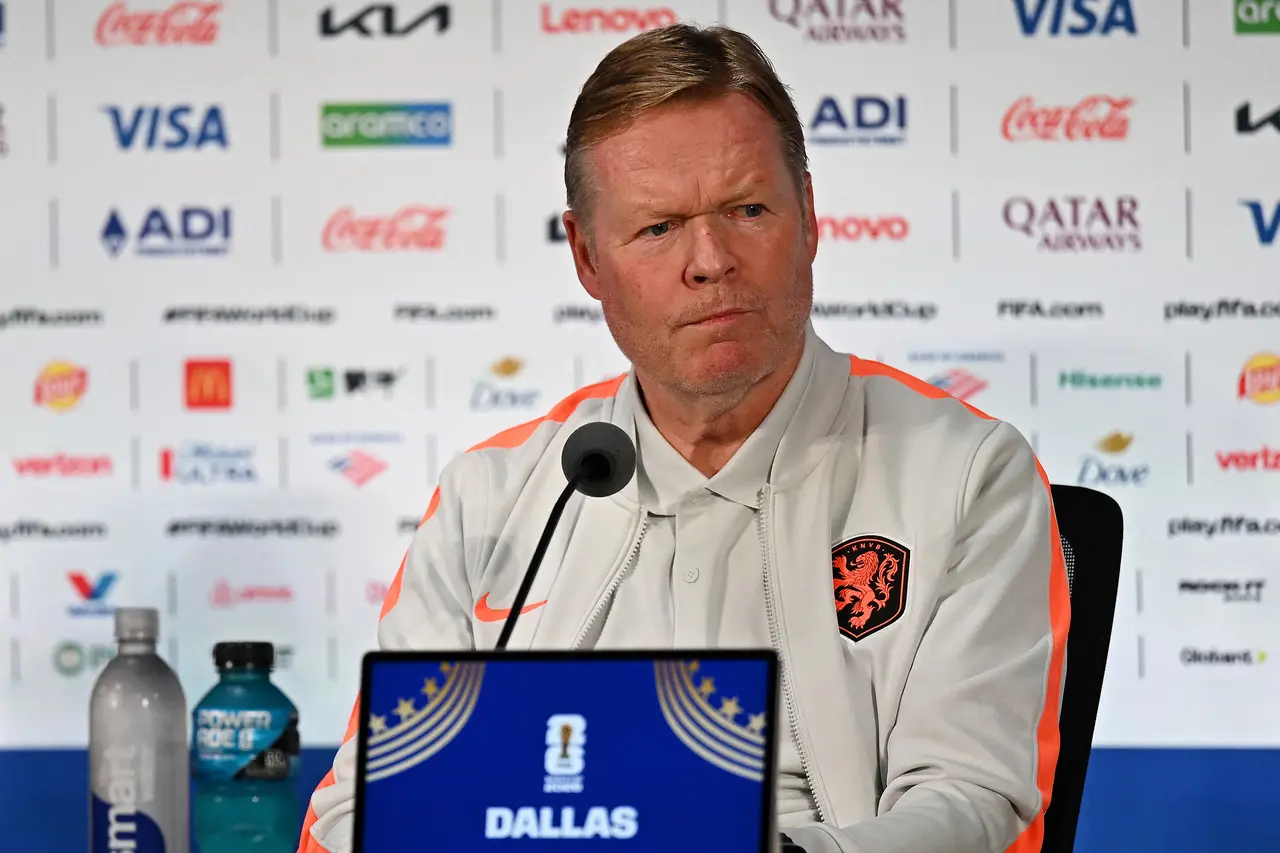
Netherlands' head coach Ronald Koeman attends a press conference ahead of Netherlands' 2026 World Cup football tournament Group F football match against Japan in Dallas on Saturday, June 13, 2026.
PAUL ELLIS/AFP/Getty Images North America/TNS
ARLINGTON, Texas — Ronald Koeman’s last match with the Netherlands national team in North Texas, before Sunday, is etched into World Cup lore.
It was July 1994, a sweltering quarterfinal at the Cotton Bowl, and a five‑goal thriller that ended with Brazil celebrating and the Dutch wondering what might have been.
Thirty-two years later, Koeman returned to the region — this time not as a player but as the head coach of the Dutch squad — and the outcome was different, though not decisive.
In an electrifying match Sunday at Dallas Stadium, the Netherlands and Japan battled to a 2-2 draw in the first of nine World Cup games to be played in Arlington.
The Dutch dictated the tempo and went ahead on two separate occasions, yet Japan’s relentless resilience — the hallmark of the Blue Samurai— brought the team back each time, salvaging a dramatic tie.
The outcome did little to soften the sting Koeman has carried since that heartbreaking night in Dallas 32 years ago.
“A lot of time has passed since that loss to Brazil,” Koeman said. “I honestly don’t remember exactly what I felt in that moment, but I do know it was a great match — it’s a pity we lost.”
That 1994 defeat still stings for Dutch fans. Brazil surged ahead 2-0 through Romário and Bebeto, the Netherlands roared back with goals from Dennis Bergkamp and Aron Winter, and Branco’s 81st‑minute free kick sealed it. Another golden Dutch generation had fallen short.
Longtime contender
The Netherlands’ identity — and its weight — traces back to 1974, when coach Rinus Michels introduced Total Football, a revolutionary system in which fixed positions vanished and every player attacked and defended in fluid rotation.
With Johan Cruyff as its conductor, the Dutch became the “Clockwork Orange,” a team that mesmerized the world.
The team reached the World Cup final in 1974 and again in 1978, losing both times to the host nation. In 2010, they fell once more in the decisive match, this time to Spain in South Africa.
...
Koki Ogawa of Japan celebrates assisting on his team's second goal by Daichi Kamada during the FIFA World Cup 2026 Group F match between Netherlands and Japan at Dallas Stadium on Sunday, June 14, 2026, in Arlington, Texas.
Michael Steele/Getty Images North America/TNS
For all its beauty, Dutch football has never lifted the sport’s biggest trophy. The 2026 squad may be the country’s best chance in years.
Captain Virgil van Dijk, forward Memphis Depay, and midfielder Frenkie de Jong anchor a roster that blends seasoned veterans with rising European talent. The balance is deliberate — and Koeman’s second stint in charge is built around it.
Koeman previously coached the national team from 2018 to 2020, leading the Netherlands to the 2019 UEFA Nations League final. He returned in 2023 with a clear mandate: deliver the country’s first World Cup title.
“We put a lot of pressure on ourselves,” Koeman said. “We want to go far in the tournament. We have a strong team and we know what we need to improve to have a real chance. But we need to take it one game at a time.”
On Sunday, the Netherlands showed flashes of why expectations are so high — even if the scoreboard didn’t tilt their way.
The team’s first dangerous chance came in the third minute, when Donyell Malen ripped a shot from inside the Japanese box, forcing goalkeeper Zion Suzuki into a full stretch for a spectacular save.
Japan settled in after that early scare, closing down every pocket of space in its defensive half and pushing forward only when necessary. The message was obvious — protecting the clean sheet came first.
Japan finally created its lone moment of danger in the 43rd minute, when Keito Nakamura unleashed a shot that skimmed past the base of the right post of the Dutch goal, defended by Bart Verbruggen.
In the second half, the Netherlands finally broke through the Japanese defense, opening the scoring in the 50th minute with a header from captain Virgil van Dijk, assisted by Ryan Gravenberch.
Eight minutes later, Japan pulled level when Keito Nakamura drilled a right‑footed shot from outside the box into the bottom‑left corner, finishing off an assist from Takefusa Kubo.
The Oranje answered right away. In the 62nd minute, Crysencio Summerville cut inside from the right and drilled a left‑footed strike into the bottom‑left corner, restoring the Dutch lead.
...
Virgil van Dijk of Netherlands celebrates scoring his team's first goal during the FIFA World Cup 2026 Group F match between Netherlands and Japan at Dallas Stadium on Sunday, June 14, 2026, in Arlington, Texas.
Michael Steele/Getty Images North America/TNS
The Blue Samurai salvaged the draw in the 88th minute, when Daichi Kamada rose to head home a corner kick, capping an electrifying match in front of 69,285 fans.
The draw against Japan only increases the pressure on a Dutch team whose fans expect a great deal in this World Cup.
Netherlands midfielder Frenkie de Jong said the team is aware of the excitement back home — but not overwhelmed by it.
“Obviously we are aware of the feelings and the vibe in the Netherlands,” he said. “It’s not as if our self-confidence has been jeopardized. We are full of self-confidence and hope we’ll be able to provide good results.”
Van Dijk, appearing in his second World Cup, echoed the sentiment.
“How far can we go? Hopefully all the way,” the defender said. “We won’t look too far ahead. But we all have big dreams, and we’ll give all we have.”
The Netherlands reached the semifinals in the 2014 World Cup before failing to qualify in 2018.
The team returned in 2022, conceding just one goal in group play and beating the U.S. in the round of 16 before losing to eventual champion Argentina on penalty kicks.
Remove shootouts, and the Dutch are unbeaten in their last 12 World Cup matches — a streak surpassed only by Brazil’s 13 straight between 1958 and 1966.
“I think we have a great group of players, especially human beings,” van Dijk said. “We are coming together here and trying to make our country proud. It’s the biggest thing we can do.”
The Netherlands will face Sweden and Tunisia in its other two Group F matches.
“We are not afraid of our opponent, but we respect them,” Koeman said, embracing yet another chance to chase the trophy that has eluded the Netherlands for generations.
____