
Seattle area doesn’t have ‘enough family-sized units to go around’
A Seattle renter’s search is always a struggle — some alchemy of budget constraints, need for space and tolerance for the grueling process of scouring listings. For families with children, that search can be even harder. Fewer than half of available rentals in the Seattle area have two or more bedrooms, the smallest share among major metro areas across the country. The analysis, from Zillow ...
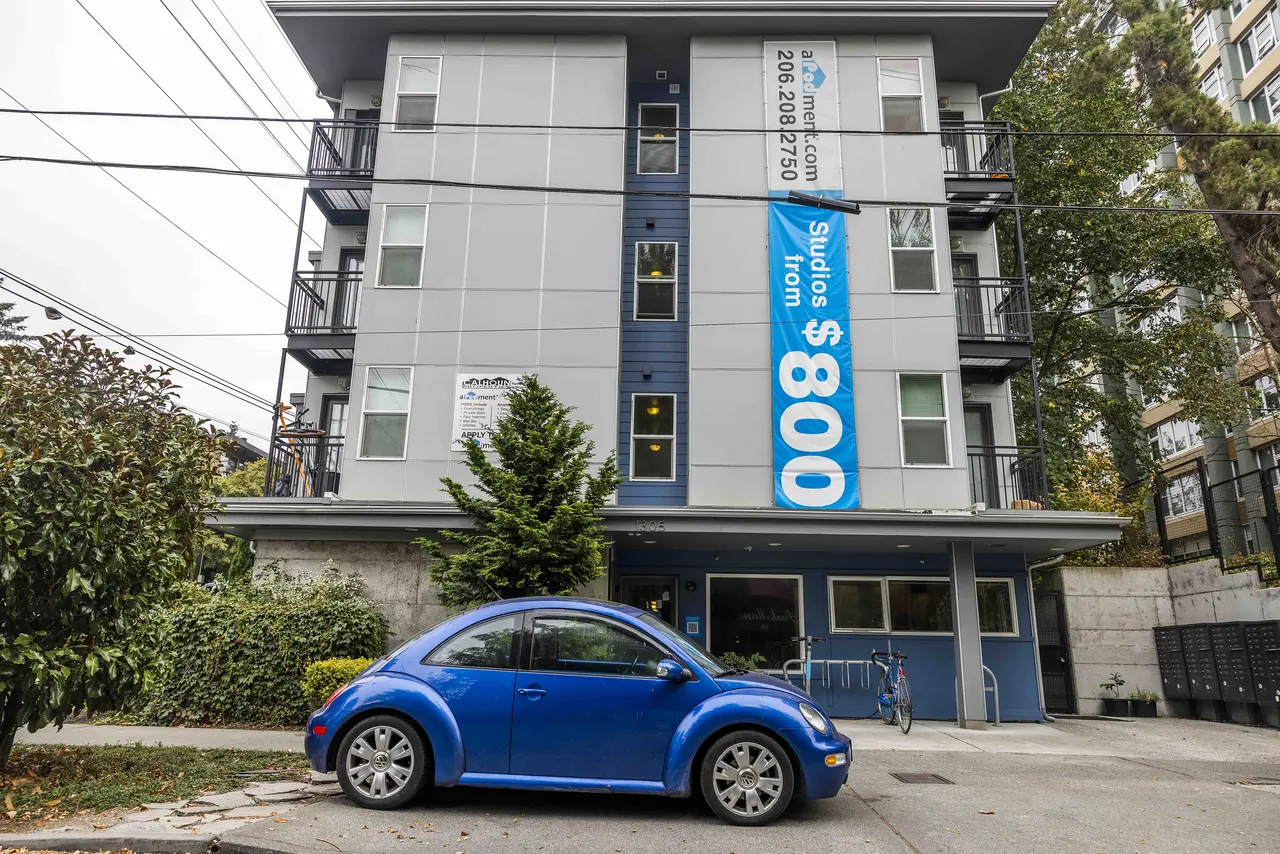
A micro-apartment building sits at the intersection of 13th Avenue East and East Mercer Street on Oct. 5, 2022, in Seattle.
Daniel Kim/The Seattle Times/TNS
A Seattle renter’s search is always a struggle — some alchemy of budget constraints, need for space and tolerance for the grueling process of scouring listings. For families with children, that search can be even harder.
Fewer than half of available rentals in the Seattle area have two or more bedrooms, the smallest share among major metro areas across the country.
The analysis, from Zillow and its subsidiary Street Easy, highlights an ongoing challenge in a region where even relatively well-off families with two incomes struggle to balance the costs of housing, childcare and basic needs. Meanwhile, those hoping to rent a single-family house find a dwindling number of homes on offer.
People earning smaller paychecks face an even bigger challenge. For every 100 low-income renters in the state, there are just 43 available homes, and much of the new construction meant to tackle the affordable housing shortage has resulted in studio and one-bedroom apartments for moderate-income renters. Developers may hesitate to build family-sized rental housing because of costs, regulatory issues or high demand for detached for-sale homes.
That lack of larger rentals creates a straightforward “structural” problem for families looking to rent. Families need more space, but larger rentals cost more and can prove harder to come by. What about buying instead? For many renters facing today’s home prices: Forget about it.
“Families who can't afford to buy are competing for a thin slice of the rental market,” Kenny Lee, Zillow and StreetEasy senior economist, said in a statement.
Less than a third of all available Seattle-area rentals listed on Zillow last month had two bedrooms, the lowest share among major metro areas and roughly tied with New York, according to Zillow’s analysis. Just 14.5% of Seattle-area rentals have three or more bedrooms, the third-lowest share in the nation.
That limited number of larger rentals can also affect childless renters who need space for remote work, caring for a family member or other needs.
High incomes across the Seattle area mean some can afford high costs while others struggle.
About a third of Seattle-area families with children rent, in line with the national average, according to Zillow's analysis of census data. More than half of those renters are rent-burdened, meaning they spend more than the recommended 30% of their income on housing. That share puts Seattle roughly in the middle of the pack among metro areas and reflects the nationwide struggle with housing affordability as more Americans are cost-burdened.
Orlando, Florida, topped the list, with 69% of renter families cost-burdened, according to the report.
The monthly cost of a family-sized rental, whether an apartment or a detached home, can exceed $2,000 or $3,000 a month. The median Seattle-area two-bedroom listed on Zillow cost $2,300, while larger rentals ran roughly $3,200 a month. Prices are higher in Seattle, where the median two-bedroom apartment rents for $2,400, according to Apartment List.
Meanwhile, the monthly mortgage payment for a mid-tier home in the metro area stands at nearly $3,800, according to Zillow. That figure assumes a 20% down payment on a $741,000 home.
“When homeownership is this expensive, renting is the reality for a lot of households with kids,” Lee said, “and there just aren't enough family-sized units to go around.”