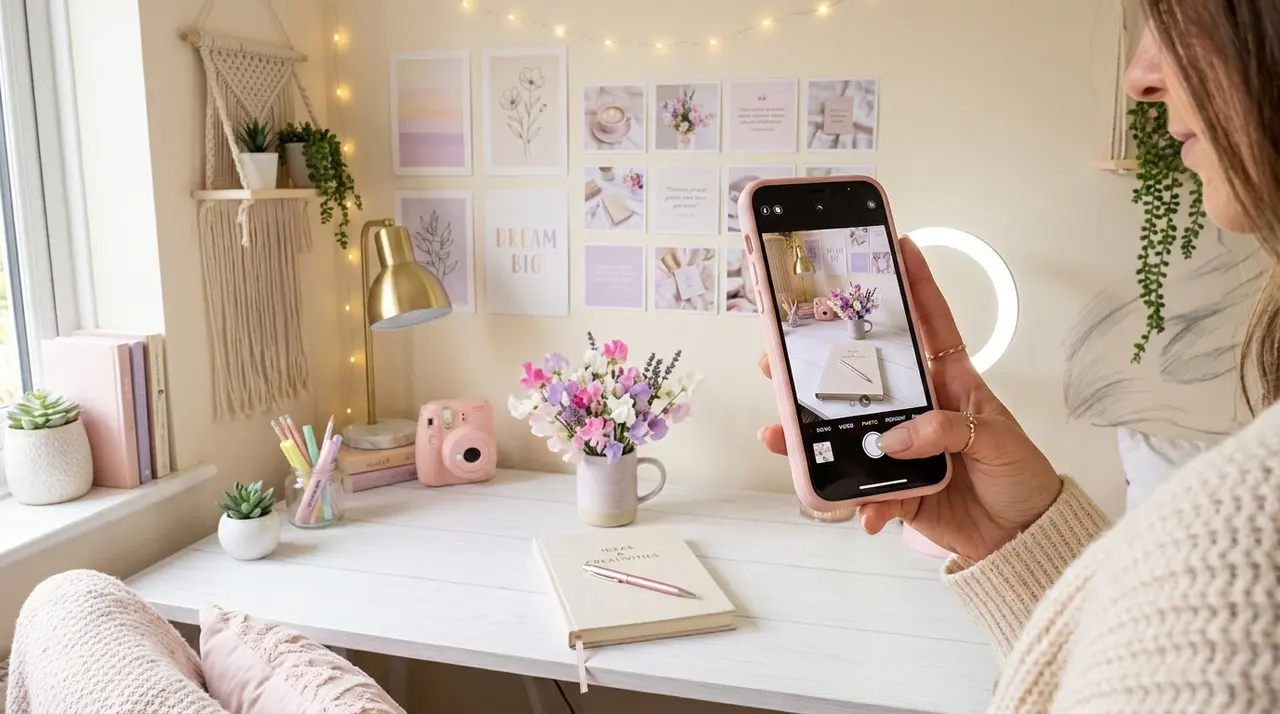


Everyone's coordinating their pens, pads and lamps into one tidy look and calling it deskscaping. Some of these moves genuinely change how a desk feels to work at. Others just photograph well, and a few simply make you happy to sit there. Swipe ahead to learn more.
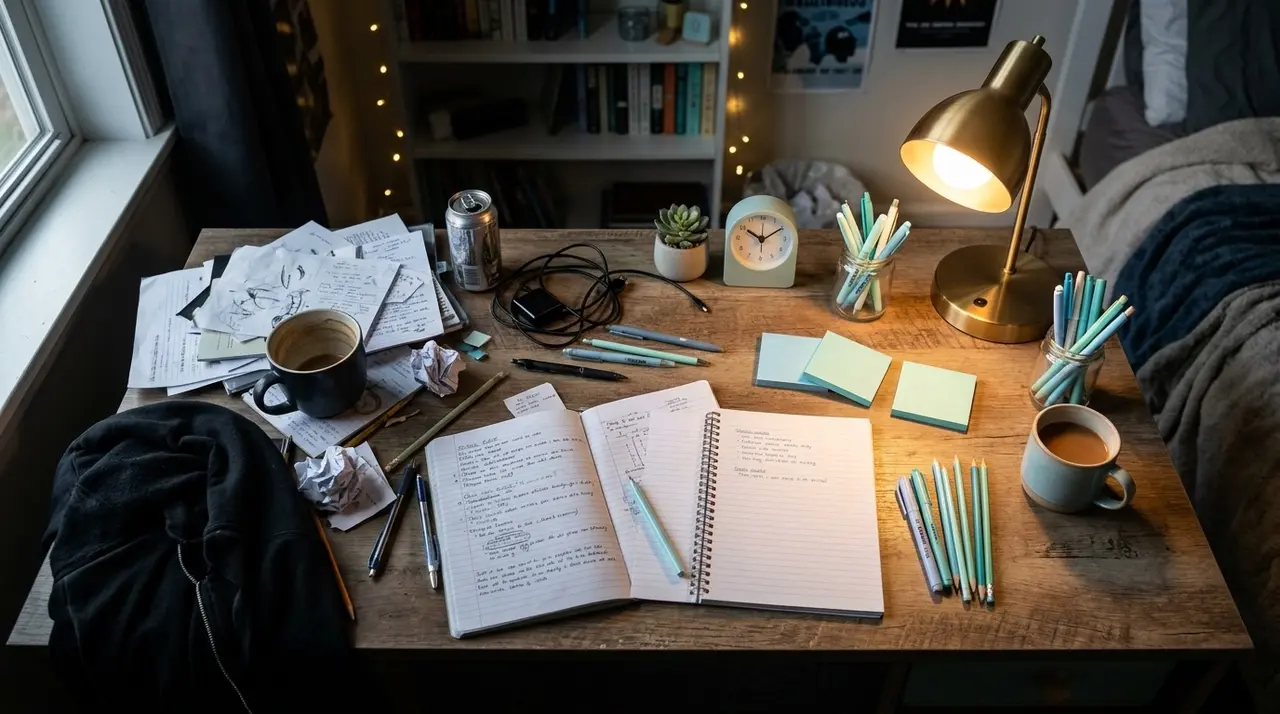
Swipe through enough desk setup photos and you'll spot the same look — a desk where the pad, pens, lamp and storage all seem to belong together. This trend less about buying more stuff, but instead about making what's on the surface read as one calm, intentional setup.
Deskscaping is the umbrella term for this. Wayfair calls it, "landscaping, but for your desk." The idea is revolves around a coordinated, clutter-free surface built around a themed desk pad, matching organizers, hidden cables and warm lighting, with anything nonessential tucked into drawers so the space stays one you're happy to come back to.
There's brain science behind the tidy surface. Using fMRI, the Princeton University Neuroscience Institute found that visual clutter competes for representation in the visual cortex, so a messy field of view makes it harder to focus because your brain is busy processing all the extra stuff.
Clutter can register in your body too. A study from UCLA's Center on Everyday Lives and Families found that women in cluttered homes carried higher levels of the stress hormone cortisol through the day than those in organized spaces.
Color does some quiet work here. Desk guides lean on a simple logic — blue reads as stability and focus, yellow as energy, green as calm — and color-coded supplies double as visual cues that make things faster to grab.
A University of British Columbia study of more than 600 people found red backgrounds boosted detail tasks like proofreading and anagrams by as much as 31%, while blue backgrounds helped creative thinking. Worth noting: researcher Juliet Zhu tested on-screen task backgrounds, not desk decor.
A little greenery i a great addition to any workspace. University of Exeter researchers found that adding plants to a bare office raised productivity about 15%, with workers reporting better concentration after three weeks, though lead researcher Marlon Nieuwenhuis measured that in real offices, not on student desks.
Design guide Hexcal points to a 2025-2026 shift toward wood finishes, fabric touches and a bit of greenery softening tech-heavy desks, plus warm, low lighting to ease eye strain.
The #studygram tag on Instagram carries roughly 19 million posts of study routines, aesthetic desks and color-coded notes. Critics call it the Pinterestification of studying — all performance, no work — while defenders argue that color-coding and visual note-taking cut mental clutter and make the actual studying easier.
The spending numbers are real. The National Retail Federation projects 2026 K-12 back-to-school spending near $43 billion, with families averaging $863, and expects college back-to-school spending to top $100 billion for the first time ever.