
The Dexit dilemma: How a Texas business phenomenon could reshape the country
Elon Musk's most consequential innovation may not have anything to do with rockets or electric cars, but something only a little less glamorous: corporate governance. In 2024, Musk moved the legal charters of his companies out of Delaware in retaliation for a struck-down-then-reinstated Tesla pay package. Since then, about 80 companies have tried to follow suit, not insignificant, but not an ...
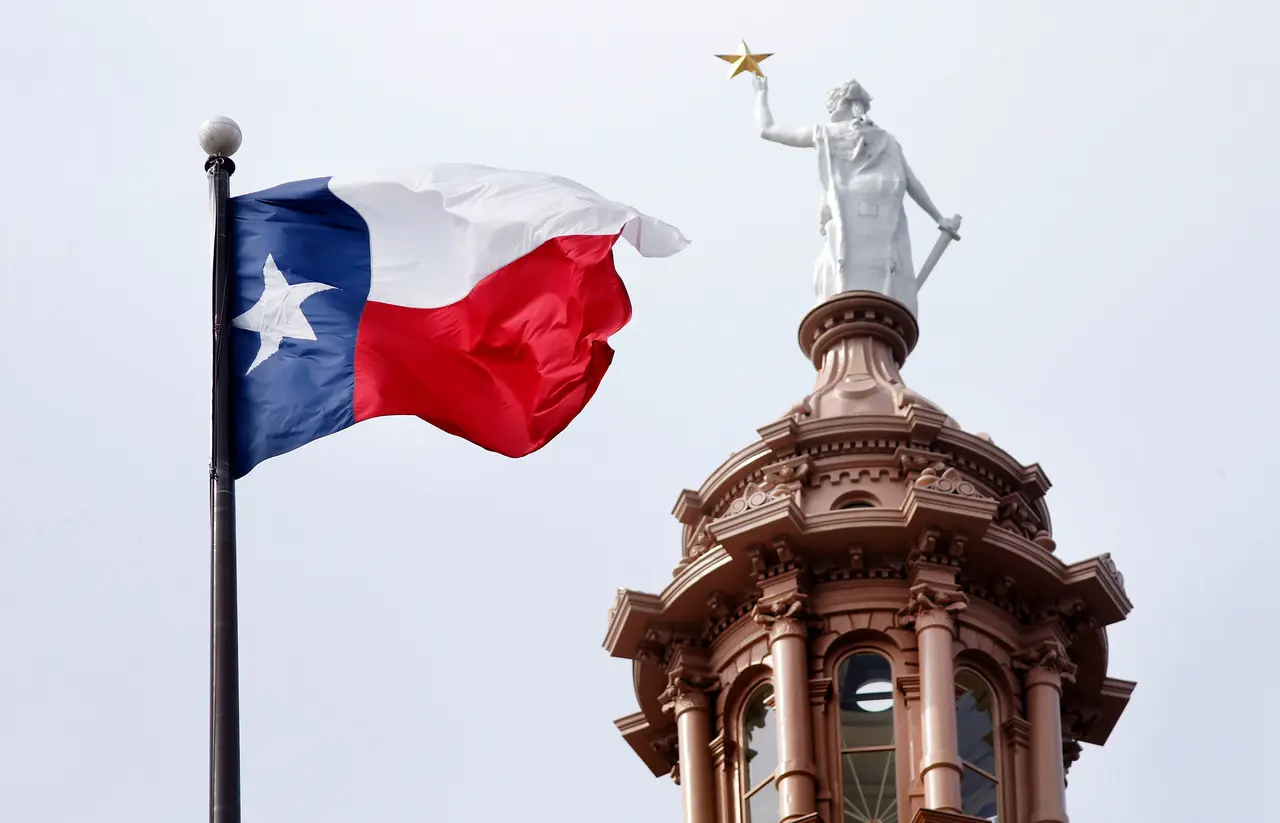
The Texas flag flies over the Texas Capitol in Austin, Texas. Data shows 43 companies have filed reincorporation proposals this year. Texas is the preferred destination of 20 of those, while Nevada has drawn 14..
Tom Fox/The Dallas Morning News/TNS
Elon Musk's most consequential innovation may not have anything to do with rockets or electric cars, but something only a little less glamorous: corporate governance.
In 2024, Musk moved the legal charters of his companies out of Delaware in retaliation for a struck-down-then-reinstated Tesla pay package. Since then, about 80 companies have tried to follow suit, not insignificant, but not an exodus.
It is enough, though, to earn a nickname: "Dexit," a portmanteau of "Delaware" and "exit." It's also enough to draw the attention of Gov. Greg Abbott, the Texas Legislature and other state businesspeople, who have since put considerable effort into peeling off companies from the First State and into the Lone Star State. Their hope is a pro-business, total package enticing companies to relocate their headquarters to Texas, list on a Texas stock exchange, and reincorporate here.
Whether that happens could live or die by market currents churning under the surface for decades, with the consequences of Dexit reaching far beyond the walls of Tesla or the borders of Texas and Delaware to fundamental questions about American public markets. Do proxy advisers and institutional investors have too much power? Who are business courts making their decisions for? And what do public companies ultimately owe the public?
The invention of Dexit
A certificate of incorporation is a birth certificate for a business. Much like an American birth certificate binds citizens to the laws and protections of the U.S., a certificate of incorporation binds a business to that state's corporate code. This location is known as a company's domicile, and it has little to do with where a company actually does business.
Delaware is the domicile capital of the U.S., home to more than 50% of corporate charters for the nation's about 4,000 public companies, including two-thirds of the Fortune 500 and 80% of any given year's initial public offerings.
Today, what makes Delaware special is its Court of Chancery, the preeminent venue for business legal issues. New businesses incorporate in Delaware because they desire the predictability that the Court of Chancery's century of expertise and legal precedent provides.
However, the court faced heightened scrutiny after Musk, the world's richest man and one of the most powerful corporate forces in the world, focused his ire on Delaware amid a legal challenge to his record-breaking salary.
In 2018, an investor with nine shares of Tesla stock filed in the Court of Chancery challenging the Tesla board's approval of a $56 billion, 10-year pay package for Musk. In January 2024, the court sided with the investor, fully rescinding the pay package on grounds that the compensation committee wasn't sufficiently independent of Musk and awarding the plaintiff's team $345 million in legal fees.
The Delaware Supreme Court unanimously reversed the decision last December — and slashed the legal fee award — but not before Musk redomiciled Tesla and SpaceX in Texas in 2024.
"When (Elon Musk) puts out a post saying nobody should ever incorporate Delaware, you know, people pay attention," said Lawrence Hamermesh, a retired Delaware corporate lawyer and professor at Widener University Delaware Law School. "I mean nobody would ever bother thinking about it before that. There wasn't any particular reason to."
Hamermesh said the Tesla decision wasn't an isolated incident. One 2024 Court of Chancery decision voided governance rights provided to Moelis and Co.'s founder a decade after the investment bank had gone public. A 2016 case opened the door to eventually all transactions with a controlling stockholder requiring "double approval" — from an independent committee and a majority of remaining minority shareholders — to avoid elevated legal scrutiny.
Both decisions were eventually undone by higher state powers but not before fomenting skepticism in the Court of Chancery.
"I think the concern that led people to take [Dexit] seriously was less about Elon Musk than it was about some of the developments in the Court of Chancery, particularly in cases involving putative controlling stockholders, and there were some opinions that, from where I stood, were wrong and reflected a certain hostility to controlling stockholders that I think was unwarranted," Hamermesh said.
Texas takes advantage
It just so happens that during the 2023 legislative session, Texas passed a law authorizing a dedicated business court, and the Texas Business Court was staffed with its first 10 judges in September 2024.
Texas was hardly revolutionary, becoming the 31st state to adopt specialized business courts of some kind. Nor was the timing actually intended to capitalize on a reincorporation wave, as this was Texas' fourth attempt to pass the court through the Legislature. Nevertheless, the Texas Business Court became the perfect overture for Dexit.
"The Texas business courts are very new, but a real opportunity to develop a truly competitive forum in comparison to the Delaware courts," said Joanna Enns, a capital markets attorney and Dallas-based partner at Hunton Andrews Kurth. "Part of what Texas did in the corporate space was to legislate some of the things that had developed over years and decades of case law in Delaware, to try to challenge such a developed legal system."
In 2025, Texas passed several key laws amending the Texas Business Organizations Code to make a run at incorporations. The most important of those was Senate Bill 29, which codified the business judgment rule, a common law doctrine that shields corporate directors from personal liability for decisions made in good faith. In Delaware, this doctrine, while reliably applied based on precedent, is not codified in state law.
"Many companies, including those that operate in Texas, are shackled by a burdensome Delaware legal establishment dominated by activist judges and special interest groups that deliberately disrespect the rights of shareholders," reads a release announcing the filing of Senate Bill 29 by Sen. Bryan Hughes, R-Tyler. "By offering Texas as a refuge from this activist storm, SB29 will draw American enterprise and the jobs it creates home to Texas."
The bill also allows Texas corporations a 3% ownership threshold for lawsuits shareholders can bring to protest business decisions. Another new law, Senate Bill 1057, allows a similar threshold — the lesser of $1 million or 3% voting shares — for shareholder proposals, among other requirements. No such thresholds exist in Delaware.
"There's been an increase in certain types of votes being proposed and claims being brought that have, for many companies, become a heavy lift or distraction from their business," Enns said. "So essentially the ability to make sure that anyone who's submitting a question for a shareholder vote or who is bringing a derivative claim actually has skin in the game and is truly invested in the company, that has been framed as being potentially beneficial to company management and boards but also flagged as a governance risk."
Some combination of these initiatives is regularly cited as reasoning by companies looking to redomicile in Texas in filings with the SEC.
Where Dexit stands today
Since the Tesla decision in 2024 and as of Aug. 18, 80 companies have tried to redomicile out of Delaware. Of those, 28 headed for Texas, 44 to Nevada, and a few elsewhere, according to the SMU Corporate Governance Initiative.
Nevada was an early beneficiary of Dexit because its corporate code is even more deferential to management than Texas. But in 2026, Texas is catching up.
According to data compiled by Benjamin Edwards, associate dean for Faculty Research and Development at the University of Nevada, Las Vegas' law school, 43 firms have filed reincorporation proposals this year, including moves into Delaware. Texas is the preferred destination of 20 of those, while Nevada has drawn 14. Both totals include votes that are still to come or have failed.
But some interesting trends are developing among the companies moving to Texas. Fifteen of the companies wanting to redomicile in Texas have their principal offices in Texas, while Nevada's come from nine different states. The largest companies — besides Musk's — that have moved from Delaware to Texas include Dell, Coinbase and Dillard's, all controlled companies, meaning one entity holds more than 50% of the voting power. The largest noncontrolled company to make the jump is pawn shop operator FirstCash Holdings with a $10 billion valuation.
"It's easy for controlled companies, they don't have to get shareholder approval if they control the company. A noncontrolled company is more difficult, right? You have to go out and get a shareholder vote," said Jordan Hirsch, partner at Hunton Andrews Kurth, during a panel.
Shareholders and Dexit
Dallas-based bank Texas Capital and San Jose air taxi developer Archer Aviation are this year's two Texas-bound Dexit proposals that didn't pass, but each for different reasons. Texas Capital's proposal straight-up failed, with about 22 million votes against redomiciling to 18 million votes for and 1.7 million broker non-votes. Archer Aviation's proposal, meanwhile, received vastly more votes for than against but failed to account for more than the required 50% of outstanding shares.
Both blamed proxy advisers for the failure.
Proxy advisers, the two largest being Glass Lewis and Institutional Shareholder Services, or ISS, are firms hired by institutional investors to research the thousands of shareholder votes that institutional investors are responsible for voting in each year. While their research and recommendations mostly stay private, what has become public indicates that they are largely recommending against redomicile proposals to Texas.
In Texas Capital's most recent earnings call, CEO, president and chairman Rob Holmes indicated that his company would try again to redomicile in Texas.
"We got 44% of the vote. I think we would've gotten the vote had our shareholder base been more retail as opposed to institutional, where they listen to irresponsible, uninformed proxy advisers," he said on the call. "I'll go on the record and say it, and it's a problem, and they have too much power.
"We'll do it again, and we look forward to continuing educating our shareholder base, and we look forward to becoming incorporated in the great state of Texas."
Archer Aviation founder and CEO Adam Goldstein targeted proxy advisers in a post on X two days before his company voted on moving out of Delaware. He quoted an Elon Musk post in which he called Glass Lewis and ISS "corporate terrorists" for recommending against his $1 trillion pay package last year.
Some reincorporation proposals have passed in spite of recommendations from proxy advisers. Exxon Mobil redomiciled from New Jersey to Texas earlier this year, and issued strongly worded public responses to both Glass Lewis and ISS indicating they recommended against the move. While Exxon Mobil was not incorporated in Delaware, its campaign to redomicile provided a rare look into what's going on beneath the surface.
Proxy advisers
Based on Exxon Mobil's response letters, a factor in Glass Lewis and ISS recommendation against redomiciling was Texas' 3% thresholds for derivative claims and shareholder proposals.
Because other states don't have such thresholds, redomiciling in Texas can erode minority shareholder rights, at odds with Glass Lewis and ISS' benchmark voting guidelines, which respectively cite "shareholder rights" and "governance changes" as considerations for reincorporation. To reach a 3% ownership stake in Archer Aviation at about a $5 billion valuation, a shareholder would need $150 million to bring a derivative claim. Even the lower threshold for shareholder proposals is $1 million.
That leaves shareholders — and the advisers paid to advocate for them — with a dilemma. It can be in a company's financial interest, and arguably a shareholder's, to avoid annoying claims and proposals. On the other hand, selling shareholders on reducing their own rights has turned out to be difficult.
Some redomiciling companies have chosen not to opt into the provisions, which may help the proposals pass a shareholder vote. Arkansas logistics company ArcBest, which successfully reincorporated in Texas earlier this year, expressly opted out of both the derivative claims and shareholder proposal thresholds in its new charter, so adopting them in the future would require further shareholder approval. Other companies, like Exxon Mobil, have split the difference.
"Exxon makes no such commitment [as ArcBest] in its 2026 proxy statement," wrote New York City comptroller Mark Levine in a letter urging other Exxon Mobil shareholders to vote against redomiciling in Texas. "Without such steps, the Board's assurances [to not opt in] mean surprisingly little. Under Texas law, through a simple amendment to its bylaws, the Board could unilaterally opt to impose [the ownership thresholds]."
Exxon Mobil's response to ISS and the post from Archer Aviation's Goldstein contend, though, that proxy advisers' recommendations against Texas reincorporation proposals are not impartial because of litigation they have with Texas over a state law passed in 2025.
Senate Bill 2337 takes aim at "nonfinancial" reasoning like environmental, social and governance and diversity, equity and inclusion considerations, which some have alleged are factors in how proxy advisers make recommendations.
ISS and Glass Lewis sued, saying that the law is a violation of the First Amendment and too vague to fairly enforce. A Texas federal court issued a preliminary injunction against the law being enforced against them.
ISS says it tailors its recommendations to clients and their needs, including environmental or social issues. Glass Lewis did not respond to a request for comment.
"(ISS) lets its clients decide what is important to them and makes recommendations accordingly," a spokesperson said in an email. "With respect to redomiciliation, ISS conducts a policy-by-policy, issue-by-issue, company-by-company analysis. When the facts support a Texas redomiciliation given a client's voting policy, ISS says so."
Blocking Dexit?
At its core, companies going back and forth with proxy advisers over reincorporation is another proxy fight — pun intended — for the larger debate over the growing power of institutional investors and advisers.
In 1950, institutional investors owned just 6% of total equity in publicly traded U.S. companies; by 2017, 65%, according to a Boston University School of Law paper. Direct retail accounts, meanwhile, own just 10% of U.S. market capitalization, according to Goldman Sachs. Concurrently, shareholder votes have taken a more prominent role in corporate governance, as "poison pill" mechanisms that gained popularity in the '80s and '90s limited outside investors' ability to buy large amounts of shares and exercise control that way, Harvard Business School professor Charles C.Y. Wang explained.
"As a result, a key way shareholders exert influence on companies is through ballot box contests," Wang said. "Through the '90s and 2000s, shareholder voting became the central arena for corporate governance fights. It became a contest over shareholder democracy."
Enter proxy advisers. Institutional investors don't always have the time or resources to thoroughly evaluate thousands of proposals, so they outsource that research and get recommendations from proxy advisers. Combined with the lowest shareholder voting participation by retail investors in nine years — in 2025, retail investors voted just 29% of shares owned — proxy advisers can wield a lot of power over public companies, regardless of the substance of their recommendations.
So long as the tension over Texas' ownership thresholds remains unresolved, this power could be a barrier to Dexit taking off. But a lack of support from proxy advisers is not always a deal breaker, especially if Delaware-fleeing, Texas-bound companies emulate Exxon Mobil's shareholder information campaign, which attorney Hirsch called a "masterclass, tour de force rollout."
Exxon Mobil has also innovated to improve retail proxy vote participation, with its Voluntary Retail Voting Program, where investors can opt in once and have their shares automatically voted in favor of board recommendations at every shareholder meeting.
What Texas stands to gain — and lose
Professor Wang cautions that a mass exodus out of Delaware could have unforeseen consequences. Texas' success, with its laws limiting minority shareholder rights, could lead other states to compete by offering less oversight over public companies and corporate governance.
"The research shows, generally, that exposing companies to scrutiny, making them accountable to shareholders, is a good disciplining mechanism ... I worry about how we're trading off the costs and benefits of reducing accountability," he said. "If companies gain more focus toward creating long-run value, great. But that leeway creates slack, and managers can abuse it for their private gain."
However, Delaware hasn't sat idly by while Texas steals its cash cow. Franchise taxes and other incorporation-related revenue total $2 billion per year, more than a quarter of Delaware's annual budget. In Texas, where franchise taxes work differently anyway, that would be less than 1% of the more than $250 billion the state collects in revenue a year.
The Delaware General Assembly, recognizing the stakes, last year passed sweeping reforms to the state's corporate code. They simplified and clarified the rules for transactions with directors, officers and controlling stakeholders, which could sate the appetite for a Dexit.
"In February of 2025, there was, I think, grave concern about what I'll shorthand as Dexit potential," said Hamermesh, who advocated for the legislation. "If you ask me today, I think there's, I don't want to say cautious optimism, but I think, certainly, less dread about an impending exodus, and so I think it's a matter of staying the course and hoping that the fairly stable population of incorporations will continue."
Gains for Texas from a mass Dexit aren't as obvious as other pro-business moves the state has made. When a company moves its headquarters, it brings physical development, jobs and property tax revenue to the community. A legal document doesn't inherently do any of that, but pro-business advocates in the state hope incentivizing reincorporations can further help Texas, as Gov. Abbott often says, "move at the speed of business."
Attorney Enns predicted that if a Delaware corporate exodus continues, though, Texas would win out over rival Nevada. Redomiciling is a long, intense legal and shareholder engagement process and, in some ways, a greater commitment to the state and its business environment than moving headquarters or listing on one of Texas' stock exchanges.
"I don't believe that 10 years from now people will say, 'Delaware what? ' or, 'Forget about Wall Street,' " Enns said. "[But] the volume of both the physical and legal moves into Texas, combined with the stock exchanges and the financial institutions that are setting up in Texas ... makes me believe that this is real, long-term and resilient."