
South America cuisines offer residents and visitors pure contrast. Each city boasts a classic dish with its own history and character. Explore these cities and understand why each dish is so emblematic of their identity.
Swipe and choose your favorite.
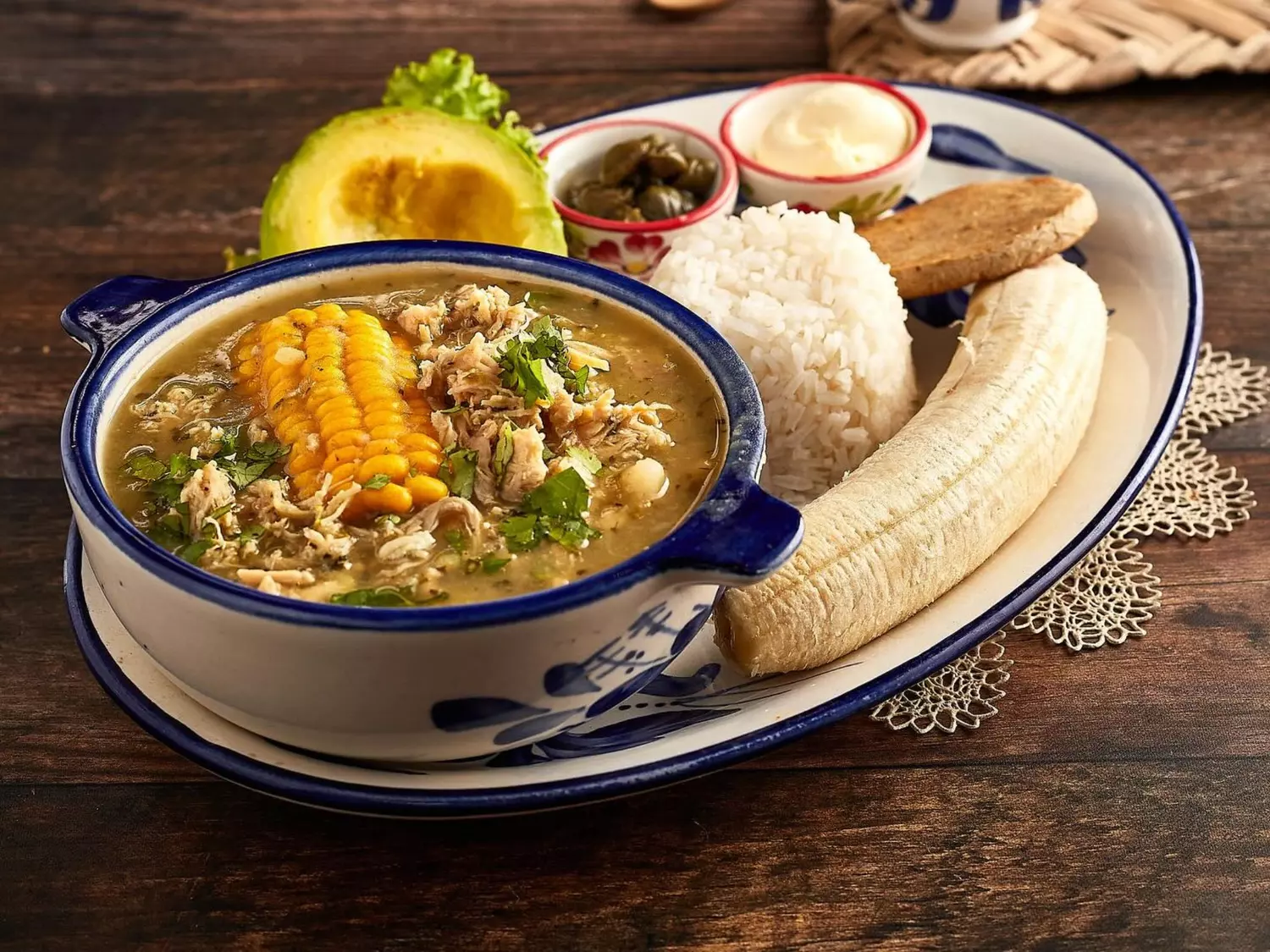
Originating in Bogotá and with Muisca heritage, it's a thick soup with three types of potatoes (criolla, sabanera, and pastusa), chicken, and guascas (a type of herb). It's served with avocado, cream, and capers to taste. Now, Aijaco is a Bogotá emblem and a festive dish throughout the country. Every spoonful combines creaminess, herbs, and plenty of flavor.
Photography: Instagram/@carmenos.co
The bandeja paisa is a hearty dish that includes beans, rice, ground beef, chicharrón (fried pork rinds), a fried egg, slices of ripe plantain, arepa (corn cake) and avocado. Originally a work meal for farmers in Antioquia, it is now a regional favorite and a source of pride for the people of Antioquia. It is served in generous portions, perfect for sharing.
Photography: Facebook/labodegaRVA
Mote de queso is a creamy yam soup with coastal cheese and a mild sofrito. It originated in the Caribbean interior, associated with the savannas and the Montes de María region, and is now deeply rooted in Córdoba and Sucre. It's usually served with a plain cornmeal bun or rice and a splash of whey. It's the perfect comfort food for a hot midday.
Photography: Instagram/@lamatriarcabarranquilla
Ceviche is a dish of Nikkei influence that combines pre-Hispanic knowledge of citrus marinating precise cuts and today it's a national staple found in ceviche restaurants throughout the country. It's prepared with the catch of the day, lime juice, aji limo peppers, red onion and cilantro. It's often served with sweet potato and corn to balance the acidity and spiciness. Traditionally, it's eaten at midday for its freshness.
Photography: Facebook/eltiodario
Asado is a tradition with Creole and gaucho roots, popularized in the Pampas, which involves grilling cuts like short ribs, flank steak, chorizo, and blood sausage over wood or charcoal. It's a weekend social ritual, a time for gentle embers and long conversations. It's usually accompanied by a simple salad and chimichurri sauce. The key lies in the patience required to cook the meat to perfection.
Photography: Instagram/@nunesparrilla
Rodízio is a continuous table service of gaucho-style grilled meats where servers circulate with skewers, serving cuts of meat (picanha, flank steak, ribs, sausage) to the table. The meat is seasoned almost exclusively with coarse salt and grilled over charcoal, a gaucho tradition popularized in churrascarias (steakhouses) since the 1950s. It typically includes various side dishes such as salad, rice and sometimes cheese bread. Diners use a green and red token to signal when the service will continue or pause.
Photography: Instagram/@restaurantefornalha
The chivito is a grilled steak sandwich with mozzarella, ham, lettuce, tomato and mayonnaise; sometimes it includes bacon and egg. It originated as a quick snack in the mid-20th century and is now a national icon. It's usually served with French fries or potato salad and is also offered as a main course with side dishes. It's the perfect companion for an afternoon at the beach or watching soccer.
Photography: Facebook/Chez Piñeiro
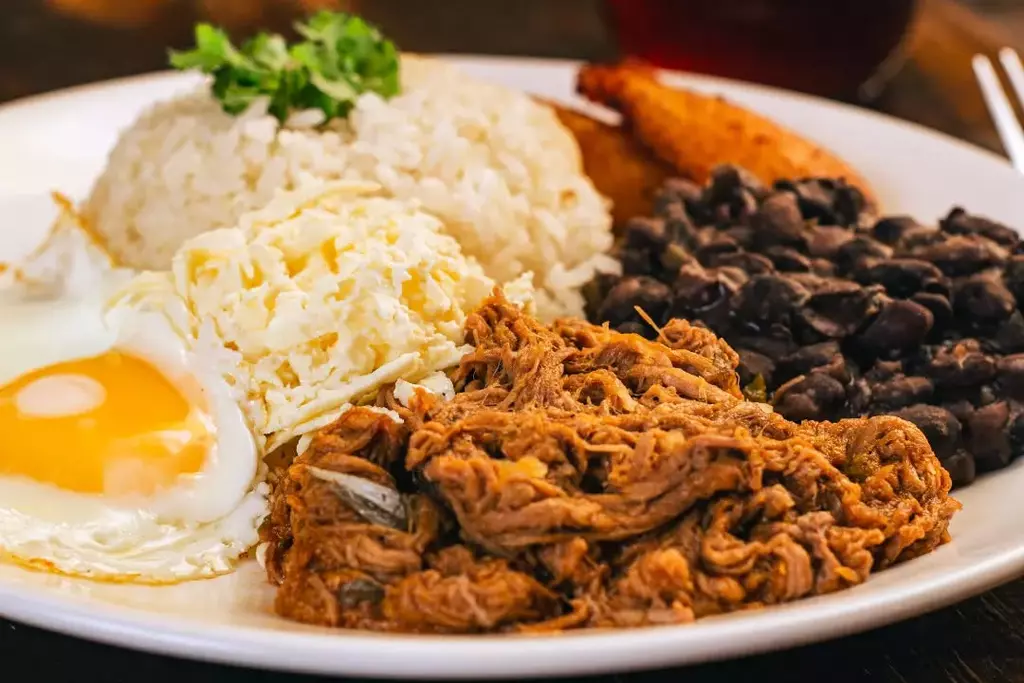
The pabellón criollo is the national dish and consists of white rice, shredded beef, black beans and fried plantains. It blends Indigenous, African, and Spanish culinary traditions and has become a staple in homes and urban eateries. The beef is shredded and sautéed, and the black beans are simmered slowly. It can also be served with egg, white cheese, and arepa on the side.
Photography: Instagram/@mautedefrancisco