
Swiss glaciers shrank at near record pace in first eight months of 2026
Summer heat waves in Europe saw Switzerland's alpine glaciers melt away at an "extraordinary" rate with more than 5% of glacier ice lost this year.
Oct. 1 (UPI) -- Summer heat waves in Europe saw Switzerland's alpine glaciers melt away at an "extraordinary" rate with more than 5% of glacier ice lost this year, prompting scientists to warn Thursday of implications for agriculture, hydropower and transport which could be hit by future shortages.
The risk of landslides can also increase when the loss of glacier ice destabilizes mountainsides which in turn can cause floods, according to a Glacier Monitoring Switzerland report, which said the ice loss in the January to August period was close to the record set in 2022.
The scientists said that while the thawing taking place high up in the Swiss mountains was in line with the long-term impacts of climate change, the pace at which the glaciers were shrinking was not.
A 2% annual loss was previously thought to be at the "extreme" but this year it was 5.5% bringing the total since 2021 to almost one-fifth, with some smaller glaciers completely vanishing.
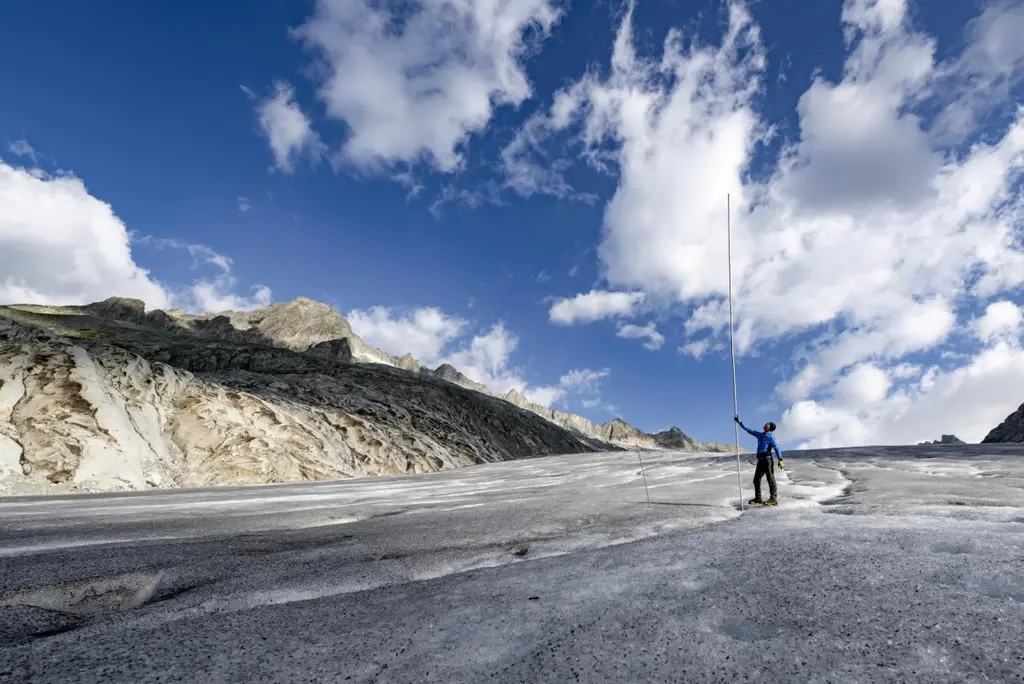
"It's really just disastrous. I visited one last week and it's so impressive to stand in this moonlike landscape where there was a big layer of ice -- an extensive glacier -- just a few years ago. And now it's a rock desert where there's some scattered blocks of old ice still lying around and melting on the hot rocks," said Glacier Monitoring Switzerland director Matthias Huss.
"What we are seeing now is a complete explosion of these melt rates, leading to the disintegration of glaciers. They're really just falling apart," he said.
Along with reductions in the thickness of ice between 8 feet and 13 feet, the study also found that glaciers didn't merely linear retreat in face of external heat, but were imploding due to the excavation action of streams running inside and beneath them.
"You have huge holes like cheese in the middle of the ice that have collapsing roofs. These are processes that tear the glaciers apart and make them retreat even faster," Huss explained.
Europe is the fastest warming continent on Earth with some of the most damaging impacts showing up in the Alps, which also span parts of France, Italy, Austria, Germany and several other countries.
MeteoSwiss said Tuesday that the April to September period was the hottest and driest since records began in 1864.
Human activity has pumped 1.8 trillion tons of carbon dioxide into the atmosphere in the 162 years since and raised the surface temperature by about 1.4 degrees Celsius.