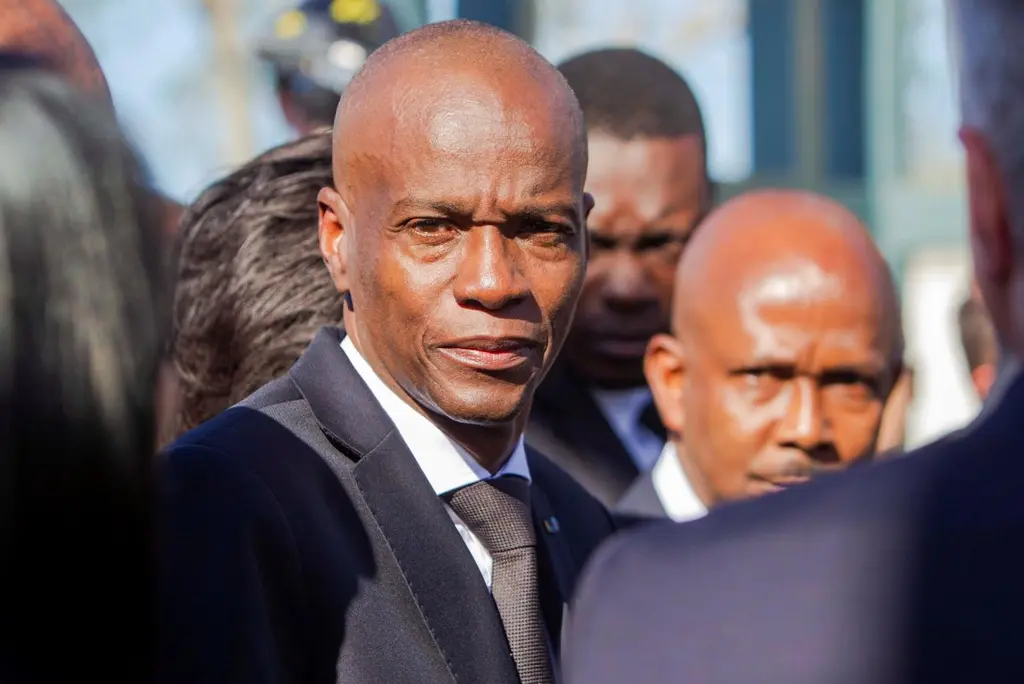

Florida pastor convicted in 2021 plot to kill Haitian president
A federal jury in Miami convicted pastor Christian Emmanuel Sanon of participating in a plot linked to Haitian President Jovenel Moïse's assassination
Nov. 19 (UPI) -- A federal jury in Miami found Haitian American pastor Christian Emmanuel Sanon guilty of participating in a conspiracy linked to the 2021 assassination of Haitian President Jovenel Moïse.
Sanon, 68, was convicted Wednesday on all eight charges against him, including conspiracy to kidnap or kill a person outside the United States, following a trial that lasted nearly eight weeks.
The verdict came after one day of jury deliberations, according to Univision and Caribbean National Weekly.
Sanon faces a possible life sentence. His sentencing is scheduled for Feb. 10.
During the trial, Sanon acknowledged having contact with individuals seeking to replace Moïse as president but denied knowing about plans to assassinate him. He also maintained that the conspirators had selected another presidential candidate before the killing.
According to an indictment filed by the U.S. Justice Department in February 2023, South Florida was a major center for planning and financing the operation to overthrow the Haitian president.
Investigators said Sanon attended an April 2021 meeting with business executives and others involved in the plot who initially intended to install him as Haiti's president, the Miami Herald reported.
In exchange, prosecutors said, Sanon would award infrastructure, security and military equipment contracts to two Florida-based companies: Counter Terrorist Unit Federal Academy and Counter Terrorist Unit Security.
The companies helped recruit Colombian nationals with military training for the operation in Haiti. The conspirators also purchased protective equipment and arranged shipments of supplies to the Caribbean nation.
In June 2021, however, the group abandoned its plan to install Sanon as president and shifted its support to a former Haitian Supreme Court justice, according to the federal investigation.
Moïse was assassinated July 7, 2021, during an armed attack on his residence near Port-au-Prince. His wife, Martine Moïse, was seriously wounded.
The Justice Department said a federal jury convicted four other defendants in May 2026: Arcangel Pretel Ortiz, Antonio Intriago, Walter Veintemilla and James Solages.
The four were convicted of offenses related to the conspiracy, providing material support for the operation and organizing a military expedition against a country with which the United States maintains peaceful relations.
Moïse's assassination left Haiti without an elected president and deepened the country's political instability. Haiti has not held elections in 10 years. General elections initially scheduled for Aug. 30 were postponed until July 18, 2027.