How ‘Grand Theft Auto VI’ pushes the boundaries of video game physics
The Dallas Morning News

How ‘Grand Theft Auto VI’ pushes the boundaries of video game physics

Niamh Ordner, The Dallas Morning News | November 18, 2026

DALLAS — Millions of U.S. adults are expected to call out sick later this week, not because of the flu, but for a video game. “Grand Theft Auto VI” officially drops this Thursday, Nov. 19, marking the first new installment in the franchise in 13 years. The highly anticipated video game is considered to be one of the most expensive video games of all time, with Business Insider suggesting a $1 ...

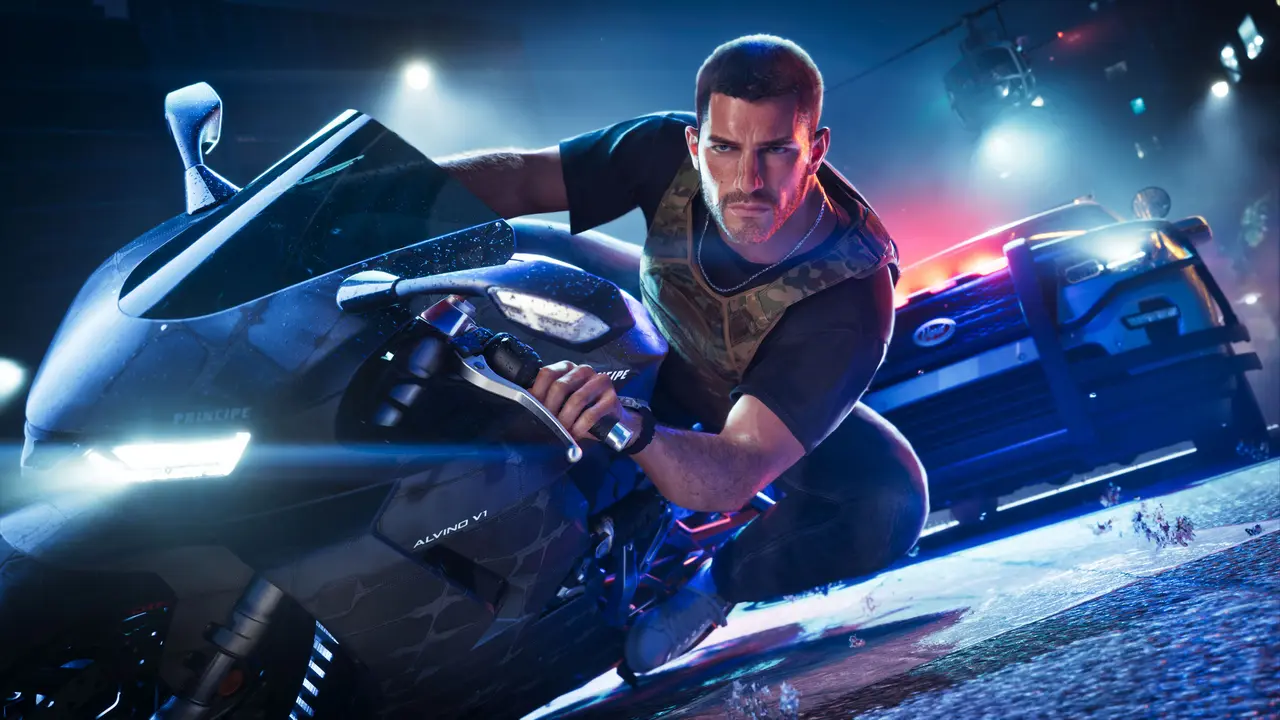
Jason Duval in "Grand Theft Auto VI."

Rockstar Games/TNS


DALLAS — Millions of U.S. adults are expected to call out sick later this week, not because of the flu, but for a video game.

“Grand Theft Auto VI” officially drops this Thursday, Nov. 19, marking the first new installment in the franchise in 13 years. The highly anticipated video game is considered to be one of the most expensive video games of all time, with Business Insider suggesting a $1 to $1.5 billion budget, and the gaming industry is abuzz with the technical leaps made by game developers.

In older video games, in-game physics and rendering relied on tricks to make them feel more realistic, said Squirrel Eiserloh, a professor at Southern Methodist University Guildhall and veteran game programmer and designer, who has no formal connection with the “GTA VI” team.

Eiserloh, who helps run the Dallas chapter of the International Game Developers Association, hosted an event in September where he and a panel of technical artists discussed the technologies and techniques seen in the extended-length “GTA VI” trailer.

Part of what's amazing about “GTA VI” is how the game developers are pulling off increasingly realistic things in real time, Eiserloh said. Based on his own experiences with physics and games, he said some of the coolest things they’ve done with in-game physics are with the lighting, characters and cars.

More realistic lighting

Many video games used to rely on prerendered or faked lighting effects to make a game look more realistic, Eiserloh said.

For example, early video games calculated what lighting would look like and used that information to generate 2D lighting textures, known as lightmaps. While atmospheric, the lighting was frozen in place, meaning the highlights and shadows would not move when the player’s perspective changed.

But “GTA VI” is able to make lighting change in real-time through the use of ray tracing.

Ray tracing is a technique that simulates the physical behavior of light in virtual environments by calculating how individual light rays bounce off surfaces, pass through transparent objects and cast shadows.

...

Vice City in "Grand Theft Auto VI."

Rockstar Games/TNS


“GTA VI” has been confirmed by its developer, Rockstar Games, to target 30 frames per second. The lighting in each of those frames is calculated in the moment, Eiserloh said, helping to create more dynamic lighting visuals.

Blending physics with character animations

From a game development “geeking-out” standpoint, Eiserloh said he finds the characters to be the most impressive, calling even their sweat and hair revolutionary.

“That's what all the game developers are rewinding and watching over and over in the trailer, because that's where they've innovated the most,” he said.

Rockstar Games has been incrementally improving its character technology for decades, Eiserloh said.

Animators typically use motion capture recordings of actors to create in-game animations, he said, which involves an actor donning a physical suit with markers and performing actions in front of cameras.

This might result in 20 or so possible reactions, Eiserloh said. If your avatar were to get hit by a car or jump off a building, the system would pick the animation that best fits the situation.

But sometimes the animation doesn’t quite match what happens in-game, he said.

“GTA VI” still relies on motion capture recordings, but to make the game feel more realistic, developers used thousands of motion capture videos and blended physics into the animations, Eiserloh said.

Imagine you’re walking back and forth in a hallway, when you’re suddenly shot in the leg, but you continue trying to walk through the pain. It’s difficult to interrupt a preprogrammed walk while still making it look realistic, Eiserloh said.

So instead of making a character’s gait rely on a prerecorded walk, the developers also integrated physics principles into the movements, Eiserloh said.

“It's this combination of your locomotive, or your internal movement of your body, with the external influences on that,” he said.

This results in a set of dynamic reactions where your avatar can both be climbing a ladder and getting shot in the shoulder, he said. “It sort of accepts all of those circumstances and blends them together.”

...

Lucia Caminos in “Grand Theft Auto VI.”

Handout/Rockstar Games/TNS


Characters were also made to be more responsive to the movement of cars while inside them. When you're driving a car and get slammed to the right, the characters now react to that motion, Eiserloh said.

This results in character movement that feels far more plausible in unpredictable situations, Eiserloh said.

Changing car movements

If you’ve played games in the “Grand Theft Auto” series before, or other games with driving mechanics, you may recall your car flipping wildly through the air before landing upright, or even magically righting itself after being flipped upside down.

If a video game’s car physics behaved exactly as they do in the real world, it would be boring, Eiserloh said.

“In a game where you want it to be fast, frenetic, exciting, dynamic and fun, you want realism. But you also want to break realism when it favors fun over reality,” Eiserloh said. It’s a constant game of tug-of-war, he said, where developers want the game to be as realistic as possible, while still prioritizing the fun factor.

While working within those boundaries, developers have worked steadily to make vehicles feel more distinct.

“In the older ‘GTAs,’ you could get in a Ferrari or a dump truck and it would kind of feel the same,” Eiserloh said. Since “GTA III,” Rockstar Games has made it to where cars drive differently depending on their type and the weather conditions.

Take for example, cars with bigger tires having more traction, or rain affecting that traction, Eiserloh said.

In “GTA VI,” developers also spent time modeling cars to make their in-game suspensions behave more accurately to real life.

“If you brake, your whole car kind of pitches forward, with the nose going down and the tail coming up. Or if you're cornering really hard, the car kind of rolls to the side,” Eiserloh said.

———

“Grand Theft Auto VI” releases at midnight local time on Thursday, Nov. 19, and will be available to play on Playstation 5 and Xbox Series X|S.

———

Recommended For You.