
Outlook, FAA, bank outage, oh my! How to practice 'cyber hygiene' in the AI age
"Please, please, please enable multi-factor authentication," said Sandip Ghosh, managing director for cybersecurity of Japanese tech giant NTT Data, which recently opened a cyber defense center in Plano. It's part of what Ghosh called "cyber hygiene," or cybersecurity basics that every person and company should be practicing, especially as artificial intelligence rapidly alters the cyber ...
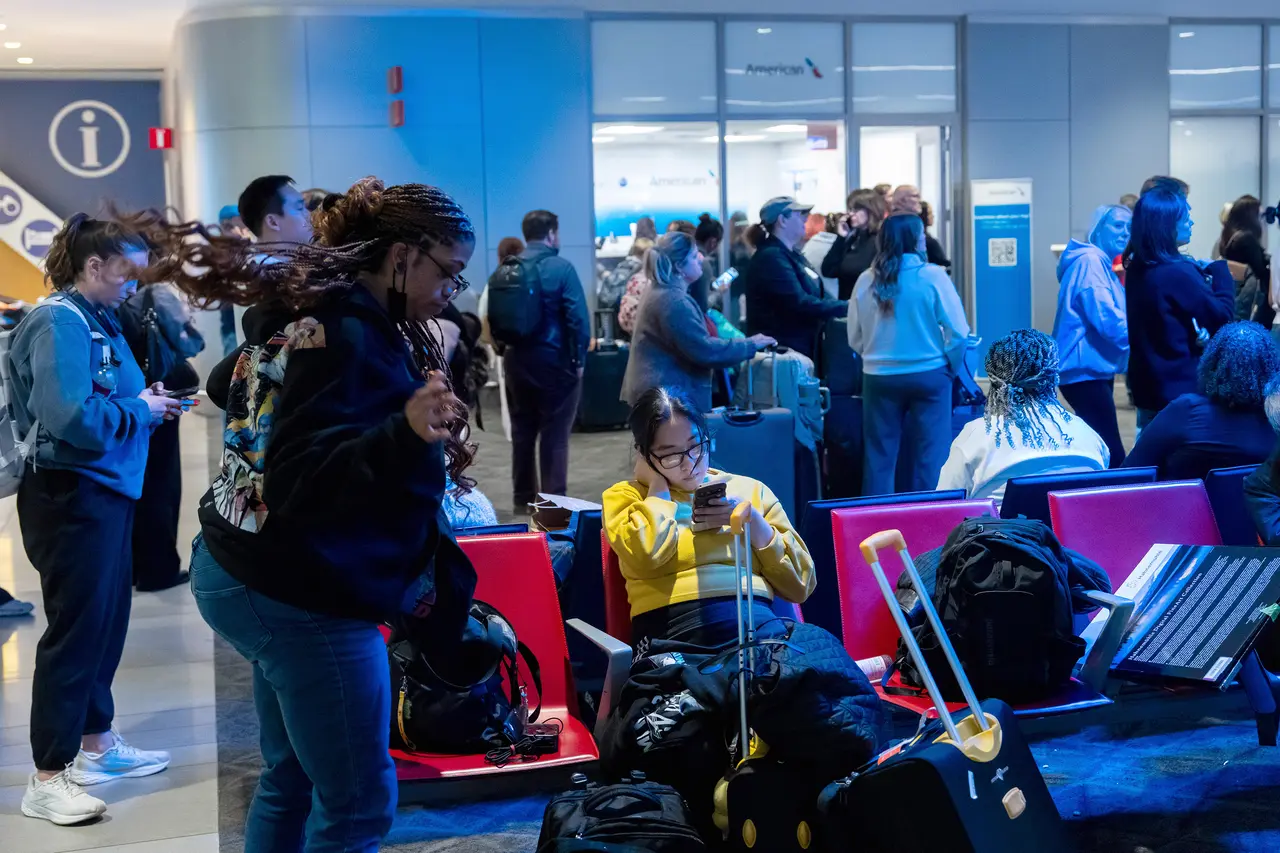
People wait to try and retrieve luggage during delays and cancellations at LaGuardia airport on Nov. 13, 2026, in the Queens borough of New York City.
Adam Gray/Getty Images North America/TNS
"Please, please, please enable multi-factor authentication," said Sandip Ghosh, managing director for cybersecurity of Japanese tech giant NTT Data, which recently opened a cyber defense center in Plano.
It's part of what Ghosh called "cyber hygiene," or cybersecurity basics that every person and company should be practicing, especially as artificial intelligence rapidly alters the cyber playing field.
In the past week and change, Microsoft Outlook went down for an extended period of time, the Federal Aviation Administration blamed its first nationwide ground stop since 9/11 on a telecom outage, CNN reported that the U.S. National Security Communications network used by the NSA went down, and several other tech outages were reported at United Airlines, Apple, JPMorgan Chase and more.
Initial reports indicate that these have been unrelated, with no evidence bad actors are to blame. But in tandem with a real, large-scale cyberattack affecting customers of the website designer Optimizely, including Zoom and Equifax, and an ominous warning from the FBI about hackers and scammers using an AI-powered tool called ARTEX, cyberspace these days feels more like "Twin Peaks" than Tomorrowland.
U.S. Secretary of State Marco Rubio told reporters Tuesday that patching, the term for small code updates to fix bugs and close security vulnerabilities, is "creating short-term disruption in the way the system works," echoing a growing consensus that, in fact, efforts to stop hackers, and not hackers themselves, are behind many of the recent outages. AI, including autonomous AI coding agents, is allowing companies to patch software much faster. For example, this month, Microsoft has implemented more than 1,200 patches, according to data firm Qualys' monthly update, nearly 20 times more than reported in the November 2025 update. That rapid increase in the pace of software updates could be behind the software outages, which begs the question, why not slow down?
"We are using AI to beat AI," Ghosh said. "We are using agents at various places to detect what is going on, and then start taking the right kind of corrective action so that the attack does not go through."
Ghosh explained that cyberattacks have also increased thanks to AI, necessitating more patches. However, what he is seeing is more often an increase in the pace and scale of relatively normal attacks, and less an increase in the sophistication of attacks. This means that basic cybersecurity practices can still be very effective for businesses and consumers.
According to NTT Data's research, less than half of organizations have formal plans to manage AI- and cloud-related security risks. Step one for businesses in this cyber Wild West: fix that. Make a plan. For small- to medium-sized businesses that can't afford their own chief information security officer, bring in an outside service provider to be a "fractional or virtual CISO," Ghosh said, and look at how you can allocate your budget to establish a dedicated cybersecurity plan.
"Let's not think of cybersecurity as an afterthought after an incident. Let's go and do cybersecurity proactively. Put a program in place, and run that program effectively," he said.
He noted that many attacks that NTT Data sees on smaller organizations are due to basic cybersecurity neglect like default passwords being used or patches that are very old, simple fixes that go a long way.
As for consumers, multi-factor authentication is a must, "because it gives you an additional layer of protection," Ghosh said.
AI is driving things like deepfake scams, so beware of calls asking for voice authentication, especially unsolicited. And if someone or something is asking for money or private information, don't just give it to them. Verify the request through multiple channels. There is a reason sheriffs' offices, toll authorities and more regularly put out notices that say, "We will never ask for money over the phone."
"If there's somebody who's asking you urgently for a money transfer, urgently asking, 'Please give your code away immediately,' that's a strict no-no," Ghosh said. "That should be a red flag in your mind immediately, that this urgency is not real, and that you should slow down and look at what are the additional things you can do to verify the genuineness of the request. Again, basic hygiene in cybersecurity."