
DeSantis signs bill creating guardrails for data centers in Florida
Gov. Ron DeSantis signed a bill into law Thursday to regulate large-scale data centers in Florida, promising that consumers would not bear the burden of the artificial intelligence boom with higher electric bills or more scarce water resources. “You should not, as a hard-working Floridian, have to subsidize some of the wealthiest companies in the history of humanity,” DeSantis said at a ...
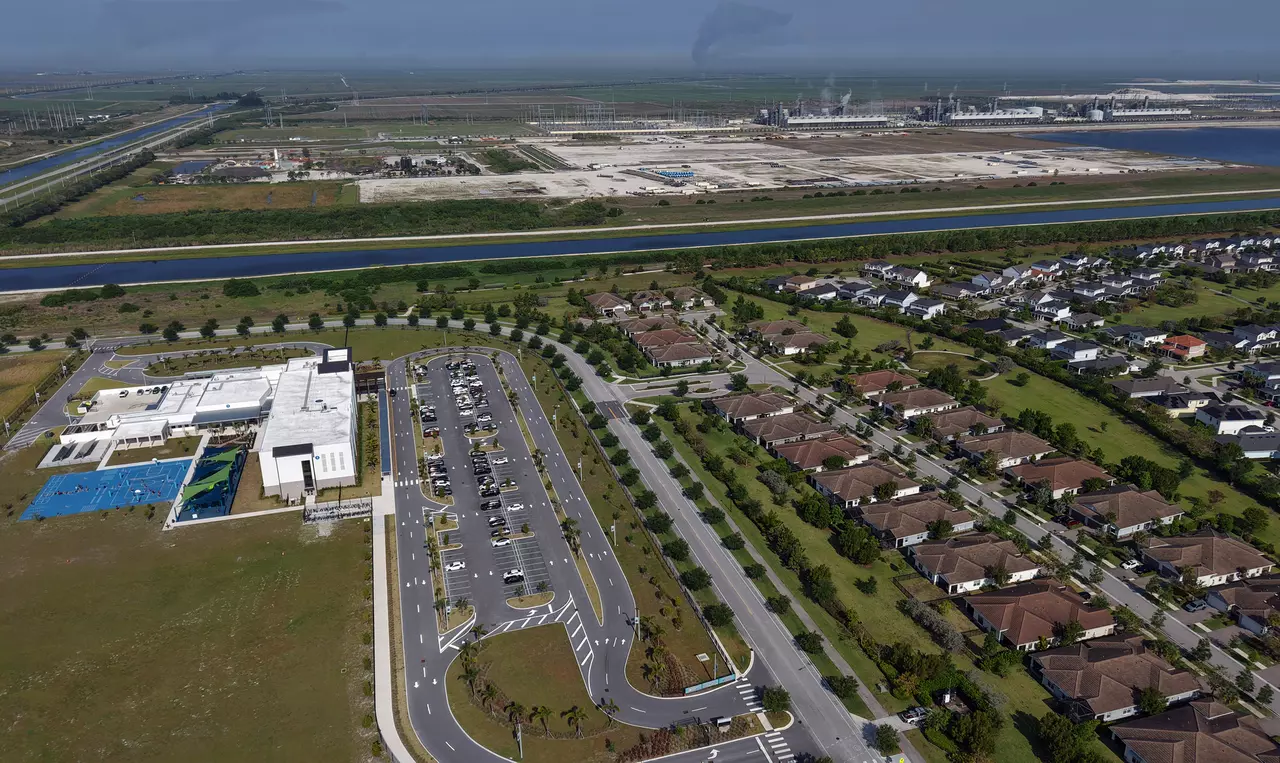
The Project Tango land, here on April 30, 2026, is located west of the Arden neighborhood, forefront right, and Saddle View Elementary School, forefront left.
Joe Cavaretta/South Florida Sun Sentinel/TNS
Gov. Ron DeSantis signed a bill into law Thursday to regulate large-scale data centers in Florida, promising that consumers would not bear the burden of the artificial intelligence boom with higher electric bills or more scarce water resources.
“You should not, as a hard-working Floridian, have to subsidize some of the wealthiest companies in the history of humanity,” DeSantis said at a Lakeland news conference shortly before he signed the bill.
He said he believed this was the first law of its kind in the country.
DeSantis had called for guardrails on the data center industry before this year’s legislative session, carving out a populist position on a topic that has united voters across the political spectrum against what they see as exploitive Big Tech projects. The projects often pop up in rural parts of the state with more open land, where residents have grown increasingly skeptical of the data center industry’s promises of high-paying jobs.
Just so far this year, residents have banded together to oppose data center proposals in Citrus, Polk and Okeechobee counties.
Senate Bill 484 requires that local water management districts deny permits to data centers “if the proposed use of the water is harmful to the water resources of the area,” and mandates the use of reclaimed water where possible.
DeSantis mentioned Florida’s ongoing drought Thursday, saying it only emphasizes how precious the resource is.
“How are you gonna say that somehow the water can go to data centers when we need the water for our own people?”
When it comes to electricity, the legislation also requires that any data center “bears its own full cost of service and that such cost is not shifted” to the public.
Earlier versions of the bill had stronger consumer protections. After pressure from the business lobby, though, lawmakers stripped out a ban on government employees signing nondisclosure agreements with data center developers. The change allows for greater public secrecy surrounding the projects.
Large-scale data centers are warehouses that contain thousands of computers used to power programs like AI. They can siphon huge amounts of water to keep the machines cool and can stretch for hundreds of acres. The new law’s protections kick in for any data center that consumes at least 50 megawatts of electricity at peak usage. The largest operations, sometimes called “hyperscalers,” can devour more than 100 megawatts continuously.
No hyperscale data centers have been built yet in Florida, but the industry has been eyeing the state for expansion.
_____