
Wildfire smoke from Canada and Minnesota pushes air quality in Illinois to unhealthy levels
CHICAGO — Thick haze settled over northern Illinois on Thursday morning as wildfire smoke from Canada and Minnesota rolled into the area, according to the National Weather Service. Particulate matter levels in the Chicago area had reached an index of 248 on a scale of 500, which is considered unhealthy for the general public. Also in this category for Illinois were Aurora and Elgin, Lake ...
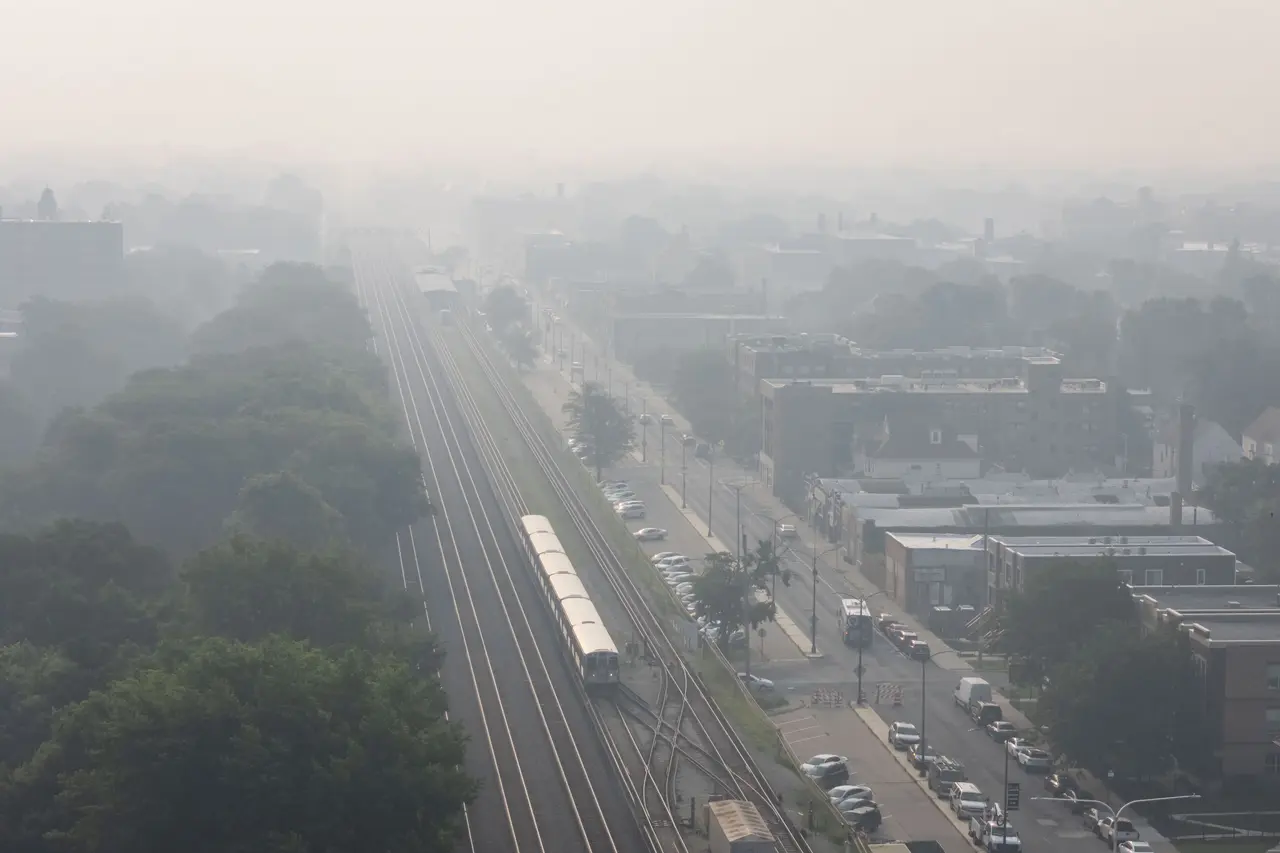
A CTA“ L” Green Line train runs through haze from Canadian wildfires on the West Side of Chicago, July 16, 2026, in the Austin neighborhood.
Brian Cassella/Chicago Tribune/TNS
CHICAGO — Thick haze settled over northern Illinois on Thursday morning as wildfire smoke from Canada and Minnesota rolled into the area, according to the National Weather Service.
Particulate matter levels in the Chicago area had reached an index of 248 on a scale of 500, which is considered unhealthy for the general public.
Also in this category for Illinois were Aurora and Elgin, Lake County, Chicago’s north and west suburbs, Rockford and Chicago’s south and west suburbs.
An Illinois Environmental Protection Agency news release recommended people limit physical activity outside when the AQI is more than 150. It also suggested residents close windows and doors if inside.
According to Swiss air quality company IQAir, as of 9 a.m. Chicago was the fourth most-polluted major city in the world, behind Detroit, Toronto and Minneapolis.
As climate change intensifies, concerns grow about air quality events that disrupt daily life becoming the norm. Scientists say climate change from human activities is making conditions like drought more common, thus increasing the size, frequency and severity of wildfires. Wind patterns also add a layer of unpredictability to the reach of bad air from intensifying, longer-lasting wildfires.
____