
U.S. kills four more in latest strike on alleged drug boat
The U.S. military late Sunday announced it had killed four people in a strike on a suspected drug-trafficking boat in the Caribbean.
Oct. 4 (UPI) -- The U.S. military late Sunday announced it had killed four people in a strike on a suspected drug-trafficking boat in the Caribbean.
It is the 71st publicly acknowledged strike in the Trump administration's 13-month military campaign in the Caribbean and Pacific Ocean, which has killed at least 238 people and that has come under mounting international criticism as illegal.
Like the previous attacks, little information about Sunday's strike was made public by U.S. Southern Command, which identified the boat in a statement as "a go-fast vessel operating along narco-trafficking routes in the Caribbean and that unspecified intelligence "revealed the vessel's active involvement in narco-trafficking."
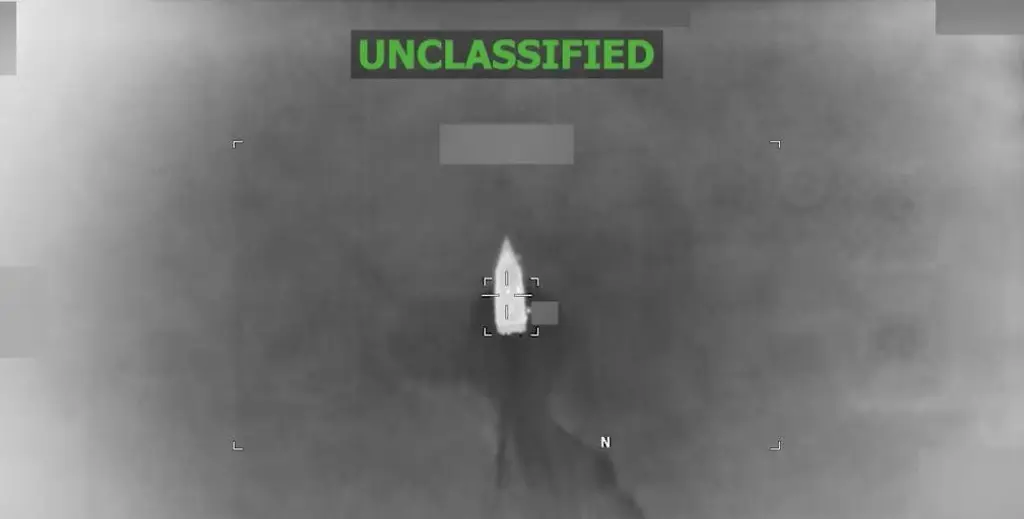
Black-and-white aerial shot video of the attack shared online by SOUTHCOM shows a boat seemingly traveling on the water. A projectile is then seen striking the vessel, which erupts into smoke and flames.
It is Joint Task Force Western Hemisphere's first strike this month and the first since Ben Saul, the independent U.N. Special rapporteur on counter-terrorism and human rights, released a briefing note on the attacks on Sept. 20, stating "there are reasonable grounds to believe" that the attacks constituted the crime against humanity of murder under customary international law.
The report states that the "attacks amount to serial extrajudicial killings in violation of the right to life."
The Trump administration has justified the strikes by saying it is in "armed conflict" against Latin American drug cartels and gangs, 21 of which President Donald Trump has designated as both foreign terrorist organizations and global terrorists.
Though the designations do not provide a legal framework for the strikes, the labels come with immigration and financial penalties, including sanctions, while bolstering the Trump administration's argument that it is combating terrorism with the strikes.
However, families have said some of their loved ones killed were not involved in drug trafficking and were fishermen or farmers. The American Civil Liberties Union has filed a case against the Trump administration, accusing it of killing two men who were returning to their homes in Trinidad and Tobago after working on farms in Venezuela.
Since the strikes began in early September 2025, the Trump administration has been accused by critics and Democrats of using the military to conduct law enforcement operations and committing extrajudicial killings o people who have neither been charged, tried nor convicted.
Saul, who has been among those calling on the Trump administration to cease its attacks, said in his September briefing note that even if those killed were members of criminal organizations listed as terrorists, the organizations have not mounted any armed attack on the United States that would trigger a right to this form of self-defense, while U.S. deaths from illicit drugs "are not assimilable to an armed attack under international law."
He also said there is growing evidence that the attacks have "not been effective in reducing drug trafficking in the United States" and that the attacks have focused on cocaine and not fentanyl and opioids, which are the primary causes of U.S. overdose deaths.
"Moreover, in killing low-level, 'replaceable' suspects, the attacks have thwarted evidence gathering on cartel structures, which would facilitate their systemic disruption, asset seizures and the prosecution of their leaders," he said.
According to Brown University's The Watson School of International and Public Affairs, U.S. military operations associated with the campaign cost an estimated $4.7 billion through March 31.