
U.S. and Iran inch toward framework deal to end war, U.S. officials say
U.S. and Iranian negotiators made progress in talks on Tuesday, moving closer to a framework agreement to end the war, two U.S. officials said.
Why it matters: The two adversaries — with the assistance of Pakistani, Egyptian and Turkish mediators — have been trying to bridge remaining gaps and reach a deal before the ceasefire expires on April 21.
A Pakistani delegation headed by Army commander Field Marshal Asim Munir arrived in Tehran on Wednesday for talks with Iranian officials.U.S. officials and sources familiar with the mediation cautioned that a deal is not guaranteed, given the substantial differences between the two sides.
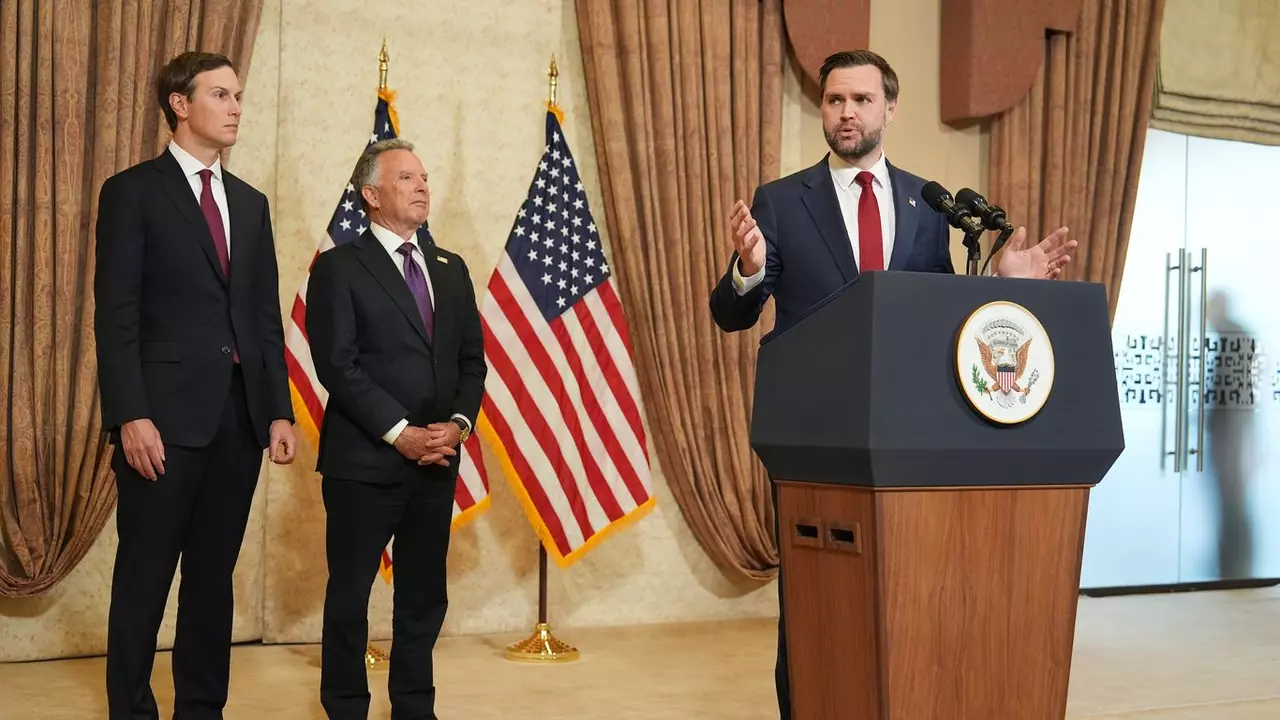
Behind the scenes: A U.S. official said President Trump's negotiating team — Vice President Vance, White House envoy Steve Witkoff and senior adviser Jared Kushner — continued making calls and exchanging draft proposals with the Iranians and mediators Tuesday.
"They were on the phone and backchanneling with all the countries and they are getting closer," the U.S. official said.A second U.S. official confirmed progress was made Tuesday."We want to make a deal. And parts of their government want to make a deal. Now the trick is to get the whole of government over there to make the deal," a third U.S. official said.
State of play: A new round of direct in-person talks will likely take place in the coming days before the ceasefire expires, U.S. officials and sources familiar with the mediation said, but no date has been set.
Vance, who led the initial talks in Pakistan last week, said at a Turning Point USA event in Georgia Tuesday: "I think the people we're sitting across from wanted to make a deal. ... I feel very good about where we are."Vance's comment is telling because the vice president was not negotiating directly with Iran's supreme leader, Mojtaba Khamenei.
Between the lines: If a framework agreement is reached, the ceasefire would need to be extended to negotiate the details of a comprehensive deal, a U.S. official and a source familiar with the mediation said.
"The details are complicated — you can't do that in two days," one U.S. official said."The U.S. has not formally agreed to an extension of the ceasefire. There is continued engagement between the U.S. and Iran to reach a deal," a second U.S. official said.
Zoom in: U.S. officials say Trump's naval blockade — which has cut off Iran's oil exports — and the country's deepening economic crisis are increasing pressure on Tehran to reach a deal.
"Iran has no money. They're broke. We know it. And they know we know it," one U.S. official said.
By the numbers: Iran exports about 1.5 million barrels of oil daily, earning roughly $140 million.
"A blockade zeroes this out overnight," said Miad Maleki, a former Iran sanctions expert at the Treasury Department and now a senior fellow at the Foundation for Defense of Democracies.Kharg Island, which handles about 90% of Iran's oil, sits 400 miles away from the Strait of Hormuz in the Persian Gulf and would effectively shut down under the blockade."We don't need to invade Kharg right now. We can just strangle it," another administration official said.
Zoom out: If Iran can't export oil and runs out of onshore storage, it will have to halt pumping — potentially taking wells offline and causing long-term economic damage, administration officials said.
"What does it say if Iran, a country the world knows for its oil, can't produce oil? It's going to be worse than Venezuela under Maduro," one official said.
Before the war, Iran's economy was already under severe strain from Trump's maximum pressure sanctions campaign, which drove high unemployment, gasoline shortages and food inflation. The war deepened the crisis.
U.S. and Israeli airstrikes have shuttered Iran's two largest steel plants and brought its petrochemical industry to a standstill.Sepah Bank — Iran's state-run financial institution that pays military and IRGC salaries — is under frequent cyberattack from Israeli hackers, and its digital security center was struck in a missile attack last month.Iran's internet shutdown, now in its 47th day, is costing the economy an additional $50 million daily.