
Supreme Court sides with FCC power in forfeiture process
WASHINGTON — The Supreme Court upheld on Thursday the Federal Communications Commission’s power to issue findings that companies broke the law, turning aside challenges from telecommunications giants that the agency had to go to the courts first. The 8-1 decision found that the FCC’s forfeiture process does not run afoul of the Constitution because it requires going to court for enforcement. ...
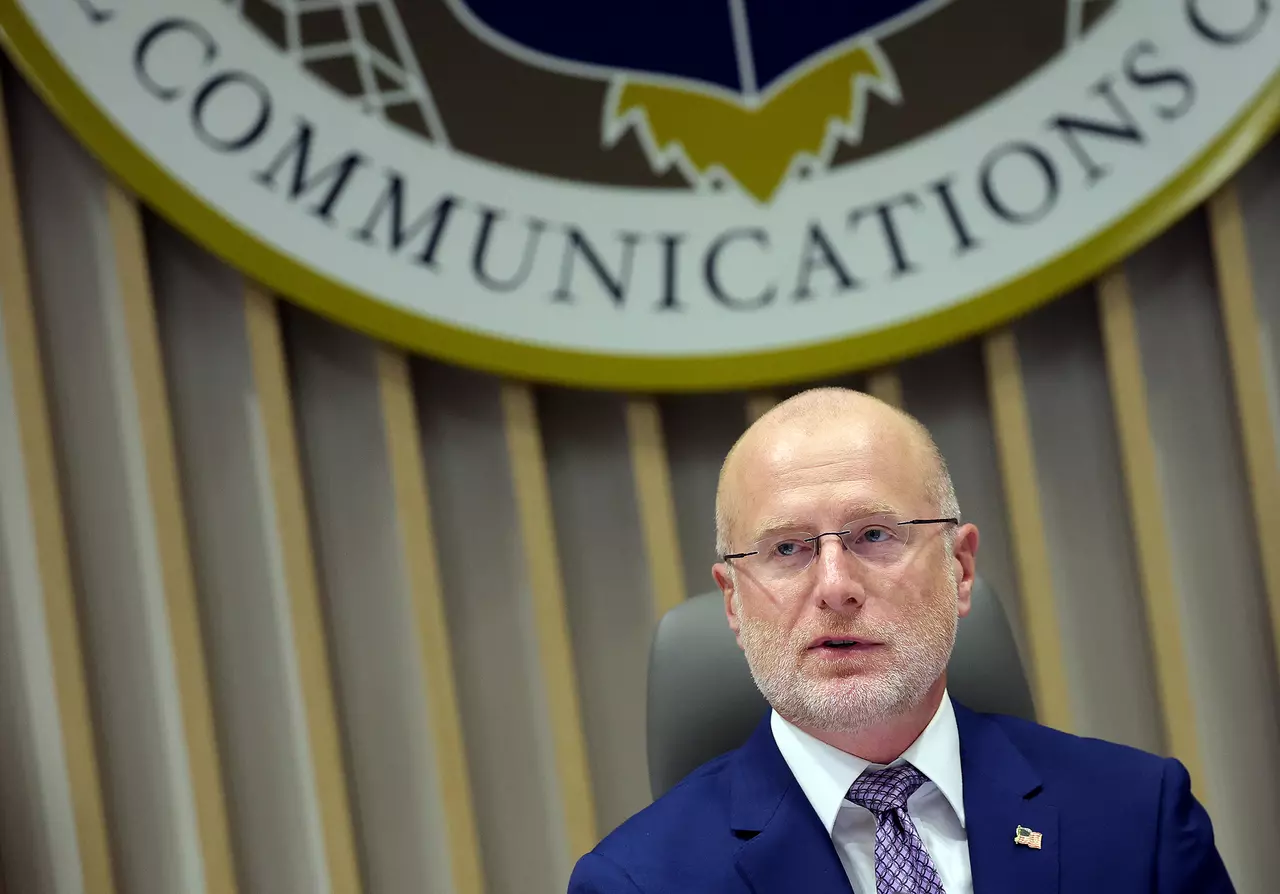
Chairman of the Federal Communications Commission Brendan Carr participates in a FCC meeting at the Federal Communications Commission headquarters on Feb. 18, 2026, in Washington, D.C..
Kevin Dietsch/Getty Images North America/TNS
WASHINGTON — The Supreme Court upheld on Thursday the Federal Communications Commission’s power to issue findings that companies broke the law, turning aside challenges from telecommunications giants that the agency had to go to the courts first.
The 8-1 decision found that the FCC’s forfeiture process does not run afoul of the Constitution because it requires going to court for enforcement. The opinion cuts against a series of recent decisions from the conservative-controlled high court that had rolled back the authority of federal agencies.
Chief Justice John G. Roberts Jr., in the majority opinion, wrote the FCC’s forfeitures only become mandatory when the Justice Department sues to enforce them, and therefore do not violate the right to a jury trial.
“So if the carriers elect not to pay and await an enforcement action, and the Department decides never to bring one, then the carriers’ jury right does not attach in the first place,” Roberts wrote.
The decision came in two cases from AT&T and Verizon challenging the constitutionality of the FCC’s forfeiture authority after the agency found the companies violated data privacy rules and issued more than $100 million in forfeiture orders against them.
In 2024, the FCC issued forfeiture notices for alleged violations of data privacy rules to AT&T, Verizon and others for incidents where third parties could gain access to users’ location data from aggregator companies who had contracts with the carriers. The companies then challenged the notices in federal appeals courts, rather than waiting for a DOJ suit to collect the money.
The Supreme Court reversed a decision from the U.S. Court of Appeals for the 5th Circuit, which threw out the FCC forfeiture and found that the FCC process violated the companies’ Seventh Amendment right to a jury trial. The justices sided with reasoning from the U.S. Court of Appeals for the 2nd Circuit which sided with the agency.
Justice Clarence Thomas dissented from the decision, arguing that the FCC should not be able to proceed without having obtained a court order first.
“When the Federal Government seeks to deprive a person of property, it must go through an Article III court,” Thomas wrote.
The cases are Verizon Communications Inc. v. Federal Communications Commission and Federal Communications Commission v. AT&T.