
Woman undergoes rare quadruple organ transplant at University of Chicago Medicine
CHICAGO -- It took some time for Jasmine Jones to absorb the news that doctors wanted to replace four of her organs at once. She had been through so much already because of cystic fibrosis, a genetic disease that can damage the lungs and other organs. The 28-year-old South Side woman had become almost numb to the situation. “I was still on autopilot,” Jones said. “Nothing hit until I was ...
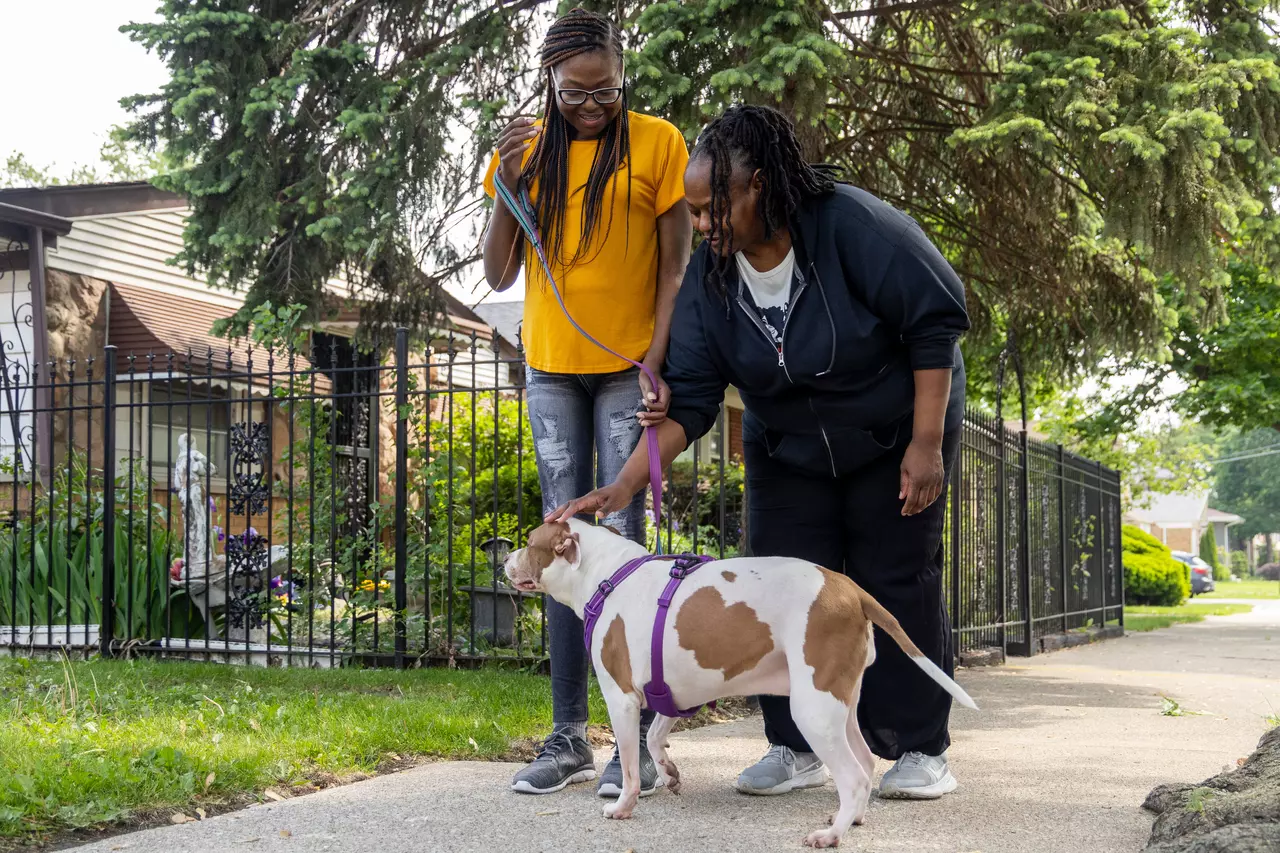
Jasmine Jones, 28, left, walks her dog Dutches with her mom, Patricia Smith, in Chicago’ s Calumet Heights neighborhood on May 17, 2026.
Josh Boland/Chicago Tribune/TNS
CHICAGO -- It took some time for Jasmine Jones to absorb the news that doctors wanted to replace four of her organs at once.
She had been through so much already because of cystic fibrosis, a genetic disease that can damage the lungs and other organs. The 28-year-old South Side woman had become almost numb to the situation.
“I was still on autopilot,” Jones said. “Nothing hit until I was getting ready to go down to surgery where I just felt this, ‘Wow, it’s really about to happen.’ But I felt so calm and just grateful. It was just like a wave of just peace and gratitude.”
In January, University of Chicago Medicine doctors performed a rare quadruple organ transplant on Jones. Over the course of 36 hours, they gave Jones a new right lung, left lung, kidney and liver, all from one deceased donor.
The procedure was the first known one of its kind in Illinois, and one of six such transplants that have been performed across the country, according to UChicago Medicine, citing information from the United Network for Organ Sharing.
“It continues to be at the edge of what we can do in transplantation,” said Dr. Rolf Barth, a transplant surgeon and co-director of the UChicago Medicine Transplant Institute. “There’s only been a handful done.”
Now, five months later, Jones is back home and feeling “pretty good,” she said. She spent about six weeks in the hospital after the transplants, and then another couple weeks at the Shirley Ryan AbilityLab rehabilitation hospital downtown.
She didn’t learn how rare her transplants were until about a month ago.
“I was like, ‘Oh my God,’” Jones said. “My mom was like, ‘I’m happy I did not know this before the surgery.’”
‘It all happened so fast’
Jones, a lifelong Chicagoan, was diagnosed with cystic fibrosis when she was just 5 months old. Cystic fibrosis causes a person’s body to make abnormally thick, sticky mucus that can clog the lungs and digestive system, making it difficult to breathe and absorb nutrients and increasing infections.
Despite the illness, Jones’ health was decent throughout her childhood, and she and her mother were able to mostly manage her symptoms at home.
That changed, however, about 10 years ago. She developed cystic fibrosis-related diabetes, pain and numbness in her hands and feet and liver problems. She lost her mobility and needed a wheelchair. Jones had to leave school after a semester at Columbia College Chicago where she had been studying theater.
Eventually, a UChicago Medicine doctor was able to get her symptoms under control with medication — and she felt mostly OK again. She found a job she loved as an assistant preschool teacher and was moving on with her life.
Then, about a year ago, Jones began to experience fatigue and pain. She started getting more frequent lung infections and retaining fluid.
“My overall health was just declining and I would spend the majority of my days in bed fighting to get up and do something but not always successfully,” Jones said.
One day, her mother returned from work to find Jones unconscious in bed in the home they share.
At that point, Jones’ doctor told her it was time to consider a liver transplant. Jones said she wasn’t ready yet.
But by the end of the year, after being in and out of the hospital for months, she had had enough.
“I was a little bit more accepting of it,” Jones said of a liver transplant. “I am tired of being in and out of the hospital. I’m tired of not living life to the fullest.”
Just as she had come to terms with the idea of needing a liver transplant, doctors told her that her kidneys were only functioning at about 10%. They also said her lungs were badly damaged.
Medications known as CFTR modulators help many people with cystic fibrosis avoid the need for lung transplants by lessening the severity of the illness. But the modulator medications don’t work for everyone, and Jones is among that group.
“Her lungs were so damaged at that point that I didn’t think … that she would be able to have a normal lifestyle or a safe lifestyle,” said Dr. Pablo Sanchez, surgical director of the lung transplant program at UChicago Medicine. “The decision at that point was to embark on this quadruple organ transplant and just do it in one big surgical procedure, give her the best opportunity at a quality of life.”
To Jones, it was all a bit of a blur.
“We went from a liver to a kidney to lungs all in a few months, really?” Jones said. “It seemed like it all happened so fast that I wasn’t really in the moment.”
A match
By December, doctors wanted to admit Jones to University of Chicago Medical Center to await the transplants. But she wanted a little more time.
Each year, Jones’ family takes a photo in pajamas in front of their Christmas tree. She didn’t want to miss it.
She told her family she wanted to do it because her grandmother was getting older. In reality, she feared dying during the surgery.
“Really, it was because I was like I don’t want to leave my family without having this last memory, a picture of us all together,” Jones said.
She made it into the family photo. The next day, Jones felt worse than ever and went to the hospital.
It was about a week before she was matched with a deceased organ donor, Jones said. Often, people in need of transplants wait years for organs from deceased donors. But patients are given higher priority for transplants based on the urgency with which they need them, and if they have a higher chance of survival after transplant.
Before she went under anesthesia for the transplants, she asked the hospital to send a chaplain to keep her mom company.
Jones’ mother, Patricia Smith, had said she wanted to be alone during the surgeries, but Jones felt she needed support.
Smith said she normally doesn’t show her emotions, and tries to hold it together for her daughter. But the uncertainty of the day hit her, and Smith’s typically-strong faith began to waver.
“She’s worried about me but she’s the one going in for this massive, possibly life-altering procedure,” Smith said.
The chaplain sat with her during the surgeries, and ended up being like a “rope that was thrown over the ledge for me to hold onto during those long hours.”
A team effort
In all, a team of about 40 doctors, nurses and anesthetists worked on Jones’ transplants.
First, Sanchez removed her lungs, washing her chest cavity and airway with an antibiotic to clear harmful bacteria before placing her new lungs into position. During that time, doctors connected Jones to a machine that pumped blood outside her body, removed carbon dioxide from the blood and then sent oxygenated blood back into her body to keep her alive.
After the lung transplant, doctors moved on to her liver. While her lungs were being transplanted, the donated liver was kept viable with a perfusion machine, which circulates oxygenated blood and nutrients in an organ while it’s outside of the body.
Jones’ donated kidney was also in a perfusion machine while the other organs were being transplanted.
“All those technologies have allowed us to push the boundaries of what we do in regards to organ transplantation,” Sanchez said.
After the liver transplant, doctors transferred Jones to the hospital’s intensive care unit, her chest still open, to give her body time to rest before the kidney transplant.
After some time in the ICU, doctors completed the fourth and final organ transplant, giving her a new kidney.
When Jones awoke after the transplants, she was uncomfortable and couldn’t move. She would spend about two weeks in the intensive care unit and then about four more weeks in the hospital.
But she said it wasn’t as hard as her past hospitalizations because of the relationships she had developed over time with her care team. “It didn’t feel as heavy,” she said.
A ‘new journey’
By March, Jones was finally able to return to the South Side home she shares with her mother, grandmother and a cousin.
At first, Jones worried about not having medical professionals to check on her constantly. Though doctors say the cystic fibrosis won’t affect her new organs, they’re still monitoring her pancreas for problems. She’ll also have to take drugs to suppress her immune system for the rest of her life to keep her body from rejecting the new organs.
But she was overjoyed to be back with her family and her two cats, Thumpy and Patches, and dog, Dutches. She’d missed them so badly in the hospital that she couldn’t talk about them without tearing up.
Jones’ doctors are beyond pleased with her progress.
“She is young and she was really sick and she underwent an extremely rare sequence of transplants that within three months put her back to a normal life,” Sanchez said. “It’s, in many ways, a miracle.”
Though quadruple organ transplants remain rare, multi-organ transplants have become more widespread in recent years as medical advances have allowed people with serious illnesses to live longer, Barth said.
“There are a lot of young people living with diseases longer than they would have ever lived in the past,” Barth said. “That’s kind of a miracle of modern medicine in a lot of ways. (It) creates patients who are young adults who decades ago would never have lived to that age that have end-stage organ disease.”
Barth also credited Jones’ success to the generosity of her organ donor.
Jones doesn’t know much about her donor, but she thinks about him daily, wondering about him and his family.
She said she’ll be forever grateful to him and her care team for helping to give her a future again. Now that she has her energy and health back, she hopes to get back to work, try new hobbies and go out more.
“I’m just excited to embark on this new journey and see what that has in store for me,” Jones said.