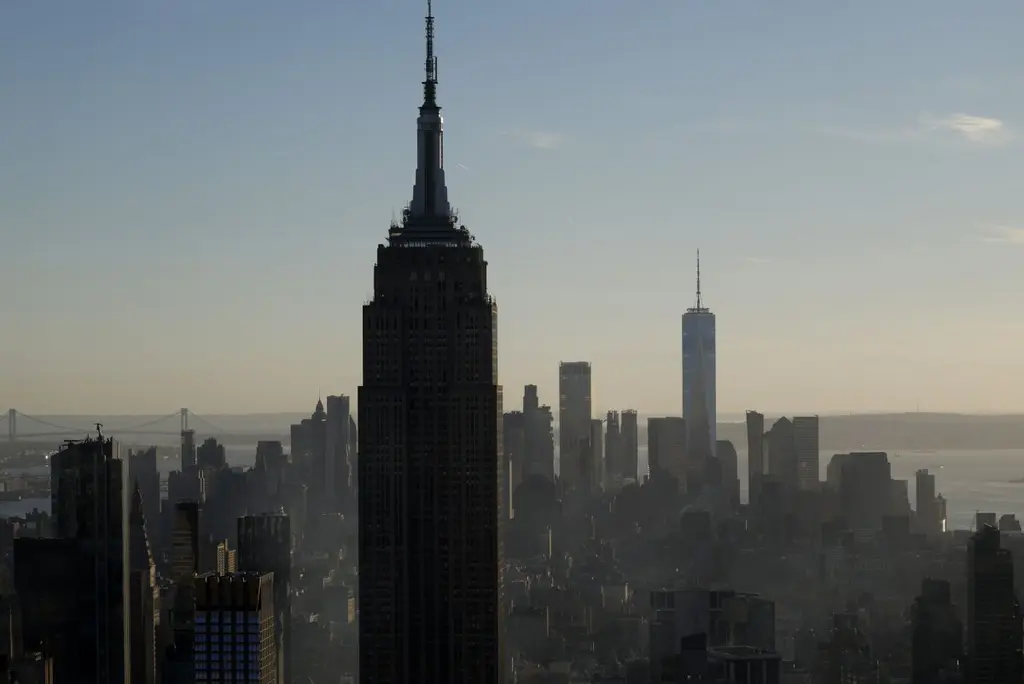

More people perceive Washington, D.C., New York City as safe to visit
More U.S. residents see Washington, D.C., and New York City as safe places to live or visit, hitting the highest levels in decades, a new poll said.
Nov. 16 (UPI) -- More U.S. residents see the cities of Washington, D.C., and New York City as safe places to live or visit, with both percentages reaching their highest level in the decades Gallup has tracked the trend, a new poll released Monday said.
The perception of the nation's capital as safe has climbed 12 percentage points since 2023, with 64% of people calling it so, the highest level as rated by Gallup since it started tracking the rate in 1990. New York City also hit a new high in perception, with 47% rating it as safe, up six percentage points.
Gallup has measured people's perceptions of the safety of 14 U.S. cities eight times since 1990, including six of the biggest cities. It added Las Vegas and New Orleans in 2006.
The cities of Seattle and Minneapolis were at their lowest point in perceptions of safety for this poll. Majorities of U.S. residents still consider them safe, Gallup said, but Minneapolis' rating dropped seven points from 2023 to 51%. Seattle's rating of 63% tied its low in 2023. Between 1993 and 2006, at 70% of people routinely named them as safe.
Of the cities most recently added to the poll, Las Vegas had a 64% safety rating, higher than its earlier ratings of 58% and 61%. New Orleans had a 47% safety rating, down from 55% in 2023 but up from 28% in 2006.
The other eight cities included in the poll were Atlanta, Boston, Chicago, Dallas, Detroit, Houston, Philadelphia and San Francisco. All but Atlanta were near their long-term averages, Gallup said, with Atlanta falling below that average.
"The perceived safety of most of these eight cities peaked in the early-to-mid 2000s, when U.S. crime rates were well below 1990s levels," Gallup said. "This period also followed the 9/11 attacks, which may have affected American's views of domestic crime or willingness to call cities unsafe. By Gallup's 2026 reading, however, several of these cities were back down."
Twelve of the 14 cities Gallup has tracked since 1990 are more likely to be considered safe today. Seattle and Minneapolis were the exceptions.
Partisan gaps in perceptions have also grown, Gallup said, sometimes dramatically.
"In 1990 and 2006, Democrats' and Republicans' perceptions of city safety differed by no more than 11 percentage points for any of the cities Gallup measured," it said. "By the next reading in 2023, those differences had widened considerably. Democrats were more likely than Republicans to consider 15 of the 16 cities safe, with gaps of at least 25 points for 13 cities. The largest were for Los Angeles (53 points) and Seattle (50 points). Because Gallup did not measure city safety between 2006 and 2023, it is unclear when these partisan differences developed.
"Large partisan gaps persist in 2026, with Democrats at least 40 points more likely than Republicans to consider six cities safe, including San Francisco, Seattle, New York and Minneapolis."
Washington, D.C., however, is an exception. In 2023, 77% of Democrats and 29% of Republicans considered the city safe. In the 2026 poll, 70% of Democrats and 63% of Republicans said it is safe.
Gallup surveyed 1,200 adults between Oct. 1-19 with a 4% margin of error.