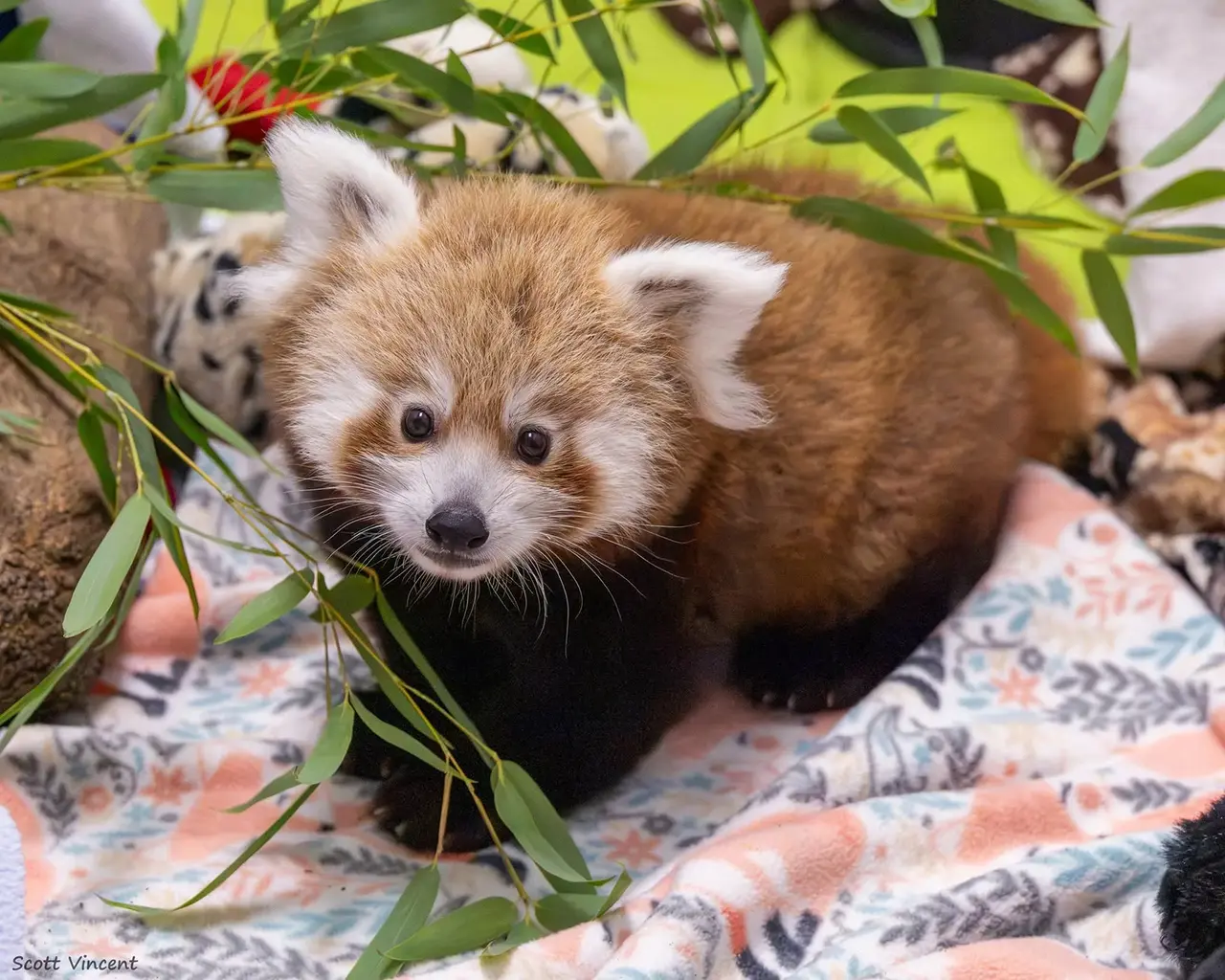

A Connecticut zoo celebrates the birth of one of the world’s rarest animals
HARTFORD, Conn. -- The Beardsley Zoo in Bridgeport is celebrating the birth of a rare red panda, allowing visitors an up close view of one of the world’s rarest endangered animals. The zoo recently celebrated the successful birth of the its first red panda cub. Born during the overnight hours on June 24 to its parents Ponya and Pilot, the zoo said the male cub represents “a landmark moment for ...
The Beardsley Zoo said the red panda cub, born on June 24, 2026, has received several months of care away from the public.
Beardsley Zoo/TNS
HARTFORD, Conn. -- The Beardsley Zoo in Bridgeport is celebrating the birth of a rare red panda, allowing visitors an up close view of one of the world’s rarest endangered animals.
The zoo recently celebrated the successful birth of the its first red panda cub. Born during the overnight hours on June 24 to its parents Ponya and Pilot, the zoo said the male cub represents “a landmark moment for the zoo and an important breeding achievement for this endangered species.”
According to the World Wildlife Fund, red pandas are currently listed as endangered species by the International Union for Conservation of Nature. Their numbers are believed to be less than 10,000 in the wild, however the exact figure remains unknown, the WWF said.
Habitat loss, fragmentation and degradation are major threats to wild red pandas. Poaching is also one of its major threats, as red pandas are killed for food, medicine, pet trade and their distinctive red fur.
There are approximately 134 red panda’s living in zoos across the United States, according to the WWF.
The red panda is actually the “first panda” because it was discovered and given its name in 1825. Giant pandas, which are more widely known today, weren’t discovered until 1869, according to the Smithsonian’s National Zoo. The animal is native to high altitude forests of the Himalayas in Nepal and southwestern China.
“Known for their reddish-brown fur, ringed tails, and playful personalities, red pandas spend much of their lives in trees and primarily feed on bamboo,” according to the Beardsley Zoo. “Despite sharing a name with giant pandas, they belong to their own unique family and are considered one of the world’s most charismatic endangered species.”
The birth of the red panda cub is part of the national Red Panda Species Survival Plan, a program dedicated to maintaining a healthy population of the species in zoos across the United States. Ponya and Pilot were paired through the SSP as part of a nationwide effort to support the future of the endangered species, the Beardsley Zoo said.
The red panda cub was born on June 24, but has received several months of care away from the public, according to the zoo. This fall, zoo staff said the cub will be reunited with its parents and available for public viewing.
“First time red panda mothers sometimes struggle with care, and after a few weeks of careful observation the cub was removed from the habitat and raised by zoo animal care and veterinary staff to ensure they had what they needed to thrive. The male cub is progressing well, feeding and adding weight as they are cared for in the zoo’s animal hospital. Baby red panda’s care will continue behind the scenes before rejoining Ponya and Pilot at the Natt Family Red Panda Habitat this fall,” the Beardsley Zoo said in a statement.
The zoo recently celebrated International Red Panda Day on Sept. 19. Guests learned about red panda conservation and were able to support the zoo’s red pandas through special animal adoption boxes available for purchase.
“There are milestones that every zoo hopes to celebrate, and this is certainly one of them,” said Dr. Jim Wharton, CEO of Beardsley Zoo. “The birth of our first red panda cub is exciting not only for our staff, but for everyone who follows Ponya and Pilot’s journey. We look forward to watching this young family grow and sharing that story with our guests. We’re also grateful for the support behind the Natt Family Red Panda Habitat, which plays an important role in caring for these remarkable animals.”
Visitors can see Ponya and Pilot at the zoo’s Natt Family Red Panda Habitat and the zoo also has a red panda livestream where online viewers can watch the red pandas from home.