
Commentary: It’s time to reform our immigration courts
Earlier this fall, sitting in the back of an immigration courtroom in Hyattsville, Maryland, I watched an immigration judge convince an elderly man that he didn’t need an attorney. The man was facing the threat of deportation to a country where he said he’d experienced attempts on his life in the past. His voice was quiet, but he repeatedly and clearly asked for time to find an attorney, which ...
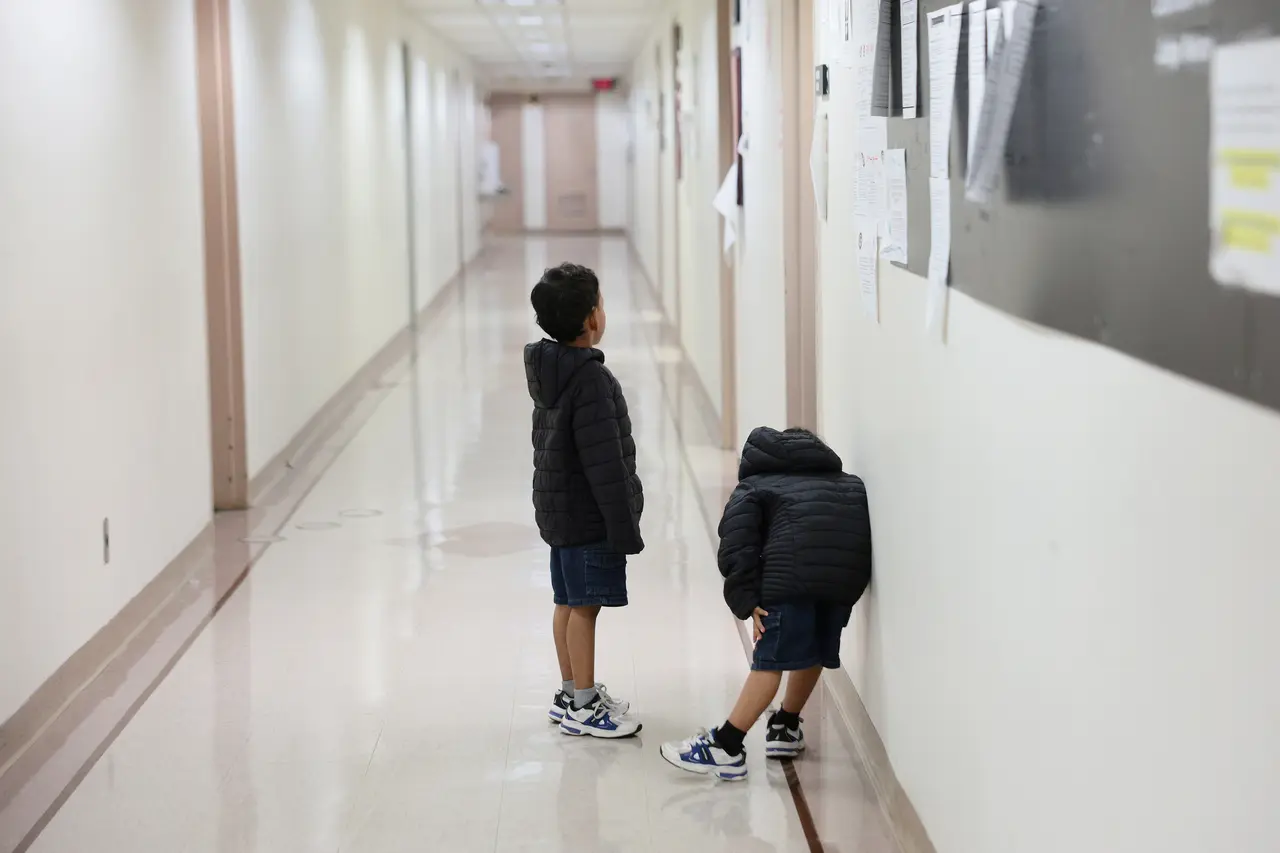
Children wait outside of an immigration court at the Jacob K. Javits Federal Building on July 31, 2026, in New York City.
Michael M. Santiago/Getty Images North America/TNS
Earlier this fall, sitting in the back of an immigration courtroom in Hyattsville, Maryland, I watched an immigration judge convince an elderly man that he didn’t need an attorney.
The man was facing the threat of deportation to a country where he said he’d experienced attempts on his life in the past. His voice was quiet, but he repeatedly and clearly asked for time to find an attorney, which the judge had previously said was his right.
But now, no matter how many times the man asked, the judge told him not to bother with an attorney for his next hearing. Eventually, the man gave up and agreed, likely to his detriment.
Over the last year, in my role as a immigration court observer through a program with the American Bar Association and the Acacia Center for Justice, I have witnessed many such affronts to judicial fairness and due process. The Trump administration has ordered immigration judges to cut the time migrants have to find an attorney to just 10 days, as part of a broad effort to speed up deportations.
While immigration judges sit on a bench and wear robes, they are not members of the independent judiciary. They are not confirmed by the Senate or elected at the local level. Nor are their jobs protected from political interference.
Immigration judges reside within the executive branch, are appointed by the attorney general, and can be fired if the administration does not like their rulings. And in fact, during the most recent fiscal year, 38% of all immigration judges in the U.S. were fired or resigned, setting the stage for President Donald Trump to pack the benches with his own picks. In response, the national approval rate for asylum cases has fallen from more than 50% to less than 6% since the term of former President Joe Biden.
Even worse, I’ve watched “detained respondents” — immigrants held in Immigration and Customs Enforcement camps across the country — give up their cases altogether and self-deport before ever getting an evidentiary hearing, just to get out of the camps. So far in Trump’s second term, these facilities have detained more than 610,000 people, or nearly 2% of the U.S. population.
Immigration offenses are civil cases, meaning that people are being held in detention although they have not been accused of any crime. I’ve seen detainees break down while telling the judge they don’t understand why they’ve been locked up for months with no hearing, no attorney and no bail.
As an observer, I’m only allowed to see initial hearings for adults. But behind closed doors, children as young as three years old are being forced to represent themselves. This practice has occurred under presidents of both political parties, but the Trump administration cut funding for migrant children’s attorneys, leading to as many as 25,000 children losing their lawyers.
Add in the U.S. Supreme Court’s September 2025 ruling allowing immigration enforcement to stop and detain individuals on the basis of their race, and it is clear the system is not designed to ensure justice. It’s designed to cleanse America of a population that Trump has said is “poisoning the blood of our country.”
That should terrify us all, and it should spur immediate action.
While much of the national outrage has understandably been focused on U.S. Immigration and Customs Enforcement itself, we should also commit to a top-to-bottom reform of the immigration court system.
That starts with establishing an independent judiciary for immigration proceedings, protecting immigration judges from political hiring and firing and ensuring that everyone appearing before an immigration judge is afforded an attorney. Congress should also define reasons for migrants to be detained before their hearings, eliminating the broad leeway that has allowed ICE to lock up hundreds of thousands of people.
And of course, the Supreme Court should immediately overturn Justice Brett Kavanaugh’s career-defining decision to legalize racial profiling in immigration enforcement — a decision he has already sheepishly tried to walk back in footnotes to subsequent decisions.
These types of basic reforms would afford Americans the minimum level of due process currently lacking in immigration courts across the country. Because what is happening today is not justice, it’s a travesty.
____
Tom Meyer is an immigration court observer with Acacia Justice and a communications professional living in Washington, D.C. This column was produced for Progressive Perspectives, a project of The Progressive magazine, and distributed by Tribune News Service.
_____