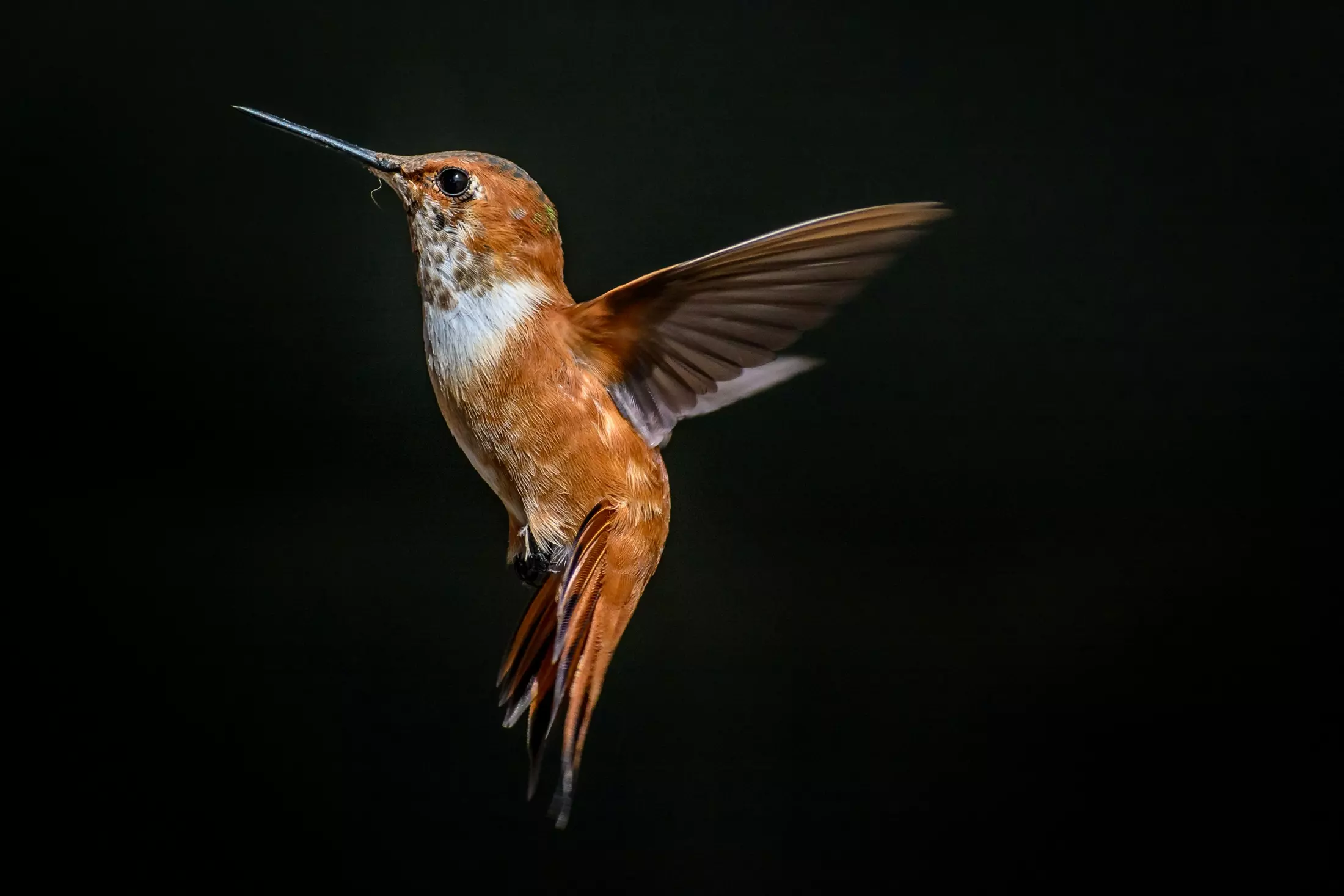

Hummingbirds are fascinating. Tiny but mighty—with wings that beat astonishingly fast—they’re the only birds that can truly hover, plus fly backwards and sideways.
Swipe through to learn about 7 species of hummingbirds found in the U.S.
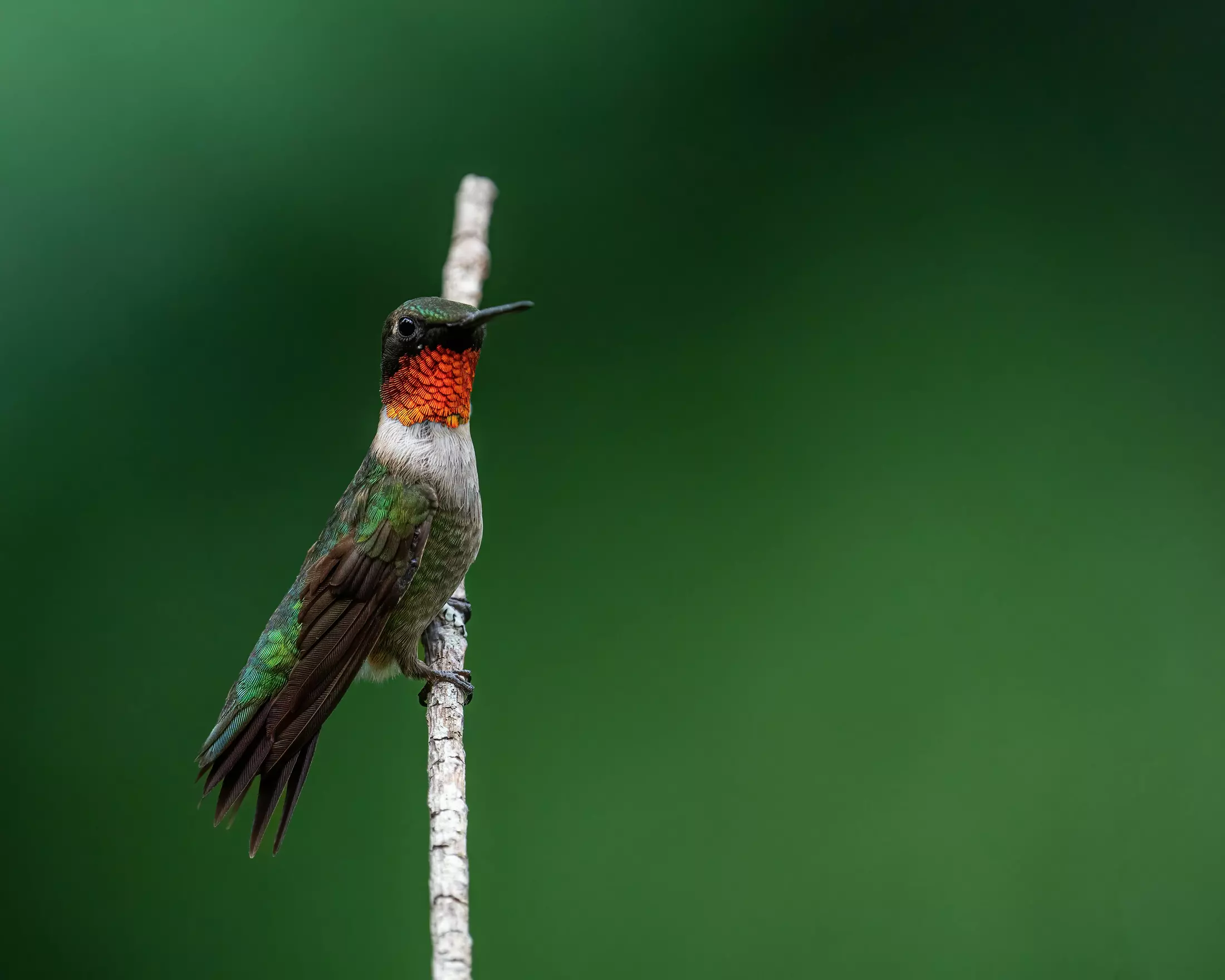
The ruby-throated hummingbird is a popular backyard visitor in the summertime, partly due to its namesake jewel-like throat, called a gorget. These uniquely stunning feathers are found only on males to aid in courtship. They look especially brilliant when reflecting sunlight, but may appear black from the wrong angle or in poor lighting.
This close relative of the ruby-throated hummingbird breeds in the western U.S (and partially into Mexico and Canada). Like many hummingbirds, this small species will readily come to hummingbird feeders filled with a solution made with 1 part white sugar dissolved in 4 parts water. Be wary of warm weather, as sugar water left outside in the heat for multiple days can ferment and grow bacteria.
Another gem of the West Coast and Southwest, male Anna’s hummingbirds are known for showing off their pink and green plumage with impressive mating displays. These medium-sized hummingbirds climb up to 130 feet in the air before stooping into a U-shaped dive, all the while making a unique chirping sound with their tail feathers in hopes of wooing an onlooking female. If she’s sufficiently impressed, the effort pays off for the lucky male.
The stunning amethyst-colored gorget on males, extending down to the bird’s flanks, makes spotting this hummingbird a real treat, but doing so requires a trip to the arid scrub and desert of the American Southwest or western Mexico. Hummingbirds are unique in many ways, including their incredible ability to hover in place and even fly backwards, accomplished by fluttering their wings in a figure-eight pattern up to 80 times per second!
There are 350+ species of hummingbirds in the world, all of which are restricted to the Americas, but only rufous hummingbirds (not to be confused with the very similar Allen’s Hummingbird!) breed as far north as Alaska. Those further south hoping to see this declining bird can spot them wintering along the Gulf Coast or during migration. Rufous hummingbirds are known for their aggression, often chasing away other hummers from potential food sources.
Unlike the uniformly patterned gorgets on other American species, male calliope hummingbirds sport a brilliant array of purplish-pink stripes emanating from their throats. These birds are the smallest in the United States, measuring no more than 9 centimeters in length and weighing about as much as a penny. Planting native, nectar-producing flowers is a great way to attract them within their northwestern U.S. breeding range.
Photography: Dan Pancamo, CC BY-SA 2.0, via Wikimedia Commons
These hummingbirds are unlikely to be mistaken for any other American species, thanks to their red bill, namesake pale orange belly, and larger relative size. Unlike most migratory birds, some buff-bellied hummingbirds nest in Mexico and southern Texas before moving north to spend the winter in parts of the U.S. Gulf Coast. Hummingbirds like this one must go into torpor each night to conserve energy, during which their heart rate can drop from over a thousand beats per second to under 100.