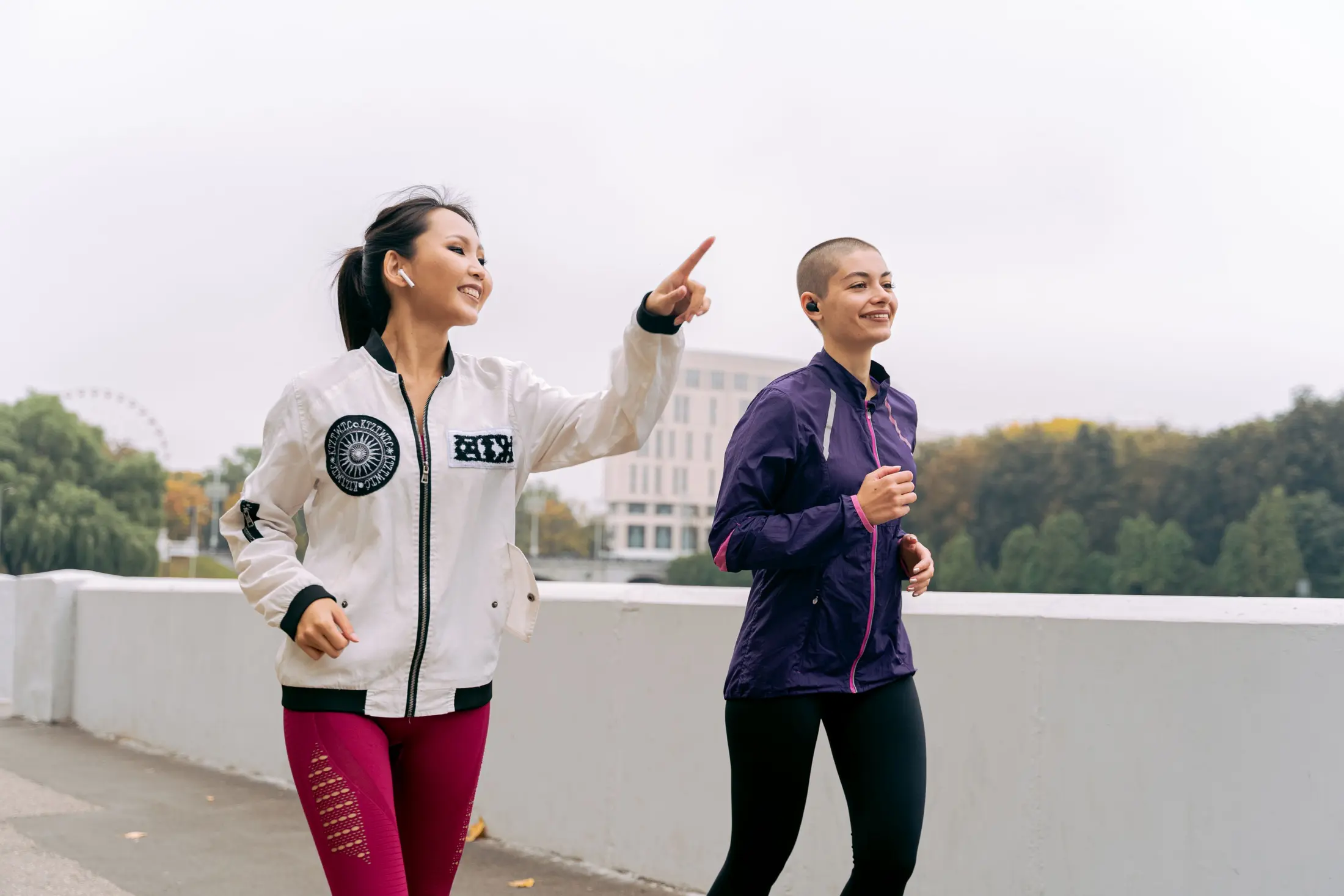

Trips to the bar after work might be a relic of the past if run clubs continue to be as popular as they have been recently. Many people prioritizing their wellness have chosen to fill that after work time slot with some good old fashioned exercise. Swipe ahead to find out why folks are taking to this healthy social activity.

According to Strada’s 2025 Year In Sport report, the number of new clubs started through the app quadruple that year, resulting in a total of over one million. In particular, the number of new running clubs jumped by 3.5x.
There’s usually no cost associated with joining a run club because they’re simple and easy. In addition to scheduled runs, these clubs sometimes partner with local businesses to host larger events as well.
The typical run club follows a routine — a group icebreaker, a warm up, the run, a cooldown period, and that’s the end. The shared experience of making it through a long run, similar to team sports, helps to build strong bonds between people over time.
Most run clubs keep the pace low enough to still be able to engage in conversation. Yes, its exercise, but that doesn’t always mean you have to go at 100%. Members can have a much more meaningful experience when they’re participating in a group, as opposed to simply running alone, but together.
Dating is another reason more people are getting into run clubs. These groups have emerged as a popular type of third space activity where people can meet other organically. These days, there’s a heavy fatigue when it comes to dating apps, and a run club is the perfect place to meet someone with a built-in common interest.
Aside from after work run clubs, many groups participate in sunrise runs, ice baths or even early morning coffee raves. And for the folks who actually replace happy hour with joining a run club, there’s the obvious health benefits of exercising regularly.
Strava also found that over half of Gen Z athletes list social connection as the main reason for joining fitness groups. In fact Gen Z is way more likely then their parents’ generation to state that participating in sports helped them meet like-minded people.
There are run clubs, like Sarasota, Florida’s Run the Ranch, where they welcome folks moving at all paces. Walkers, joggers, competitive runs and even parents with strollers have been known to frequent this club.
Transplants to new cities often use run clubs to engage with people in their new environments. According to co-founder of Portland, Maine run club Runaways, Mari Balow, there were a couple of free running clubs in the area. As of 2026, that number has jumped to 15, with Runaways being one of the largest.