
Mike Rogers slams Abdul El-Sayed over 2012 essay on breast cancer
TAYLOR, Mich. — As U.S. Senate hopeful Mike Rogers walked into a Saturday news conference on healthcare, he shook hands with a family medicine doctor who stood next to his podium. "A real doctor," Rogers said, a pointed jab at his opponent Abdul El-Sayed, who has a doctorate in public health. At the news conference, the former congressman criticized El-Sayed for an essay he wrote in 2012 ...
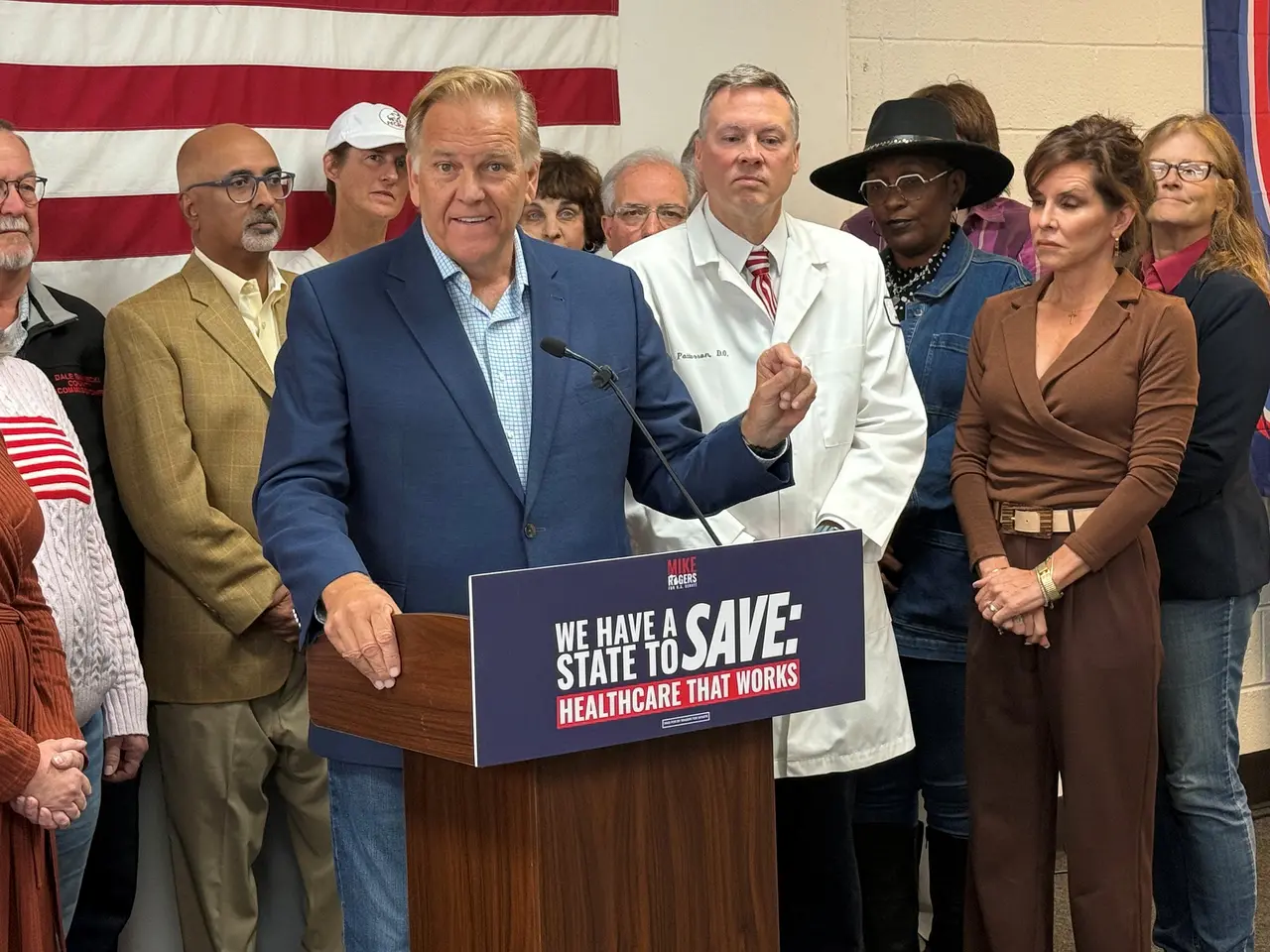
Michigan GOP Senate candidate Mike Rogers stands with family medicine Dr.
Kara Berg/The Detroit News/TNS
TAYLOR, Mich. — As U.S. Senate hopeful Mike Rogers walked into a Saturday news conference on healthcare, he shook hands with a family medicine doctor who stood next to his podium.
"A real doctor," Rogers said, a pointed jab at his opponent Abdul El-Sayed, who has a doctorate in public health.
At the news conference, the former congressman criticized El-Sayed for an essay he wrote in 2012 titled "The Pink Ribbon Lobby and Everyone Else" deriding the National Institutes of Health for how it allocates disease-specific funding based in part based on lobbying dollars. Rogers recently began airing a TV ad on this essay, alleging El-Sayed "blasted breast cancer patient advocates, saying increased funding for breast cancer research was disturbing because it benefited women with social power and privilege. What is wrong with Abdul El-Sayed?"
Rogers said El-Sayed's essay is disparaging to women and is a "slap in the face to tens of thousands of Michigan women who get diagnosed with breast cancer every year."
"I'm starting to believe he lacks the maturity to be a United States senator," Rogers said.
In the 2012 essay, El-Sayed wrote that another article in the American Sociological Review exploring the effects of single-disease interest groups have on setting medical research priorities was "clarifying — if not disturbing." El-Sayed said the article in question didn't even include breast cancer in its analysis, but noted that interest group's influence and that women are twice as likely to die of lung cancer and six times as likely to die of heart disease as breast cancer.
"All of this is not to say that breast cancer isn’t an incredibly important disease, which it is," he wrote. "And given the gendered history of public health, medicine, and research in our country, the social focus on breast cancer is warranted. However, the reallocation of public funds disproportionately to breast cancer is certainly not."
El-Sayed's campaign spokesperson Cole Wozniak said El-Sayed has spent his career working to improve health outcomes by providing preventive screenings and mammograms, while Rogers has voted to defund organizations that help women catch breast cancer early, voted to repeal protections for preexisting conditions and wants to charge a new $50 fee for routine cancer screenings.
"The contrast couldn’t be more stark: Abdul will fight to increase access for women’s healthcare and make it more affordable while Mike Rogers has a long record of fighting to rip away access to care for women across Michigan," Wozniak said in a statement.
Wozniak said El-Sayed "wrote the book on Medicare for All" and as a public health official, "erased tens of millions of dollars in medical debt for tens of thousands of Michiganders and delivered free glasses to thousands of kids."
For most of his Saturday news conference, Rogers spoke about how El-Sayed's Medicare for All proposal would give people on private healthcare worse care than they have now, would not give doctors the same compensation for caring for Medicare patients they get now and would expand treatment times.
Under the broad outlines of the plan, a universal system would be created that would cover “all necessary healthcare, including vision, dental, and hearing” for every American without premiums, copays or deductibles broadly accepted by healthcare providers. On "Meet the Press" in August, El-Sayed said the average person would likely pay "a little more in taxes" than they currently do to their insurer, but they would get more coverage.
"I just can't think of a more important issue to the people of Michigan than healthcare, their rising costs and how we get to the bottom of this. The way we don't do it is blow up the system that we have. We fix the system that we have," Rogers said. "So many people will lose in Medicare for All."
Rogers brought up a woman with chronic health issues, GOP state Rep. Jamie Thompson, and family medicine Dr. David Patterson to speak on the effect of El-Sayed's proposed Medicare for All plan.
"Handing out free healthcare without addressing the actual price of healthcare is going to be a recipe for higher taxes and lower outcomes and lower quality," Thompson said. "Socialized medicine does not allow for quality, patient-centered care. As a nurse, I know that."
Patterson, a Flat Rock family medicine physician, said healthcare is about more than handing someone an insurance card. Michigan needs healthcare that puts patients first, strengthens relationships and makes good care affordable and accessible, Patterson said.
"The relationship between a doctor and a patient is at the heart of good healthcare, and that's exactly why I believe Abdul El-Sayed's Medicare for all plan gets healthcare completely wrong," Patterson said. "If the system can't meet the demand, if patients struggle to find a doctor, physicians have less time with each patient, or people wait longer for appointments, you really haven't solved the underlying problem. We simply change who pays the bill."