
Editorial: Stomping on IRS audits is an egregious abuse of power by President Donald Trump
Since 2010, Donald Trump has fought with the Internal Revenue Service over his company’s tax returns in which the tax enforcers were reported to have asserted the Trump Organization improperly claimed massive losses, including from Trump’s Chicago skyscraper. On Tuesday, the Justice Department agreed to end any and all audits of Trump, his business and his family as part of the settlement of a ...
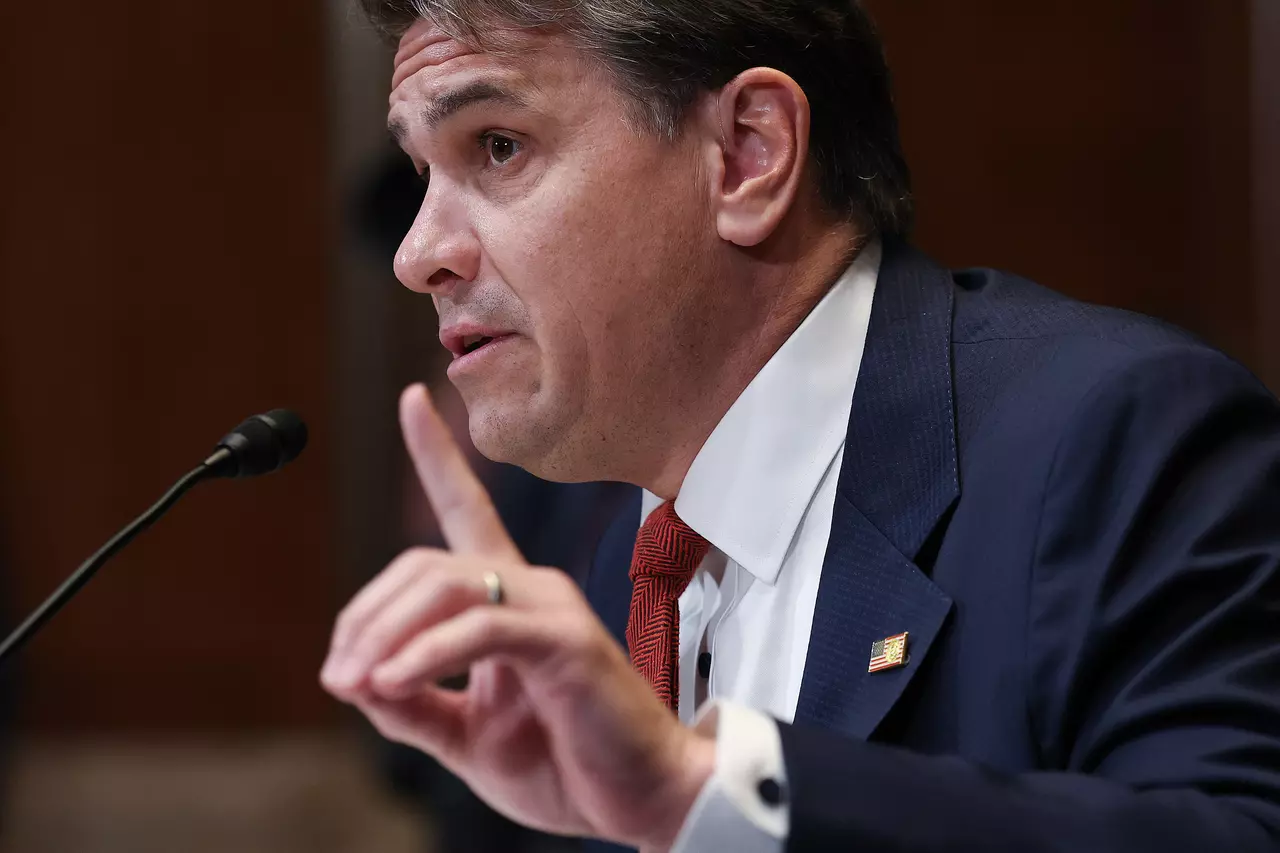
Acting U.S. Attorney General Todd Blanche testifies during a Senate Committee on Appropriations, Subcommittee on Commerce, Justice, Science, and Related Agencies hearing in the Dirksen Senate Office Building on Capitol Hill on May 19, 2026, in Washington, D.C. The hearing was held to examine the Department of Justice's proposed FY2027 budget estimate.
Win McNamee/Getty Images North America/TNS
Since 2010, Donald Trump has fought with the Internal Revenue Service over his company’s tax returns in which the tax enforcers were reported to have asserted the Trump Organization improperly claimed massive losses, including from Trump’s Chicago skyscraper.
On Tuesday, the Justice Department agreed to end any and all audits of Trump, his business and his family as part of the settlement of a $10 billion lawsuit Trump filed against the Internal Revenue Service earlier this year over past tax records that had been leaked to the media by an IRS contractor, who pleaded guilty to the act in 2023 and now is serving a five-year prison sentence.
The settlement, which also creates a $1.8 billion fund to reimburse victims in Trump’s eyes of previous government “lawfare,” is structured in such a way that it doesn’t require court approval. That perhaps was the game plan from the start.
The end result is that Trump as an individual sued an agency of the government he heads, and the Justice Department — now headed by Trump’s former personal lawyer, acting Attorney General Todd Blanche — agreed to these outrageous concessions rather than contest what legal experts said was a defensible case. The IRS, the Justice Department and the office of the president of the United States all are supposed to represent the American people. But we see nothing but Trump’s personal and corporate interests served in this brazen arrangement.
Americans sadly have become inured to the many norms Trump has shattered during his time in the Oval Office. So it’s fair to ask: What’s so egregious about this latest break with ordinary presidential behavior?
So let’s plainly state precisely what the Department of Justice — the part of the executive branch that, under both Republicans and Democrats, in the past has declared its independence from the White House in the use of its immense powers — has done here.
The DOJ has agreed to set aside $1.8 billion, to be overseen by five Blanche appointees, to dole out to those Trump has deemed maltreated by the government for partisan reasons. These apparently will include people prosecuted in the violent Jan. 6 attacks. All of those, of course, already have been pardoned by Trump. Now, they also may be in line for substantial payments.
There has been no congressional appropriation of this money; the source of these payments is a long-standing federal fund to pay settlements and judgments to those who sue the government. And there is no judicial review. Yet to be seen is how much disclosure will be provided as to who gets paid and how much, as well as the “qualifications” claimants must show.
And, oh yes, the new “anti-weaponization” fund will accept no new claims after Dec. 1, 2028, less than two months before Trump is scheduled to leave office.
Is this legal? It shouldn’t be.
A fund to pay off Trump’s allies on its face has nothing to do with Trump’s grievances against the IRS.
Speaking to the Wall Street Journal, Peter Keisler, acting attorney general in George W. Bush’s administration, called the lawsuit a “pretext to create a mechanism for doing something unlawful, which is to provide payments from the federal treasury to private people at the president’s discretion.”
Sounds about right to us.
Two local police officers who were attacked on Jan. 6 have filed a suit to block creation of the fund. Let’s hope the lawsuit gets the fund the court scrutiny it deserves.
Yet more objectionable is the settlement provision giving Trump and his family total immunity from penalties for any improper past tax avoidance.
In the era before becoming president, Trump made no secret of his willingness to push the boundaries in terms of his tax returns. Running for office the first time in 2016, Trump was confronted by his opponent Hillary Clinton about how he had paid nothing in federal taxes over a few years in which he’d had to make his returns public.
“That makes me smart,” Trump retorted.
There are plenty of Americans who would agreed, believing that successful business people generally seek to use whatever legal means they can to pay as little as possible in income taxes. No problem there.
The corollary to that position, however, is that when you make a whole lot of money and also take an aggressive posture on minimizing your taxes, you better be prepared to face IRS scrutiny.
The IRS in past years challenged Trump’s claim of a $72.9 million tax refund, a chunk of which appeared to stem from 2000s-era losses on his notorious Chicago tower; an adverse ruling could have cost Trump more than $100 million, according to New York Times reporting. A subsequent New York Times-ProPublica investigation found that the IRS suspected Trump of declaring losses on Trump Tower Chicago twice, a major no-no.
Whether or not the IRS actively was auditing Trump prior to this settlement remains unclear. But in 2024, Eric Trump told the New York Times the agency was auditing Trump. With his personal lawyer now running the Justice Department, those audits appear over. For good.
All Americans, regardless of political belief, should be able to agree that a president using the power of his office to force the taxman off his back is a terrible abuse thereof.
___