
This Founder Went From ‘Kitchen Chemist’ to 9-Figure Business Owner Whose Products Are Sold at Target, Ulta and CVS
Janell Stephens started her career as a speech language pathologist before tapping into her passion for haircare.
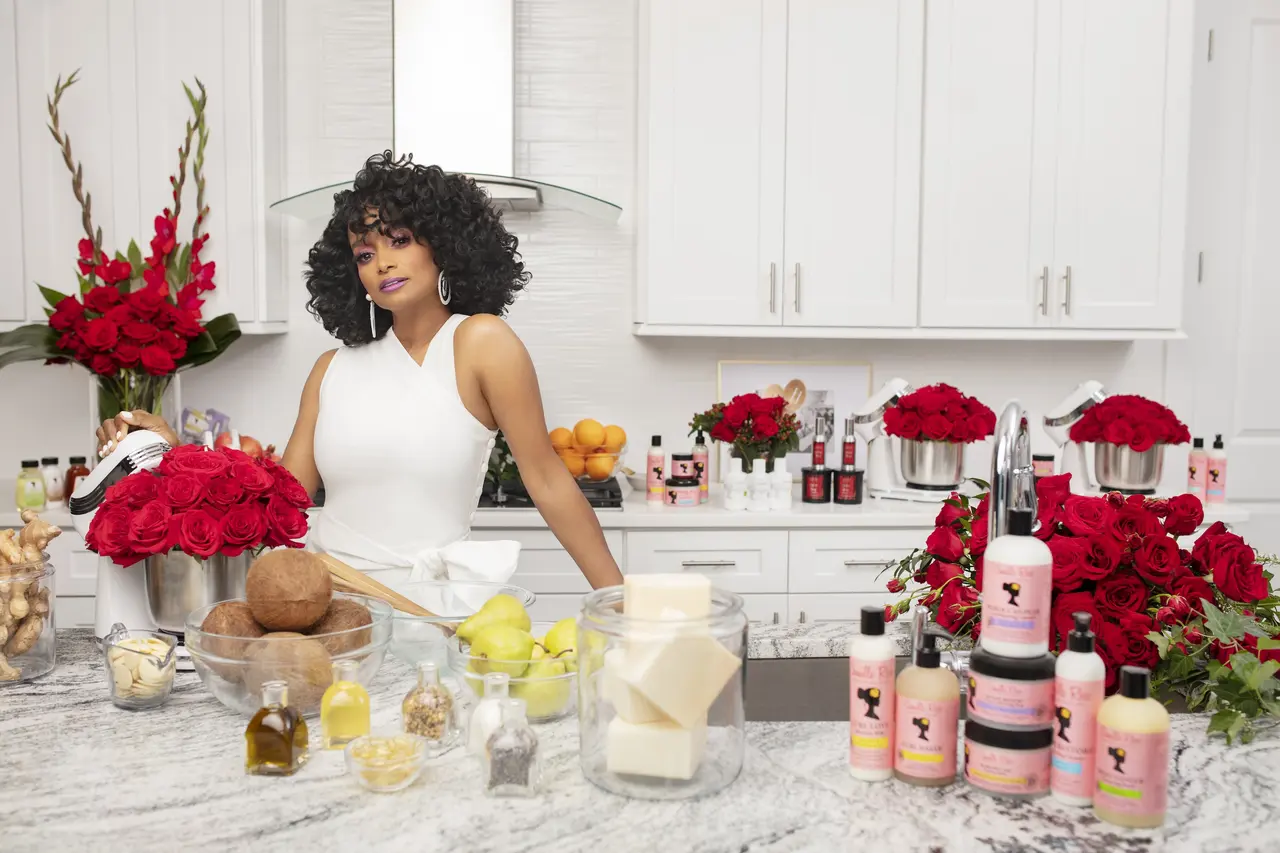
Janell Stephens. Credit: Camille Rose
Camille Rose
Key Takeaways Janell Stephens was a speech-language pathologist and ran a home-health agency before entering the haircare space. She turned a personal need for effective hair products into Camille Rose, starting with homemade formulas in her kitchen. A Target buyer discovered Camille Rose at a hair show in 2012, leading to an initial launch in 100 Target stores.
Janell Stephens started haircare brand Camille Rose in her kitchen in 2011 to create hair products that worked for her family. Her experimentation became the foundation for a brand now found in major retailers including Target, Ulta and CVS.
“I call myself a kitchen chemist,” Stephens, founder and CEO of Camille Rose, said in a new interview with Entrepreneur. “I was just in the kitchen making a plethora of products at the time.”
Stephens built the company gradually, moving from homemade products to working with chemists, manufacturers, marketers, warehouse staff and a broader team of 35 employees. This year, the company is on track for 9-figure revenue, and projects continued double-digit growth in 2027.
The brand had a breakout moment earlier this year when reality TV star Kim Kardashian used Camille Rose products to style her 8-year-old daughter Chicago’s hair.
Janell Stephens. Credit: Camille Rose
A career pivot
Stephens is a speech language pathologist by training. Before starting Camille Rose, she worked with stroke survivors and people with swallowing disorders, traumatic brain injuries and speech disorders. After graduate school, she opened a home-health agency and ran it for about eight years.
Then came a career shift.
While her husband completed a medical fellowship in hematology and oncology, Stephens sold her clinic and decided to pursue another long-standing interest: formulating hair and skin products. She began studying under an herbalist for about a year, learning about the properties of oils, herbs and butters, and how different ingredients could perform on hair and skin.
“He taught me about herbs,” she says. “He taught me about the benefits of oils, how to make an emollient, the benefits of different butters and how they would affect or how they would apply to the hair and skin.”
Building Camille Rose
Camille Rose grew from a personal problem. Stephens wanted products that delivered visible results for her own hair and for her children’s hair. At the time, she says, she was paying close attention to what was listed on product labels and was dissatisfied with what she found in the market.
“My kids had needs; I had needs,” Stephens says. “I needed products that were showing a difference in my hair and in their hair, and I was also [reading the labels of] everything that I was using back then.”
Rather than settle for existing options, she began buying ingredients and studying formulations. “From that point on, I became obsessed with it,” Stephens says. “I just found it so fascinating, finding, ordering different ingredients, trying it out. If it works, yes, I’ll keep it. If it doesn’t, throw it out, start over.”
The first product she jarred, labeled and sold was Camille Rose’s Algae Renew Deep Conditioner, made with blue-green algae and vitamins. It remains one of the company’s bestsellers. Another early hit, Curl Love Moisture Milk, remains a central product for the brand.
Curl Love Collection. Credit: Camille Rose
Stephens refers to the brand’s “core four” as Cocoa Nibs & Honey Growth Serum, Curl Love Moisture Milk, Algae Renew Deep Conditioner and Almond Jai Twisting Butter. But she said she often recommends the deep conditioner as a place for customers to start.
Her philosophy
The products also established a signature Camille Rose philosophy: Using food-inspired ingredients and drawing connections between nutrition and personal care.
“If it nourishes your body inside, my philosophy and what I live by is that it should have those same benefits to the outside of the body,” she says.
Sea moss is one example. Stephens noted that consumers use it as a nutritional ingredient because of its mineral content, and she sees a similar potential for products applied externally.
However, she is quick to distinguish her approach from an overly simplistic “all-natural” marketing claim. “We’re not all-natural,” Stephens says. “We never claim all-natural, and I don’t think anybody should.”
Camille Rose uses natural and naturally derived ingredients, but it also uses preservatives. That distinction matters, particularly in beauty, where a product must maintain stability, safety and performance over time. “You also cannot make one product solely on food-grade ingredients,” Stephens says. “The rest are all ingredients that are science-backed.”
Turning a kitchen formula into a retail business
Stephens started making products as a hobby and gave them away to friends and family for free in exchange for feedback. When they kept coming back for more, she decided to put up a website and start taking orders. She used feedback and repeat requests to establish demand.
Stephens launched Camille Rose online in 2011. Orders followed, with growth driven by word-of-mouth, Facebook and customer results. As the business began gaining traction online, Stephens recognized that she needed outside support.
She contacted another beauty brand whose products she had used and asked if she could work with its chemist. The chemist agreed to work with her on a contract basis and helped transform homemade recipes into scalable formulations.
“It went from a pinch of this and a dash of that to real percentages,” Stephens says.
That kind of precision became increasingly important as Camille Rose moved beyond its kitchen origins. Stephens said it took roughly a year and a half to find the manufacturer and chemist relationship that fit the company’s needs and values.
The company’s first major retail breakthrough came at a hair show in 2012, where Stephens set up a booth to introduce Camille Rose to prospective customers and industry contacts. A buyer stopped by, and Stephens was initially unaware which retailer he represented. They spoke for about an hour about the brand’s origins, her reasons for starting it and the purpose behind individual products.
“At the end of that hour, he pulled out his card and he said, ‘I am a buyer from Target. I would love to fly you up,’” Stephens recalls.
The brand launched in100 Target stores. Even at that scale, the orders were demanding. “My first orders were thousands per product, so I was nonstop,” Stephens says.
She called on family and friends to help produce the orders. In the early days, she handled nearly every other task, too: customer service, shipping, packing, social media and operations. “I was my everything,” she says.
Guava Collection. Credit: Camille Rose
Expanding while still staying involved
As Camille Rose expanded, Stephens moved its operations from her home to a small warehouse, hired an additional person to help formulate products and gradually built a more conventional organization. Today, the business includes employees in marketing, social media, digital, creative, operations, customer service and warehousing.
However, Stephens has remained closely involved in product development. “I’m still a product developer for Camille Rose,” she says. “Of course, I have a lab and a team of chemists and researchers that’s working with me.”
The work is more structured now than it was during the company’s kitchen phase. Developing a new product can take months to a year, Stephens says. She begins with a concept and works with her team to develop, evaluate and refine it.
Stephens tries the products herself and also works with stylists and hair models. The company tests products across different curl types and textures and compares them against established products in the market.
That can mean going back to the lab to improve a formula’s shine, frizz control or overall performance. The goal is to ensure each product meets the brand’s standard.
Maintaining that standard was especially important when Camille Rose began scaling production. “I needed to make sure that my manufacturer and the chemist that I’m working with honored our formulas,” she says.
How she grew the brand
Camille Rose’s growth has depended on making the brand visible. Stephens says the company leans on social media, influencers and celebrity relationships.
TikTok is a priority for the company. Stephens’s core advice for founders thinking about social media marketing is to simply start.
“Turn the camera on and start talking about your product,” she says. “You may have five people listening; you may have 500 people listening, but keep at it. Turn the camera on.”
For a founder launching a haircare or other product, Stephens said the first 90 days should focus on brand identity, awareness and consistent outreach. That includes developing a strong brand guide, becoming the brand’s own first influencer and using both organic and paid partnerships to build an audience.
She also advocates grassroots marketing: handing out samples at parks and festivals, participating in local markets and speaking directly with shoppers at neighborhood stores.
Stephens urges founders to act consistently, even when the next step appears small.
“If you have an idea, don’t just let it sit out there and don’t just talk about it,” she says. “Write out a plan to do something and move forward.”
Subscribe to the Entrepreneur Daily newsletter to get the news and resources you need today to help you build your business better.