

Keeping your family safe is always top of mind, right? You insist on seatbelts and you keep the batteries fresh in your smoke detectors. But do you make sure the air inside your home is safe to breathe?
Swipe through to learn why you should have an air quality monitor in your home and what it will keep tabs on for you.
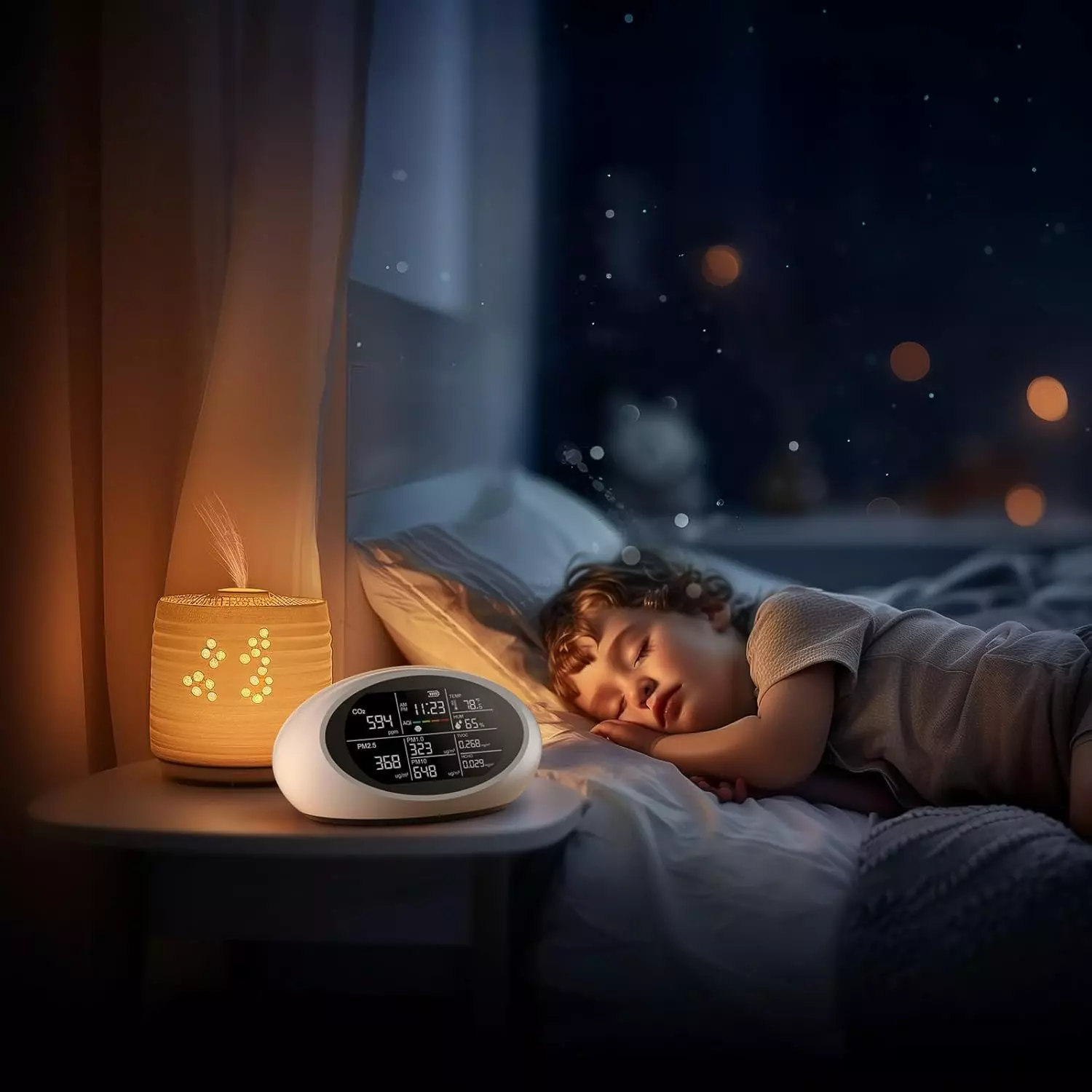
Poor air quality caused by any of a number of pollutants can cause family members to experience fatigue, headaches and respiratory illnesses. Some can cause long-term health problems, and other, death.
Photography: Amazon
If a monitor alerts you to the presence of a dangerous substance, you can take steps to clear the air in your home. You might need to ventilate a particular room or install an air purifier.
Photography: Levoit
Clearing the space short-term is important, but discovering the source of the pollutant and fixing it is absolutely critical. An air quality monitor can help detect what the cause is and where it is coming from.
An air quality monitor can detect radon. A gas that comes from the natural decay of uranium in soil, radon can make its way up through the layers of the earth and into your home, where it becomes trapped. Radon exposure is the second most-common cause of lung cancer, behind smoking.
Photography: Pinterest/Ágústa Amalía
This colorless and odorless gas is the result of incomplete combustion when fuel is burned. It can be emitted by any improperly maintained and vented appliance, including gas stoves, furnaces, water heaters, fireplaces, clothes dryers and gas ovens. Carbon monoxide poisoning causes oxygen deprivation, leading to headache, dizziness, confusion, loss of consciousness and even death
Some air quality monitors can detect formaldehyde, though the colorless gas has a strong pickle-like odor that might signal its presence, too. Used in manufacturing, formaldehyde is found in building materials and in furniture. High concentrations can cause airway irritation, bronchospasm and pulmonary edema.
An air quality monitor can detect unhealthy levels of particulate matter, such as dust, pollen and smoke. Folks with asthma or other respiratory conditions might be extra sensitive to dirty air.