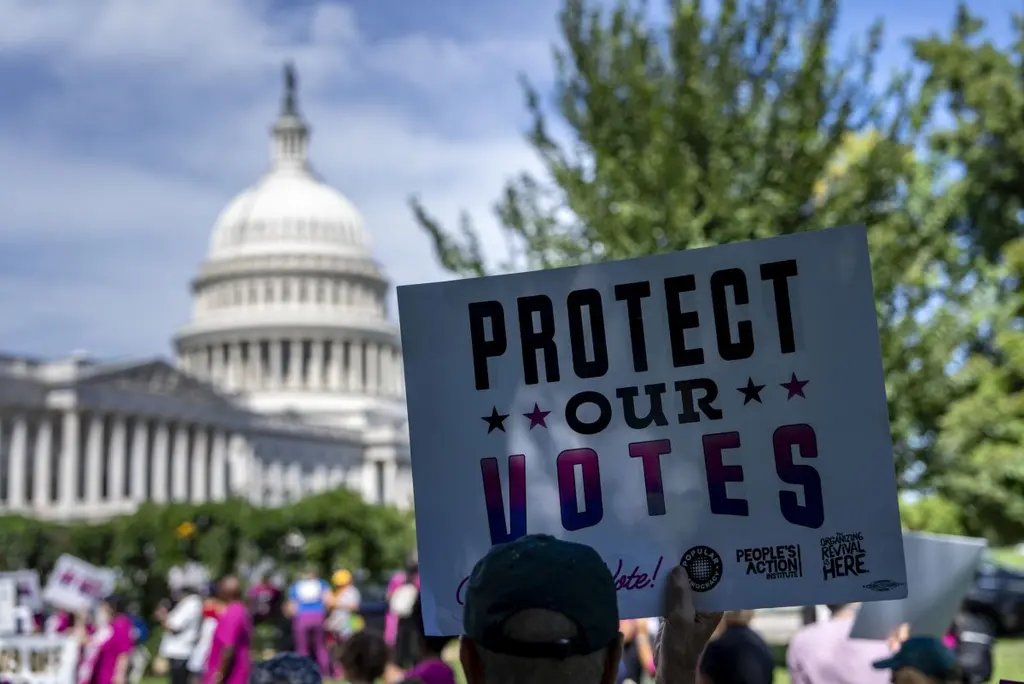

Supreme Court allows Trump administration to use SAVE voter database
The U.S. Supreme Court on Friday allowed the Trump administration to use an expanded federal database with citizenship information.
Sept. 25 (UPI) -- The U.S. Supreme Court on Friday allowed the Trump administration to use an expanded federal database with citizenship information.
The court was divided 6-3 on ideological lines with conservatives siding with the administration. It approved an emergency request by President Donald Trump's administration to use the database. Lower courts had blocked the government from using it.
Critics say the database is unreliable and could cause U.S. citizens to get kicked off voter rolls.
The court did note in the ruling that the National Voter Registration Act bans the broad purging of voter rolls within 90 days of an election, which "limits the potential impact" of the decision.
"Today's decision is profoundly disappointing, as it puts millions of Americans at risk of being unlawfully targeted by the administration's unreliable voter purge database weeks before the midterm elections," the League of Women Voters said in a statement. "However, this case is not over. The D.C. district court ruled that the expanded SAVE program violated multiple laws. We will be doing everything in our power to protect Americans' voting and privacy rights by ensuring that the district court decision stands."
The issue began with an executive order Trump signed in March 2025 requiring the Department of Homeland Security and other agencies to make federal databases of citizenship information available to state elections directors.
Other parts of the order remain in legal limbo, such as the demand that states turn over their voter rolls to the federal government. The government sued 30 states to demand their full voter rolls, but it has lost 25 of those cases. A case against Oklahoma was dropped when it agreed to give the government its list.
The League of Women Voters and other groups sued to block the use of the SAVE database, saying that it's inaccurate. It also argued that using the Social Security numbers violates several laws.
Justice Ketanji Brown Jackson wrote the dissent.
"The harm caused by burdening or disenfranchising even a few lawful voters outweighs the nonexistent harm that the Government experiences when it is prevented from taking an action that it likely lacks the authority to take," she said.
Jason Snead, executive director of the Honest Elections Project, said in a statement that the decision, "just makes it easier for states to get federal citizenship data to help them clean up voter rolls."