
Feds push Liberia deportation for Abrego Garcia; defense prepares response
The Trump administration says it is prepared to deport Kilmar Abrego Garcia to Liberia within days. Now his attorneys have two weeks to argue why that should not happen before a federal judge decides. Under a court-ordered schedule, Abrego Garcia’s legal team was given a two-week window Monday to respond after the administration laid out its case Friday as to why orders blocking his detention ...
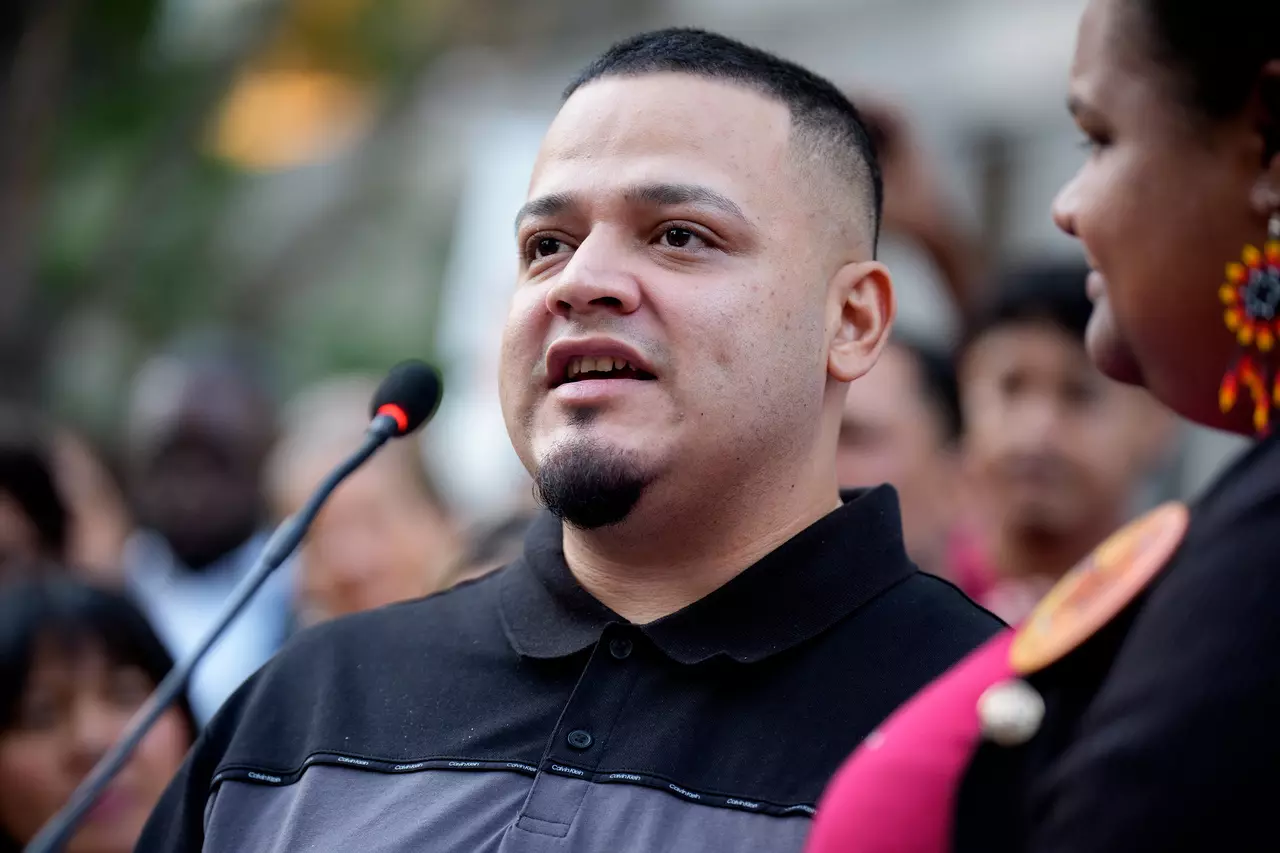
Kilmar Abrego Garcia speaks during a rally and prayer vigil for him before he enters a U.S. Immigration and Customs Enforcement field office on Aug. 25, 2025, in Baltimore, Maryland.
Andrew Harnik/Getty Images North America/TNS
The Trump administration says it is prepared to deport Kilmar Abrego Garcia to Liberia within days. Now his attorneys have two weeks to argue why that should not happen before a federal judge decides.
Under a court-ordered schedule, Abrego Garcia’s legal team was given a two-week window Monday to respond after the administration laid out its case Friday as to why orders blocking his detention and removal should be lifted.
U.S. District Judge Paula Xinis will ultimately decide whether to dissolve those injunctions — a move the government says would allow deportation to proceed almost immediately.
In a March 20 filing, Justice Department lawyers argued they are “ready, willing, and able” to remove Abrego Garcia to Liberia and could do so “in a matter of days” if the court lifts its restrictions.
But Xinis has previously been skeptical. In a February ruling, she found the government had not shown “good reason to believe” Abrego Garcia would be deported to a third country in the reasonably foreseeable future, citing a lack of firm assurances from any receiving nation. She also noted the need for guarantees he would not be sent back to El Salvador, where an immigration judge barred his removal in 2019 over fears of gang-related persecution.
Laying out the current dispute
The dispute now before the court centers on whether Liberia is a viable destination — and whether Abrego Garcia can instead choose to be sent to Costa Rica, which his attorneys say has agreed to accept him.
Acting Immigration and Customs Enforcement (ICE) Director Todd Lyons told the court the U.S. has been negotiating with Liberia and warned that abandoning those efforts could harm diplomatic credibility. He rejected Abrego Garcia’s request to go to Costa Rica, arguing the law does not allow immigrants to designate a country of removal years after their cases have concluded.
“Neither the statute nor the regulations permit an alien to designate a country of removal beyond the initial opportunity granted in removal proceedings,” Lyons wrote.
Abrego Garcia’s attorneys argue the government is ignoring a viable option and recycling arguments the court has already rejected. They say the administration still has not identified a lawful, realistic path to remove him.
“They haven’t provided any substantively new argument or any substantively new evidence that actually moved the needle in any way,” said Abrego Garcia’s lawyer, Simon Sandoval-Moshenberg. “I don’t think the government can come up with any good argument for why they get to change the country and designate a new country seven years later, and yet somehow he doesn’t.”
In the 2019 case, the only country the federal government identified as a place to send Abrego Garcia was El Salvador. Why can they decide to send him to Liberia now, but say Abrego Garcia can’t change his mind? Sandoval-Moshenberg asked.
“So that’s really just an effort on their part to have their cake and eat it too,” he added.
In her earlier ruling, Xinis criticized the government’s approach, writing that officials had issued “one empty threat after another” to remove him to countries in Africa while failing to pursue Costa Rica.
The administration now says circumstances have changed and that Liberia is available, with court orders standing as the main barrier to removal.
The case has moved through shifting custody and legal rulings over the past year. Court filings show Abrego Garcia was previously deported to El Salvador in 2025 despite a withholding order, later returned to the United States, released in separate criminal proceedings, and then taken into ICE custody again while officials pursued third-country removal.
The Baltimore Sun has reached out for comment to DHS/ICE. This story will be updated if responses are received.
_____