

Innovation comes in many shapes and sizes. Some of it enables us to do things we couldn't before, and other innovations aim to save our planet.
Some of the most exciting innovations at CES fall into the latter category, and here are 8 that could really reduce our environmental impact.
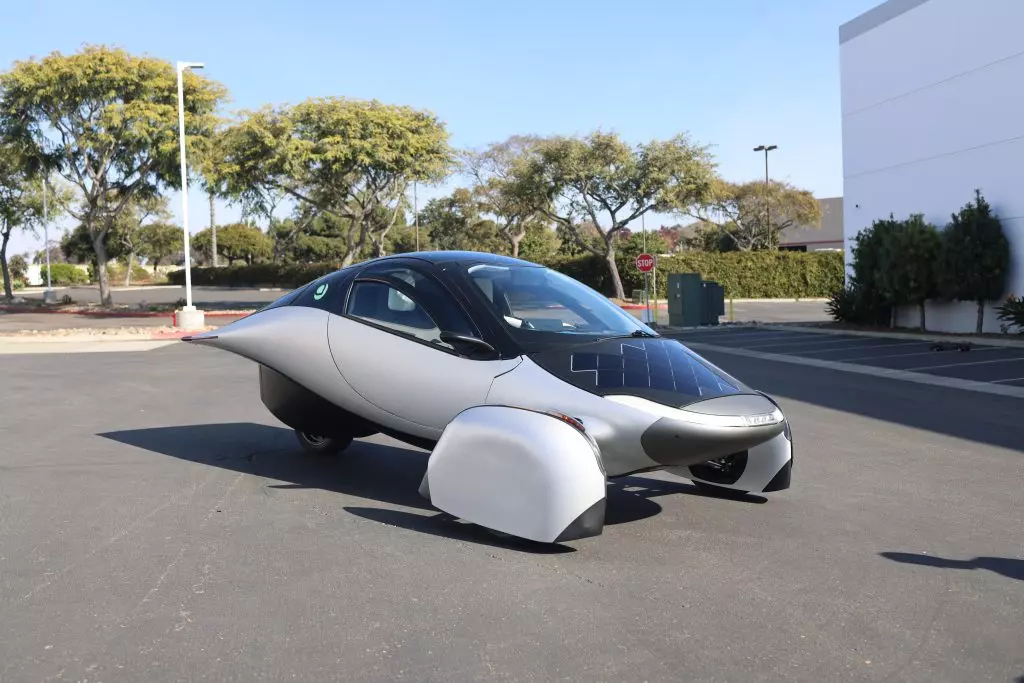
Charging EVs with solar is not exactly a new phenomenon, but what if your car's power draw was so low, that you could charge it with the solar panels on the roof? That's what the Aptera Solar EV Promises.
With a 3-wheeled, aerodynamic profile it is 70% more power efficient than a standard EV. So you can make your daily commute without ever plugging it in.
photography: Aptera
Solar seems like a no-brainer for the uninitiated, but there's actually a hefty installation cost involved. The modifications to the home required also make it unfriendly to renters. Solar brand Zoltux aims to resolve this issue.
With its 800W Balcony Solar Kit, you can set it up on a stand, and plug it into a standard outlet of your home. It will begin feeding energy to your household without a complicated setup.
photography: Zoltux
I don't know if you know this, but modern batteries are bad for the environment.
Luckily, an innovation that could fix this problem might be right around the corner. Flint, a company out of Singapore, has developed a battery made out of cellulose, which comes from plants and is biodegradable. The technology can currently be shrunk down to the size of a watch strap.
photography: Katie Collins / CNET
I know what you're thinking: why haven't we thought of this before? But we haven't had a good enough panel until recently. Now, thanks to Perovskite, a lightweight and efficient type of panel, Anker has been able to make a beach umbrella that charges at up to 100W.
photography: Anker
Perovskite hasn't just found its way into beach umbrellas, though. Soon, your clothes will charge your phone. Anker is releasing a cloak alongside its umbrella that can charge up to 30W. And they're not the only company throwing their hats in the ring.
Ecoflow is throwing a literal hat into the ring with the EcoFlow Power Hat. If you've ever wanted to wear a phone charger on your head, soon you'll have a chance. And it will only cost you $129.
photography: EcoFlow
Most of the EVs on the market today are modeled after their gas-guzzling older siblings. It stands to reason that there's probably a better way to design them. Donut Motors thinks so, anyway.
They've developed a lightweight electric motor that's in the wheel of your car. This will theoretically make your car more power-efficient, handle better, and create room for more cargo space. We still have yet to see this tech implemented in an actual car, but it sounds promising.
photography: Donut Labs
Water and farmland are two commodities that we need to survive. And contrary to popular belief, we don't have an inexhaustible supply of them. Fortunately, companies like AirFarm are coming up with solutions that require less of both.
AirFarm is an inflatable indoor farm that uses nutrient-rich vapor to grow plants. This is 90% more water efficient than traditional methods and doesn't require soil. That means if we burn our farmland to a crisp, we won't have to send Matthew McConaughey into space. His daughter will be so happy.
photography: Andrew Watman / Forbes
Batteries have a limited lifespan. But overcharging can reduce them even further. Most laptops and phones now come with battery management technology, but what about the devices that don't?
LEO will keep your battery alive and kicking by managing it on any device. It plugs in between the cable and the device and cuts off power when the battery is charged to the specified amount. Now, even your dumb headphones can charge smart.
photography: Liion Power B.V.