
Dieter Kurtenbach: Play the hits — nostalgia is the best exit strategy for Kerr, Curry’s Warriors
In the cold, clinical world of modern sports, nostalgia is usually treated like a contagious disease. We’re told to asset-manage our heroes and pivot to a soulless, analytical future built by a large language model. But for the Golden State Warriors, nostalgia isn’t a trap; it’s the only sane exit strategy. Because when the alternative is the delusion of a quick fix or the desperation of a ...
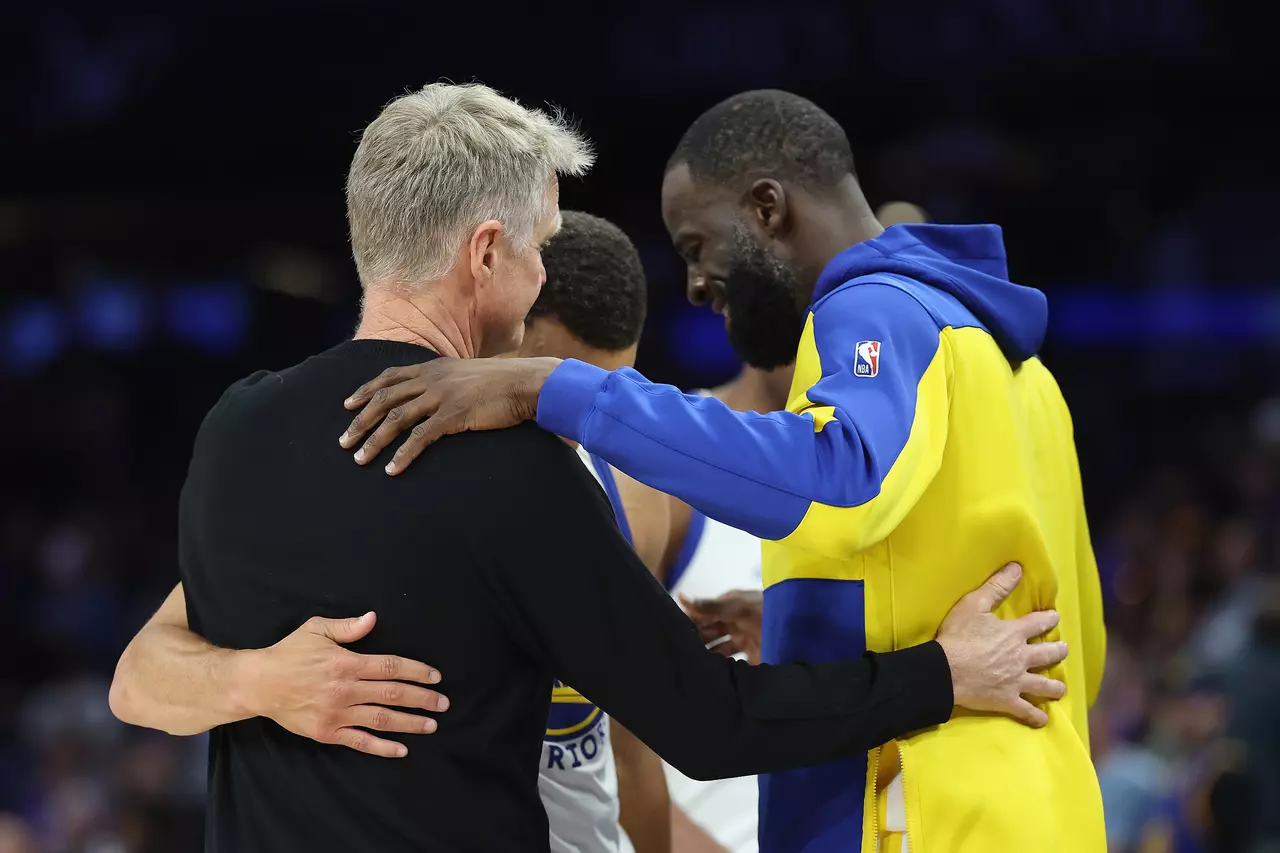
From left, Golden State Warriors head coach Steve Kerr, Stephen Curry and Draymond Green embrace during the final moments of an NBA play-in tournament loss against the Phoenix Suns at Mortgage Matchup Center on April 17, 2026, in Phoenix.
Christian Petersen/Getty Images North America/TNS
In the cold, clinical world of modern sports, nostalgia is usually treated like a contagious disease.
We’re told to asset-manage our heroes and pivot to a soulless, analytical future built by a large language model.
But for the Golden State Warriors, nostalgia isn’t a trap; it’s the only sane exit strategy.
Because when the alternative is the delusion of a quick fix or the desperation of a scorched-earth rebuild, you don’t blow it up. You lean in. You play the hits.
It’s time to stop chasing a future that doesn’t exist and embrace the glorious past that still breathes.
The “Two Timelines” plan didn’t just fail; it went up in flames like so many other overhyped, overfunded Silicon Valley ideas. The bridge to the future turned out to be a pier that ended 20 feet into the Bay.
So, why keep trying to build a walkway to nowhere?
It’s not like the Warriors were ever going to find a better coach than Steve Kerr.
The Dubs’ coach didn’t spend the weeks after the season ended updating his LinkedIn profile looking for “new challenges.” He took a couple of days off, but ultimately kept showing up to work at Chase Center — probably because you don’t walk away from the privilege of coaching Steph Curry.
Running it back always made the most sense. In a league obsessed with the “new,” there’s a quiet, dignified power in the “old,” even if it comes across as unremarkable in the standings.
If the Warriors want to do this right, they should stop acting like they’re one clever trade away from a fifth ring and start acting like a band on a farewell tour.
You don’t go to a Rolling Stones concert to hear the new experimental jazz fusion album; you go to hear “Gimme Shelter.”
Don’t get me wrong, the goal is always to win games. But another title?
That’s not a goal; that’s a hallucination.
It would require a massive, implausible overhaul that the current roster — and the current cap sheet — simply won’t allow.
But winning a playoff series or two? A few weeks of April basketball where the building is shaking? That’s doable. That’s worthwhile.
That might be done by getting the old band back together with a few clever moves on the periphery. We’re talking about players Kerr knows how to get the most out of, even if there’s not as much to get out of them anymore.
Why not bring back Klay Thompson? Sure, the jumper isn’t as pure as it was before the ACL and the Achilles decided to betray him, and his defense has gone from “lockdown” to “polite suggestion.” But he’s Klay. He belongs in a Warriors jersey.
What about Kevon Looney?
And dare I even suggest another swing at Kevin Durant? It’s the ultimate “texting the ex at 2 a.m.” move.
You remember the championships and the unstoppable mid-range jumpers; you conveniently forget the weird Twitter burners and the inevitable “it’s complicated” status.
But if the goal is to be interesting for the next two years, this is the swing. Perhaps this time, he’ll bite. (Probably not, but, again, it doesn’t hurt to ask.)
The downside of leaning into the past is virtually non-existent because the future is a desert anyway. The No. 11 pick in the 2026 NBA draft is unlikely to turn into an elite, franchise-anchoring player. He’s more likely to be a guy who has a very nice six-year run as a rotational piece.
In two years, the Warriors are likely starting from scratch regardless.
By playing the hits now, starting with Kerr, they can ensure that when they finally do hit the “reset” button, they’re starting with a blank slate and a clear conscience.
Kerr, Curry, Draymond and Klay didn’t just play for the Warriors; they built the institution. They turned a laughingstock into a gold standard. It’s their right to see it end as they wish — not in a series of cold-blooded trades for future second-round picks, but together, on the court, until the lights finally go out.
Sometimes, the best way to move forward is to stop running away from who you were.
____