
Michigan Democrats reintroduce 9 controversial bills Whitmer vetoed
LANSING, Mich. — Michigan Senate and House Democrats are reintroducing nine bills that Democratic Gov. Gretchen Whitmer vetoed earlier this month at the end of an 18-month legal fight between the legislative chambers. The bills are unlikely to have much of a chance of moving through the Republican-led House, where the majority has largely voiced opposition to the proposals. But Senate Majority ...
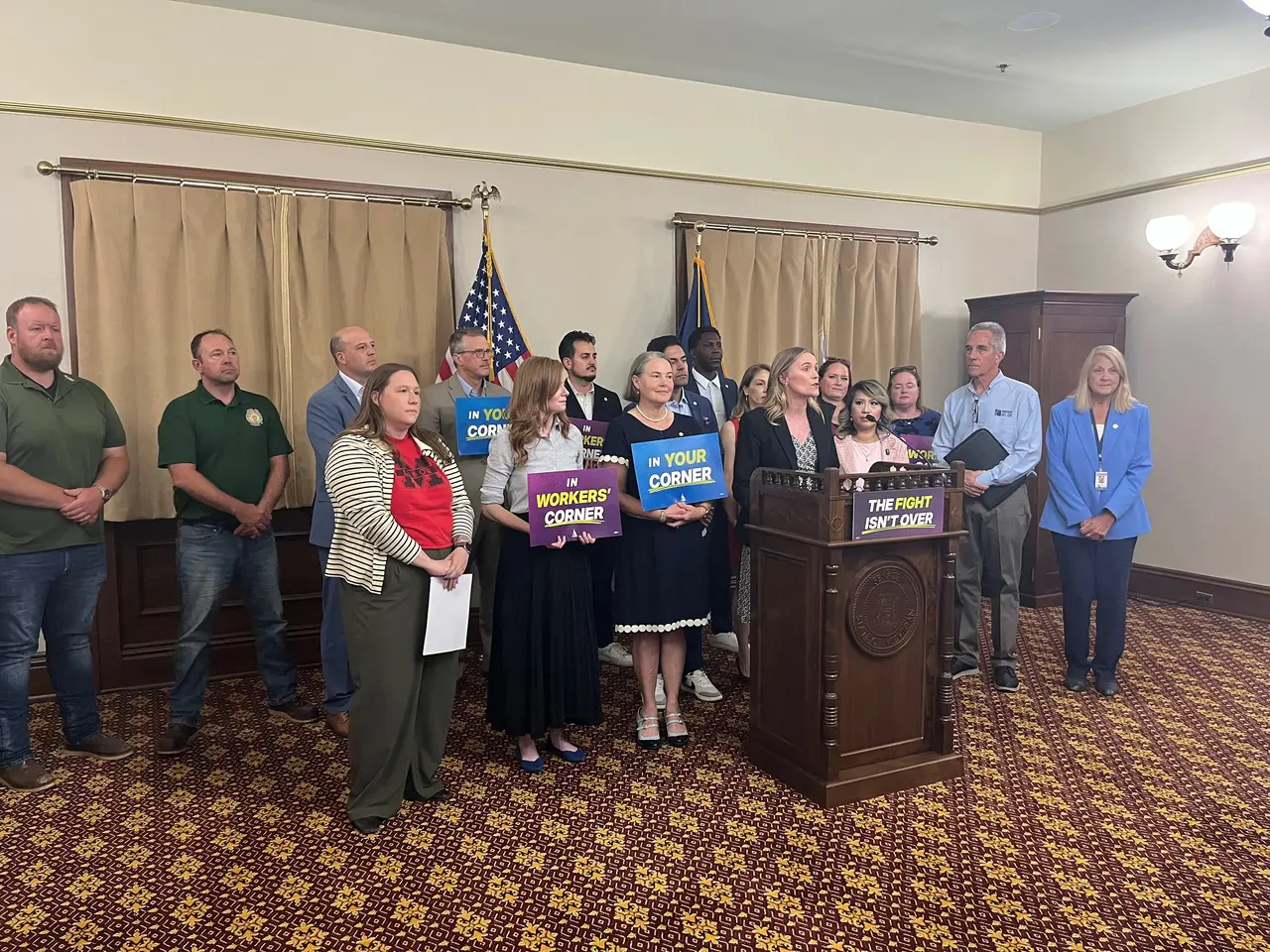
Senate Majority Leader Winnie Brinks, D- Grand Rapids, speaks during a press conference in Lansing on Wednesday, July 29, 2026, on efforts to reintroduce nine bills caught up in litigation for 18 months and then vetoed by Gov.
Beth LeBlanc, The Detroit News/The Detroit News/TNS
LANSING, Mich. — Michigan Senate and House Democrats are reintroducing nine bills that Democratic Gov. Gretchen Whitmer vetoed earlier this month at the end of an 18-month legal fight between the legislative chambers.
The bills are unlikely to have much of a chance of moving through the Republican-led House, where the majority has largely voiced opposition to the proposals. But Senate Majority Leader Winnie Brinks, D-Grand Rapids, said lawmakers are not "backing down" from efforts to pass the legislation.
"We have not given up this fight, and we are not backing down," Brink said. "These bills are quality public policy that will lower costs and improve lives for the dedicated, hard-working Michiganders who make our state so great."
The legislation at issue would allow the Detroit Historical Museum and Charles H. Wright Museum of African American History to pursue tax support on the ballot; create pensions for corrections officers; put limits on debt collection efforts; and increase government contributions to employees' health care. The legislation was being introduced separately in both the House and Senate.
House Speaker Matt Hall, R-Richland Township, said the legislation is unpopular among state police, whose pension system corrections officers would join, and would result in huge increases in health care costs for local governments and agencies.
For the House to take up the bills, Hall said, there would need to be a significant tradeoff.
"They’re going to have to make a deal with me to dramatically lower property taxes; cut more waste, fraud, and abuse in the budget; and we’ll look at the hospital cost review board," Hall said, referring to the House's $5 billion property tax cut proposal and efforts to curb nonprofit hospital costs.
And, Hall noted, even House passage would not guarantee approval by Democratic Gov. Gretchen Whitmer.
"It wasn’t me who vetoed their bills; it was Gretchen Whitmer who vetoed their bills," Hall said. "They’ve got to overcome that too.”
The bills were first passed at the end of the Democratic trifecta in 2024, but the Democratic House failed to present the bills to the governor before Hall and his 58-52 majority took office in January 2025.
Hall halted presentation of the bills to the governor, arguing he had no legal responsibility to complete the job that the Democratic trifecta left unfinished.
Senate Democrats filed suit against the House, arguing the lower chamber had a constitutional duty to present the bills to the governor after they had passed both chambers. The Court of Claims and Court of Appeals sided with Senate Democrats and the appellate panel ordered the lower court to set a date by which the bills must be transferred to the governor.
The Michigan Supreme Court declined to weigh in on the matter and left the Court of Appeals order in place.
Within hours of the high court order, Hall had transferred the bills to Whitmer. The governor vetoed all nine bills, arguing the passage of 18 months made it difficult to comply with implementation dates and fiscal requirements in the legislation.
"Had the House presented these bills to me in a timely manner, as the Constitution requires, today would have looked much different," Whitmer said in her July 10 veto letter.
The veto set off an uproar among Democratic lawmakers and labor unions that were waiting on the bills' enactment. Brinks on Wednesday said she still believed the technical issues in the bills could have been resolved without a veto.
"A legal battle and a veto may have delayed this legislation's passage, but it did not diminish its value or our commitment to getting it done," Brinks said.
Michigan's labor unions are ready to do whatever is necessary to push the legislation through the chambers and to the governor, said Ron Bieber, president of the Michigan AFL-CIO. The AFL-CIO, along with the Michigan Education Association and United Auto Workers union, issued a statement July 10 condemning Whitmer's veto of the bills.
"For too long the people of Michigan, the people who make Michigan run, the people who keep our children safe and educated, our communities healthy and our state moving have been left to shoulder the burden of rising costs and economic uncertainty alone," Bieber said.
_____