
Editorial: Texas' anti-NIMBY housing law is getting results
When the Texas Legislature passed Senate Bill 840, the goal was to boost the state's housing stock in major cities. The law allows developers to build multifamily and mixed-use projects in districts zoned for commercial use without having to request a zoning change. Many cities have been howling in protest since. Some have put up new rules to undermine SB 840. But even with those obstacles, SB ...
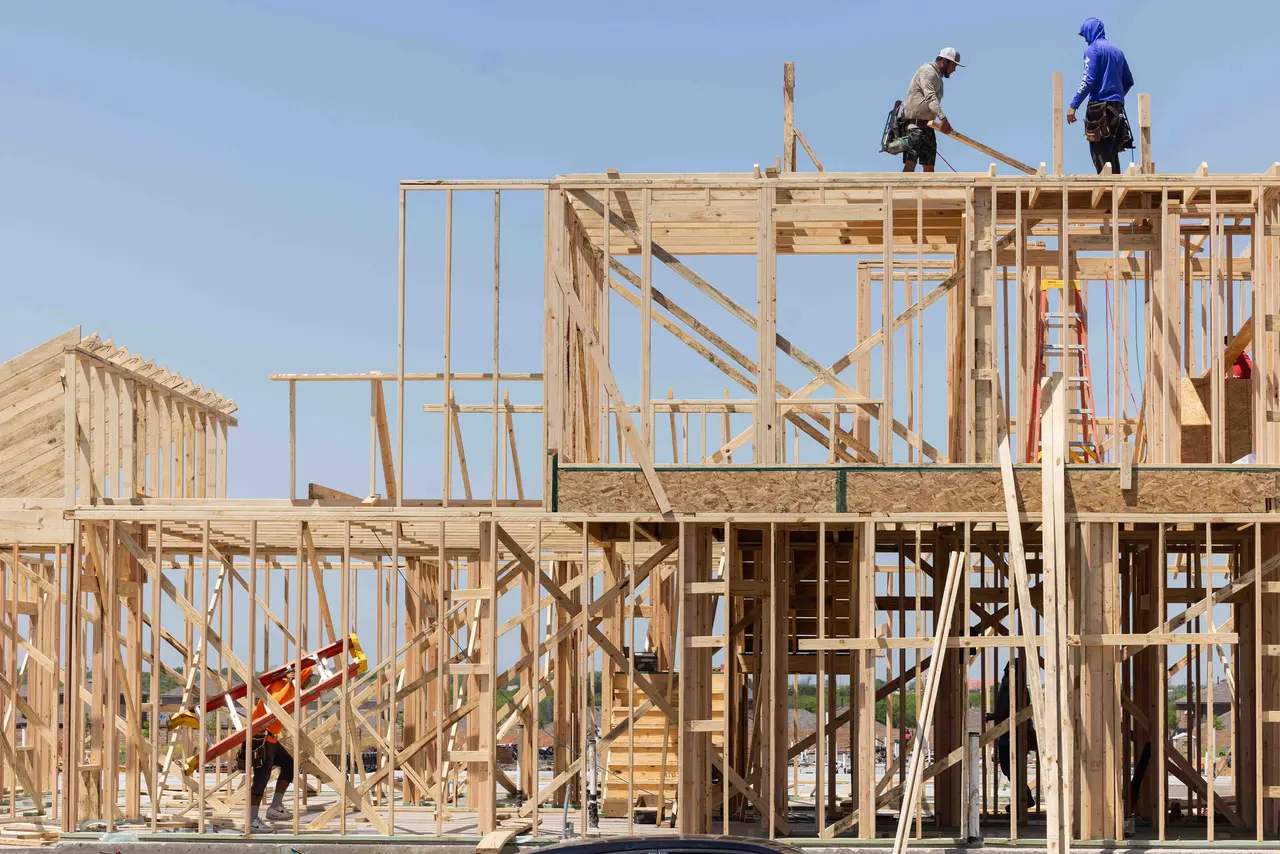
Construction workers build the frame to a new home in the Cartwright Ranch by D.R. Horton community in Crandall, Texas, on Thursday, April 10, 2025.
Juan Figueroa/The Dallas Morning News/TNS
When the Texas Legislature passed Senate Bill 840, the goal was to boost the state's housing stock in major cities. The law allows developers to build multifamily and mixed-use projects in districts zoned for commercial use without having to request a zoning change.
Many cities have been howling in protest since. Some have put up new rules to undermine SB 840.
But even with those obstacles, SB 840 appears to be working. Since the law went into effect in September, it has directly facilitated more than 1,250 housing units and indirectly supported at least 7,235 units, according to a report by a bipartisan coalition that backs the law.
The nearly 8,500 homes that have been enabled by SB 840 are not all a done deal. Some have been approved, and others are pending. But one thing is clear: Developers want to build this housing.
The coalition that authored the report — Texas Appleseed, the American Enterprise Institute and Texans for Reasonable Solutions — identified multifamily applications that would not have been allowed before SB 840 and other projects whose rezoning was made easier by the law.
Some developers have chosen to go through a rezoning process for their multifamily projects instead of building by right with SB 840. The thinking is that some multifamily will be allowed regardless of the outcome of the zoning case. That gives developers leverage to negotiate with city officials, who'd prefer to have some say rather than none.
Dallas gets a tip of the hat for being among a handful of cities the report credits with embracing the law by aligning local rules. One reason Dallas was singled out was for tracking the use of SB 840 in permit applications. That's helpful because qualifying projects don't necessarily leave a paper trail that identifies them as SB 840 developments.
As we have noted earlier, Dallas' neighbors haven't been as welcoming. Cities including Frisco, Grand Prairie and Plano have imposed new rules to blunt the law. Frisco took a radical approach, changing its zoning rules to allow heavy industrial use in commercial districts with a special use permit. Why would Frisco do that? SB 840 doesn't apply to land that allows heavy industrial use.
Plano imposes minimum heights for SB 840 housing but not other kinds of development in the same zoning districts. Grand Prairie requires SB 840 developments to have an Olympic-size pool and public art for "maintaining the scenery," as one official put it. It was telling to watch representatives for these cities struggle to answer questions about these rules at a recent legislative hearing in Austin.
State lawmakers should hold their ground. Texas needs more housing, and we won't get it if NIMBYs keep calling the shots.
Suburban attempts to circumvent the law have caught the eye of Gov. Greg Abbott, according to the Texas Tribune. He threatened a crackdown in the next legislative session, and this is a law with bipartisan backing. Rebel cities ignore that at their peril.
_____