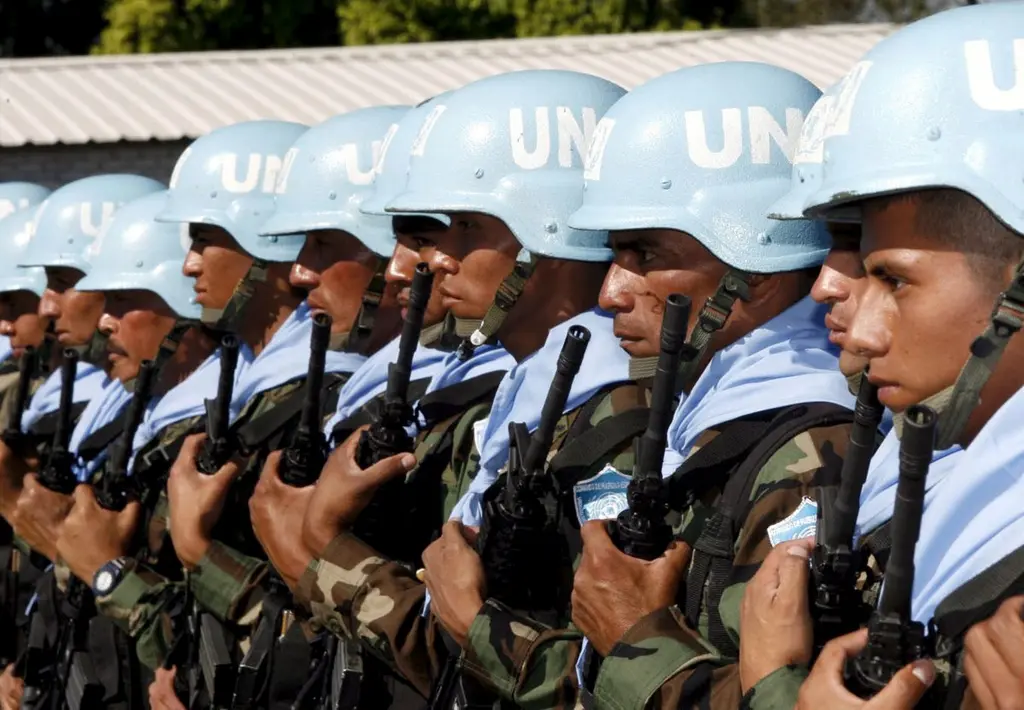

U.N.'s 35-year Western Sahara mission ends over U.S.-Russia rift
The United Nations' 35-year peacekeeping mission in Western Sahara ended over the weekend after the U.N. Security Council failed to renew its mandate.
Nov. 2 (UPI) -- The United Nations' 35-year peacekeeping mission in Western Sahara ended over the weekend after the U.N. Security Council failed to renew its mandate amid disagreements between the United States and Russia.
The mission began winding down operations Sunday. As it ceases operations, a small team will oversee the return of assets belonging to countries that have committed peacekeeping troops to mission and the disposal of U.N.-owned equipment, Stéphane Dujarric, spokesman to U.N. Secretary-General Antonio Guterres, said in a statement.
"The secretary-general remains concerned about the security situation throughout the territory and the risk of escalation of hostilities. He calls on all concerned to exercise maximum restraint and to refrain from actions that could further increase tensions or undermine regional stability," Dujarric said.
Established in 1991, the mission in the disputed northwest African territory was task with overseeing the cease-fire between Morocco and an independence movement and organizing a referendum on whether Western Sahara should become independent or integrate with Morocco.
Although hostilities continue in Western Sahara and the referendum was never held, the U.N. mission is ending after Russia vetoed a U.S.-drafted resolution to extend its mandate and a competing Russian proposal failed to secure enough votes.
Both resolutions sought to extend the mission for another year, but the two countries disagreed over the mission's future mandate and the political framework for resolving the conflict.
Russia accused the United States of siding with Morocco and the United States accused Russia of obstructing progress toward a political settlement.
The vote on the U.S. resolution was 11 in favor, one against and three abstentions, while the Russian resolution received three votes in favor from China, Somalia and Russia, one against, being the United States and 11 abstentions.
"The United States has presented a resolution with the support of 11 members of this council -- which would have taken historic steps, actually moving forward this 50-year frozen conflict to finally ending it, to realize some results," U.S. Ambassador to the U.N. Mike Walz told the Security Council following Russia's veto of the U.S. resolution.
"We presented a path to finally stem the very real and devastating human cost of this conflict -- a cost that was the very reason for the resolution that was vetoed today."
The Polisario independence movement said in a statement Saturday that it noted "with satisfaction" that the U.S. resolution was not adopted, stating that if it had been the U.N. peace process in the disputed territory would have been eroded and would have "created a dangerous precedent with destabilizing implications for broader regional and international peace and security."
Russia's Ambassador to the U.N. Vassily Nebenzia defended his decision to veto the U.S. resolution, accusing Washington of attempting to resolve the decades-long territorial dispute "exclusively in terms of Morocco's autonomy plan."
He told the council that the U.S. approach would have broken with the historical foundations of the Western Sahara settlement process and effectively asked the council to "forget" about the referendum and Polisario Front's 2007 proposal, which he said retained equal standing with Morocco's autonomy initiative.