
7 Regional Iterations of Loaded French Fries
AI FOTOSCAPE

7 Regional Iterations of Loaded French Fries

Images: Gemini

Plain ketchup doesn't do enough to highlight capabilities of a potato. Engineering a loaded fry dish requires matching potato starch to the moisture and weight of heavy, rich regional toppings. Swipe ahead to learn more about loaded fries from all over.
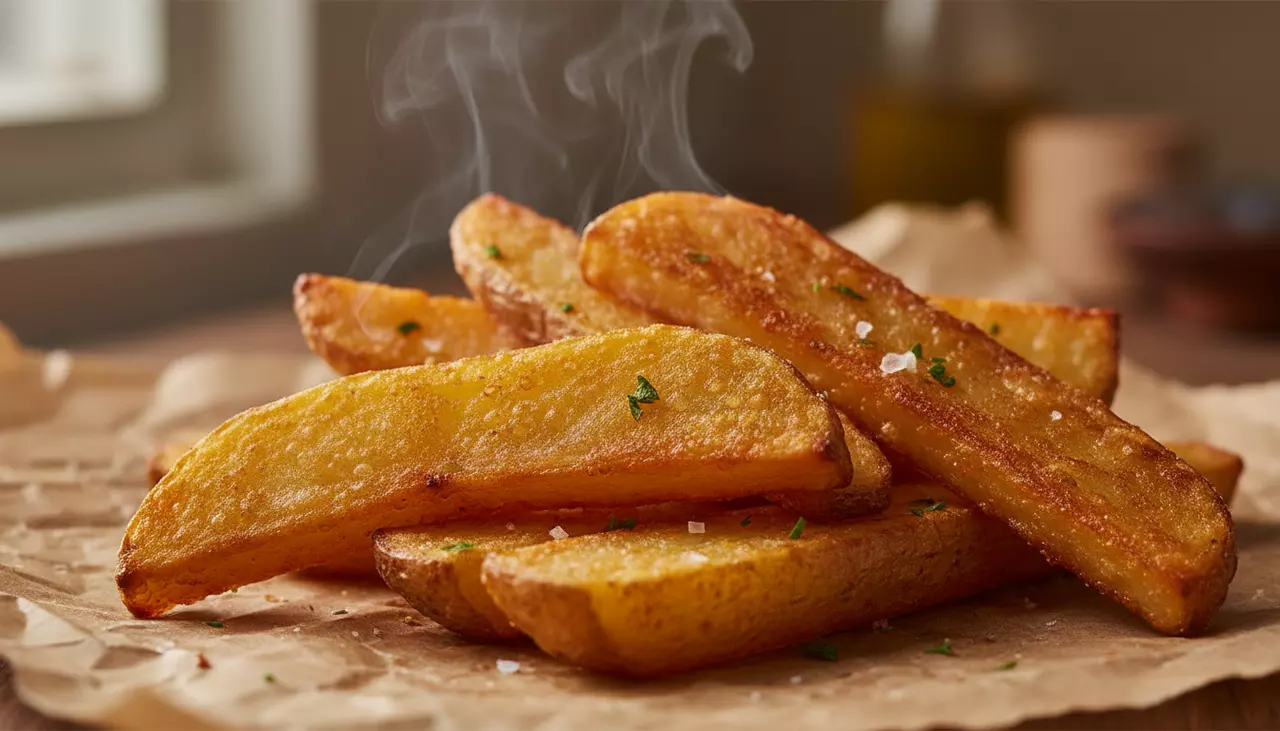
## The Potato Canvas

High-starch Russet Burbank potatoes possess a high solids-to-water ratio, creating a rigid amylose shell during the double-fry process that resists soggy collapse under heavy toppings. Chefs cut the potatoes to a precise three-eighths-inch straight-cut size to balance the weight-bearing surface area against the overall potato mass. While par-frying at 325 degrees Fahrenheit establishes the interior structure, a second fry at 375 degrees Fahrenheit flashes the exterior. This rapid temperature shift creates microscopic exterior voids that anchor wet emulsified toppings without compromising the crunch.

## The Kapsalon

In 2003 Cape Verdean barber Nathaniel Gomes invented this legendary Dutch street food in Rotterdam by asking his local shawarma shop, El Aviva, to mix his favorite ingredients inside a disposable aluminum container. This layout kept the cheese melted and the salad cool, earning the dish the name Kapsalon, which translates directly to hairdressing salon in Dutch. True preparation requires Gouda cheese graded as 48+, indicating a 48 percent fat content in the dry matter. This specific fat ratio achieves an elastic melt blanket over the hot kebab meat, preventing the cheese from separating into grease and oil.

## Chips Masala

Restaurants in Nairobi, Kenya like Exotica and Slush popularized Chips Masala to revive day-old limp French fries, turning stale leftovers into a celebrated Kenyan street food snack. The dish stems from the historical migration of Indian railway workers to East Africa during the late 19th century. To make the base, cooks simmer raw grated Roma tomatoes with a pungent mix of cumin, turmeric, garlic and ginger before adding ketchup and fresh coriander to finish the reduction. This process forms a thick clingy coating over the potato, preventing excess water from ruining the crisp spuds.

The Chorrillana

The historic port city of Valparaiso claims the massive Chilean Chorrillana, which the restaurant Social J. Cruz M. popularized in 1970 as a cheap, heavy sharing plate for hungry students. An older legend traces the recipe back to the 1881 Battle of Chorrillos during the War of the Pacific, where soldiers scavenged scraps of beef steak, eggs and onions to top their potatoes. The traditional recipe uses zero cheese or gravy; instead, sweet caramelized yellow onions and runny egg yolks coat the beef steak strips to create a rich natural sauce directly on the plate.

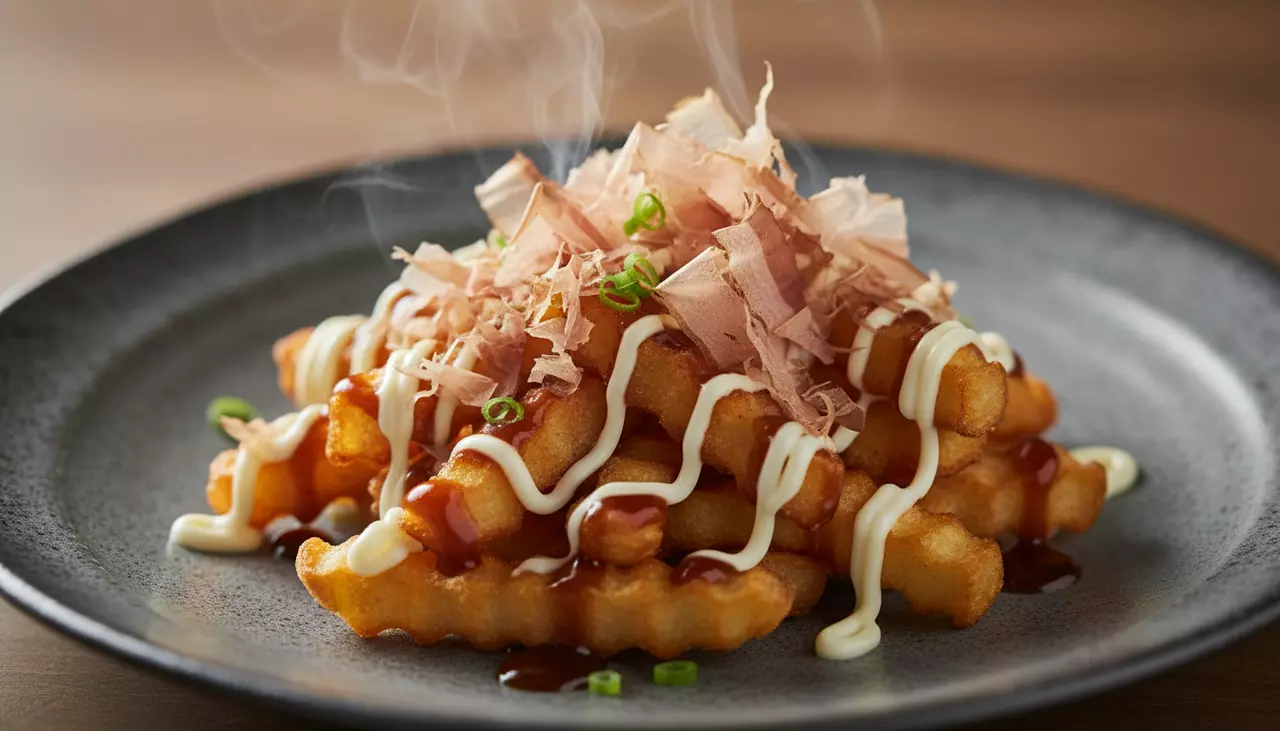
Okonomiyaki Fries


Adapting the classic flavors of Kansai-style savory cabbage pancakes from Osaka, which rose to prominence during post-WWII grain shortages, this dish utilizes a thermodynamic reaction. When hot fries meet paper-thin dried bonito flakes, rising steam and heat cause the fish flakes to curl and twitch in a kinetic dancing effect across the plate. Chefs drizzle a dense brown okonomiyaki sauce sweetened with dates, apples and raisins over the spuds. This sweet reduction balances the savory, egg yolk structure of rich Kewpie mayonnaise.

The Garbage Plate

Nick Tahou Hots in Rochester, New York created and trademarked this famous high-calorie plate and has created variations of the massive meal since the 1910s. In the mid-20th century, hungry college students coined the unique name by simply asking the cooks for a plate containing all of the garbage. A Greek-influenced, finely ground meat hot sauce acts as the critical topping. The recipe heavily seasons this sauce with cinnamon, allspice and cloves to reflect the ancestral heritage of restaurant founder Alex Tahou.

Foie Gras Poutine

Chef Martin Picard introduced this high-end dish in November 2001 at his Montreal bistro, Au Pied de Cochon, lifting poutine from greasy-spoon diners to fine-dining status. Picard double-cooks hand-cut frites in a rich mixture of 2/3 beef tallow and 1/3 peanut oil, before topping the hot potatoes with fresh cheese curds, which must squeak at room temperature to verify correct moisture content. A rich veal stock reduction emulsified with melted foie gras forms the gravy and a whole pan-seared lobe of grade-A duck liver crowns the entire creation.

Recommended For You.