
Mac Engel: Ex-Cowboys QB raising awareness about life-altering medical condition
FORT WORTH, Texas — At 61, Steve Beuerlein is at the age where he is often reminded weekly of his own mortality, and now he has joined millions of Americans who search for ways to extend their life as many years as possible. Not just years, but quality years. Unlike so many of his former teammates who grapple daily with the specter of potential CTE symptoms, the former Dallas Cowboys ...
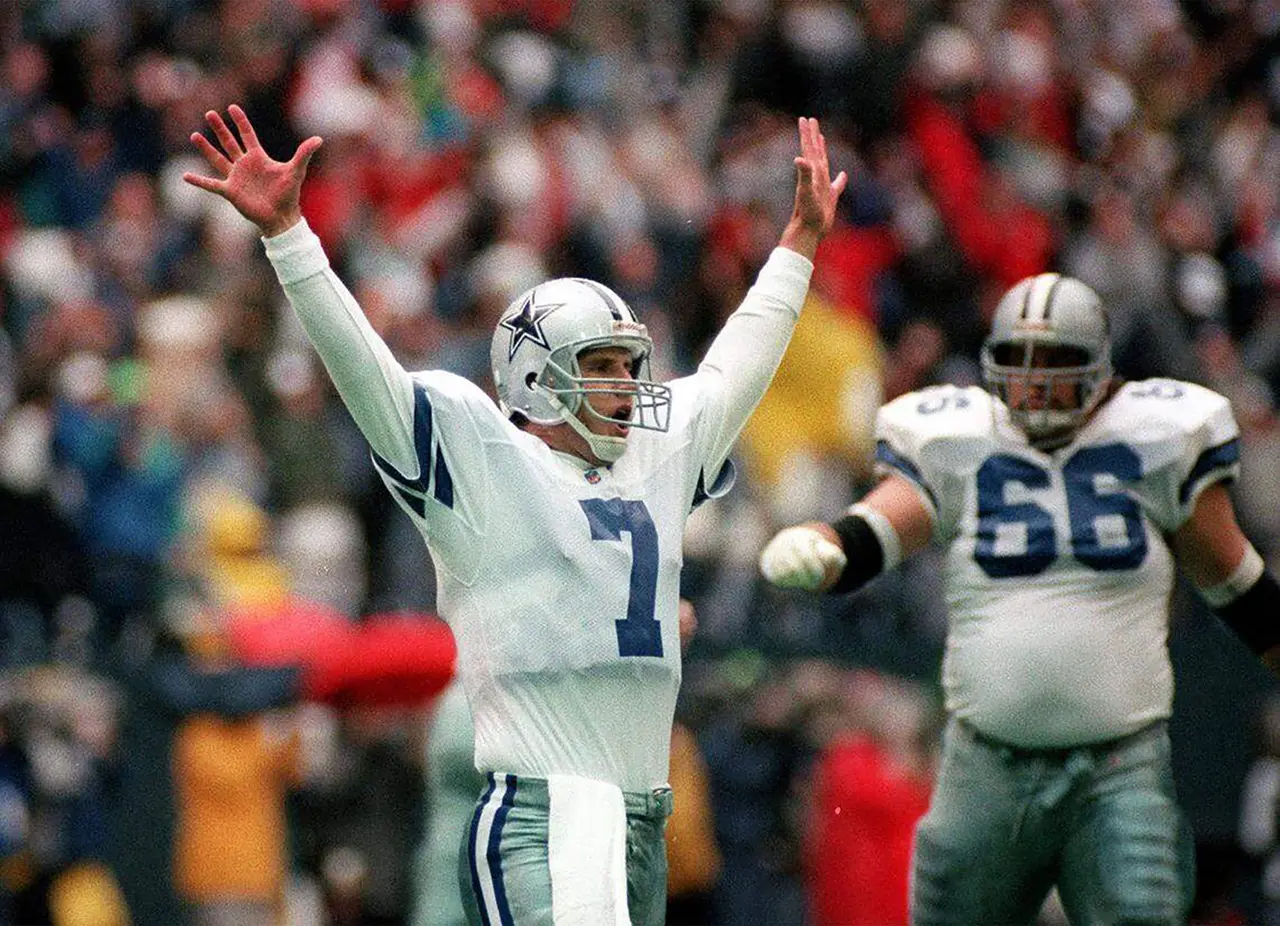
Former Dallas Cowboys quarterback Steve Beuerlein is now involved with a company, HeartFlow, that uses AI technology to scan the heart for early detection of potential heart problems.
Paul Moseley/Fort Worth Star-Telegram/TNS
FORT WORTH, Texas — At 61, Steve Beuerlein is at the age where he is often reminded weekly of his own mortality, and now he has joined millions of Americans who search for ways to extend their life as many years as possible.
Not just years, but quality years.
Unlike so many of his former teammates who grapple daily with the specter of potential CTE symptoms, the former Dallas Cowboys quarterback is focusing on a problem that is quiet but far more common in NFL players, as well as millions of Americans.
Heart disease accounts for approximately one in every five deaths in America, according to the Centers for Disease Control and Prevention.
“Among NFL players,” Beuerlein said, “that number is one in three. So if you are a former pro football player, your risk of having some sort of coronary heart issue is 13 percent greater.”
Former NBA player John Salley said on the TFU podcast, “The chances of a 7-footer living past 60 is 50 percent. In 2016, 11 of us died from congestive heart failure in that one year.”
Beuerlein is not a 7-footer, but he is a 6-foot-3 athlete who played pro football for 14 years. Combine that history with his own genetics, and he’s aware of the odds.
“My dad battled heart issues the last 20 to 25 years of his life; that’s not what killed him, but he had to deal with it,” Beuerlein told the Star-Telegram earlier this summer. “Myself and my three brothers are concerned that we’d have the same genetic issues, and I am always trying ways to address those.”
He is now involved with a company, HeartFlow, that uses AI technology to scan the heart for early detection of potential heart problems. It creates a 3D image of a patient’s heart to give the person — and their physician — an accurate, detailed look at the potential warnings.
(Note to our readers: The company that creates this technology reached out to the Star-Telegram about potentially talking to Beuerlein on behalf of HeartFlow. This sort of pitch is common in both entertainment and sports media. Usually the answer is, ‘Thanks, but no thanks,’ but given the topic, we said yes.)
Beuerlein began his college career at Notre Dame, and shared time as a freshman at South Bend with then-senior quarterback Blair Kiel. Kiel played six years in the NFL, for the Bucs, Colts and Packers. On April 8, 2012, Kiel died at age 50.
“He was at his home (in Columbus, Ind.) and he had a massive heart attack in his kitchen,” Beuerlein said. “He was in good shape. No signs of anything, but it was one of those (heart) episodes that got him.”
Kiel’s death is one of those moments that changes a former teammate’s day, and maybe his life. Blair Kiel died?! He wasn’t old. He took care of himself. This wasn’t a guy who looked the part of a pending heart ailment. On the surface, there was nothing wrong with Kiel.
“When you look at the people who are my age, and older, that’s where the majority of these (heart issues) are coming from,” Beuerlein said. “Things were a lot different back when I played, in terms of access to determining what may and may not be good for your health and what people did then.
“Steroids. Performance-enhancing drugs; contrary to popular belief, I was never a steroid guy.”
He’s kidding about the last part. The first part, he’s not. Steroid use in the ‘80s was not exactly uncommon, and the potential long-term effects of those drugs were still relatively unknown. Or they were denied and never discussed openly.
“It’s the type of stuff that can have a cumulative effect on the heart,” Beuerlein said. “That type of information is available today that allows you to get ahead of it. Football players often carry around a lot of weight, and a lot of guys maybe don’t do a good job of shedding that extra weight.”
An increasing number of former NFL offensive linemen are aware of these trends, and once their playing careers end, many reshape their bodies. Former Carolina Panthers offensive lineman Russell Okung said in 2023 that he dropped 100 pounds in 40 days. He said he did it thanks to fasting and water, a regimen medical professionals doubt.
Former Browns offensive tackle Joe Thomas lost approximately 55 pounds after he retired in 2017. He looks great, and he is now a marathon runner.
The weight loss doesn’t guarantee anyone they can avoid a coronary event, but it improves their chances.
“Fifty percent of the time, the first-time heart episodes are a complete surprise,” Beuerlein said. “There are no symptoms, and no event that gives you an indication of an issue. If you want to be proactive about this, talk to your doctor. Get the blood work done. Heart disease is preventable, but not if you don’t know your family history and try to get ahead of it.”
Beuerlein’s effort to raise awareness about heart disease is not just aimed at retired football players — it goes for all of us, so we can make our remaining years quality years.