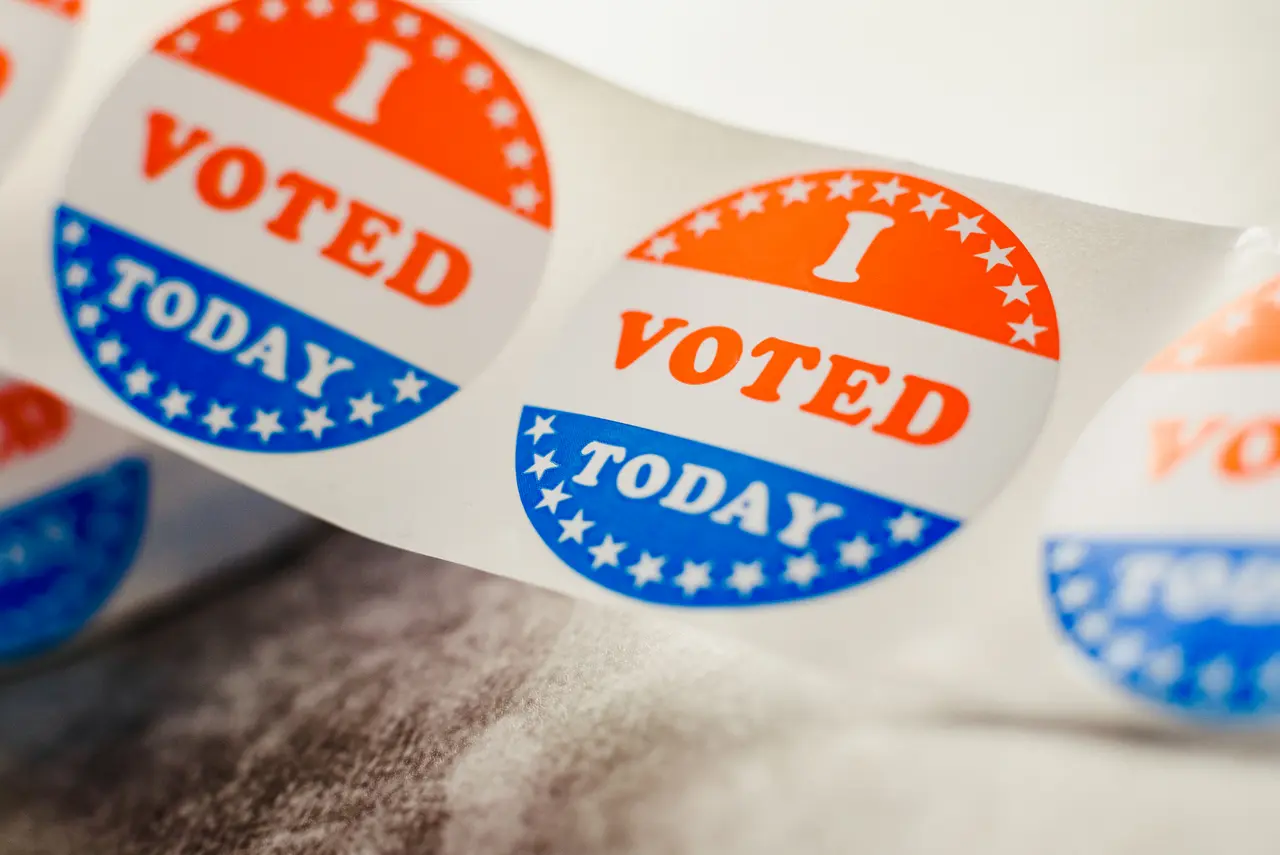

Group of elected officials endorse ‘No’ vote on Massachusetts ballot question to end current primary system
BOSTON — A coalition of 27 Massachusetts state lawmakers, city councilors and other elected officials are publicly opposing a ballot question in the upcoming election that would get rid of the current primary election system and replace it with a single, all-party primary. The ballot committee, Voter Rights MA, includes seven members of the state Senate, 11 members of the House, a sheriff, a ...
A coalition of 27 Massachusetts state lawmakers, city councilors and other elected officials are publicly opposing a ballot question in the upcoming election that would get rid of the current primary election system and replace it with a single, all-party primary.
Joaquin Corbalan/Dreamstime/TNS
BOSTON — A coalition of 27 Massachusetts state lawmakers, city councilors and other elected officials are publicly opposing a ballot question in the upcoming election that would get rid of the current primary election system and replace it with a single, all-party primary.
The ballot committee, Voter Rights MA, includes seven members of the state Senate, 11 members of the House, a sheriff, a mayor, and city councilors from Boston, Cambridge, Somerville, Revere, Lawrence and Lynn.
The measure, which will appear as question 3 on the November ballot, would replace the state’s current multi-party primary system with a single primary including all political parties. In that system, the top two vote-getters would advance to the general election.
“We are proud to announce these endorsements. These are the candidates who would be hurt by the top two (system). They ran in contested primaries. They won without permission from anyone,” said Voter Rights MA Chair Jordan Berg Powers. “Under top two, a crowded field can leave a district with two November candidates who agree on everything. They know what this question would do to the next person who tries.”
The group includes Democratic state Sens. Lydia Edwards, James Eldridge, Dylan Fernandes, Adam Gómez, Paul Mark, Jacob Oliveira, and Pavel Payano; as well as Democratic state Reps. Kip Diggs, Kate Donaghue, Brandy Fluker-Reid, Carlos González, Homar Gómez, Ryan Hamilton, Russell Holmes, Jay Livingstone, Samantha Montaño, Estela Reyes, and Andres Vargas.
The group also includes Somerville Mayor Jake Wilson, Barnstable County Sheriff Donna Buckley, Lawrence City Councilor Stephany Infante, Cambridge City Councilor At-Large Timothy Flaherty, Lynn City Councilor At-Large Brian LaPierre, Lawrence City Council President Jeovanny Rodriguez, Boston City Councilor Brian Worrell, City Councilor, former Roxbury City Councilor Tito Jackson, and former Revere City Councillor Juan Pablo Jaramillo.
“This question is misleading and hurts first-time candidates like I was. Essentially, it will reward the richest candidate who can buy up TV and media. The rich already have too much voice in politics. Why would we make it the system default?” said Sen. Edwards.
“Question 3 is a solution looking for a problem that does not exist. Independent and unenrolled voters in Massachusetts already have the right to participate in our primary elections by choosing a Democratic or Republican ballot. We don’t need to dismantle a system voters understand to give people a right they already have,” added Rep. Holmes.
Also known as a “jungle primary,” the top two system is being used in just two other states: California and Washington, except for Presidential primaries. Alaska utilizes a top four system with a ranked-choice runoff election.
“California ran this experiment. The results are terrible. In one race, four Democrats split the vote in a majority-minority district Obama won by sixteen points. Yet, because of the top two system, those voters spent November choosing between only two Republicans,” added Rep. Vargas.
Both of the state’s two main political parties also oppose the measure, with the Massachusetts Democratic Party endorsing Voter Rights MA.
“Jungle primaries wouldn’t give Massachusetts voters more choice; it would give more power to wealthy donors and corporate PACs, letting candidates with deep pockets or personal fortunes outpace grassroots campaigns before a single door is knocked,” said MassDems Chair Steve Kerrigan. “We’ve watched this play out in California, and time and again we see less choice, more money. Massachusetts shouldn’t make the same mistake.”
The Massachusetts Republican Party also opposes the ballot measure.
“For generations, Massachusetts voters have chosen their party’s nominees through partisan primaries. This would abolish that system and replace it with a top two primary that destroys competitive elections and denies voters a real choice between contrasting visions in November, MassGOP Chair Amy Carnevale added.
Supporters of the ballot measure, the “Yes on 3” campaign – organized by the Coalition for a Healthy Democracy, say the state’s current partisan primary system has led to uncontested races and decreased voter participation in Massachusetts.
“Massachusetts has the least competitive elections in the nation—over half of all races go uncontested, leaving millions of voters without a real choice. Our goal is simple: make our democracy more healthy with open, fair and accountable elections,” the “Yes on 3” campaign argues.
“All-Party Primaries restore accountability and participation by opening the process to all voters, regardless of party, adding fairness to our system,” it says.
In addition to MassDems, the coalition already has announced the endorsements of the AFL-CIO, SEIU State Council, SEIU1199, SEIU 509, SEIU 32BJ, the American Federation of Teachers (AFT), Progressive Massachusetts, Progressive Democrats of Massachusetts, Act On Mass.
The “Yes on 3” campaign is supported by state Auditor Diana DiZoglio, the NAACP, and several former Democratic lawmakers, including former Gov. Deval Patrick, former Congressman Joe Kennedy III, and former DNC Chair Steve Grossman. Former Republican Lt. Gov. Kerry Healey is also supporting the measure.
Question 3 is seeing support among Bay State voters, according to recent polling.
A UMass Amherst/WCVB poll released August 12 recorded 51% of respondents support the ballot measure, while 32% of respondents were against it.
_____