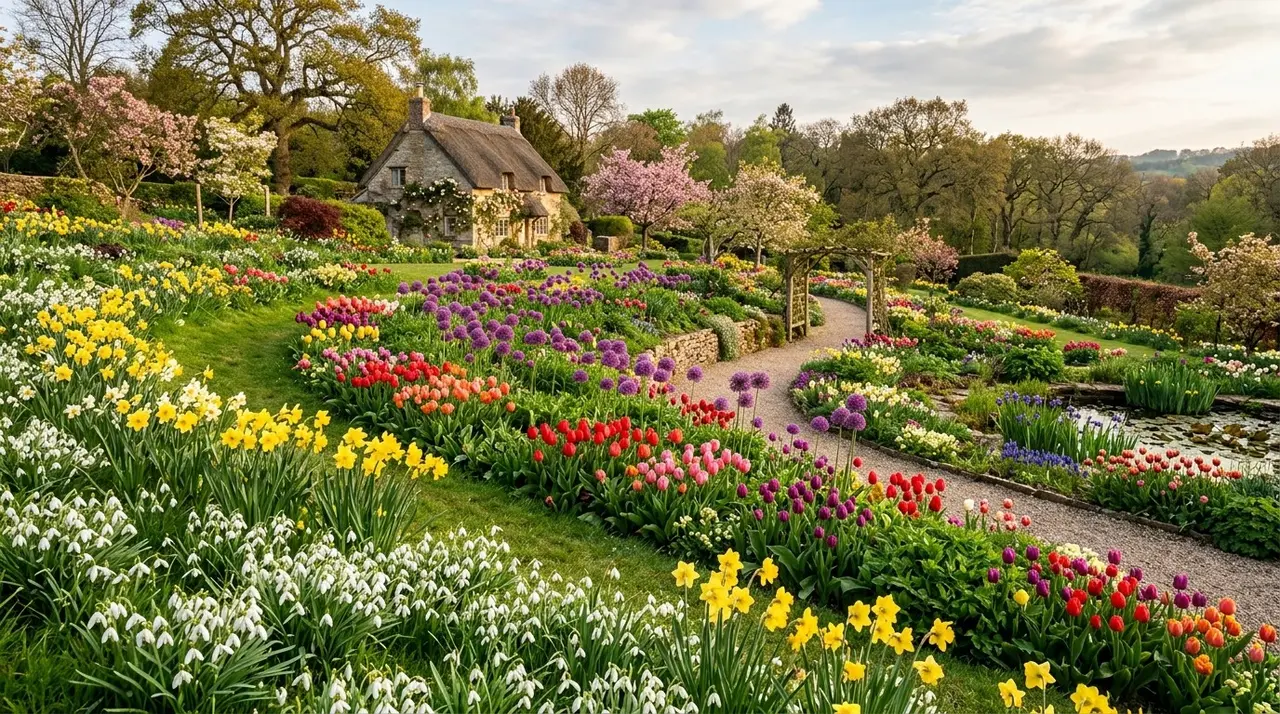

Spring gardens are best planned out in the fall. Every daffodil that sprouts during April was planted by someone in September or October, and the ones that come up strongest went in while the soil was still warm enough for roots to establish before the ground froze. The window is opening right now in the upper Midwest and northern New England. Here's what to plant, how deep, and when to do it where you live.
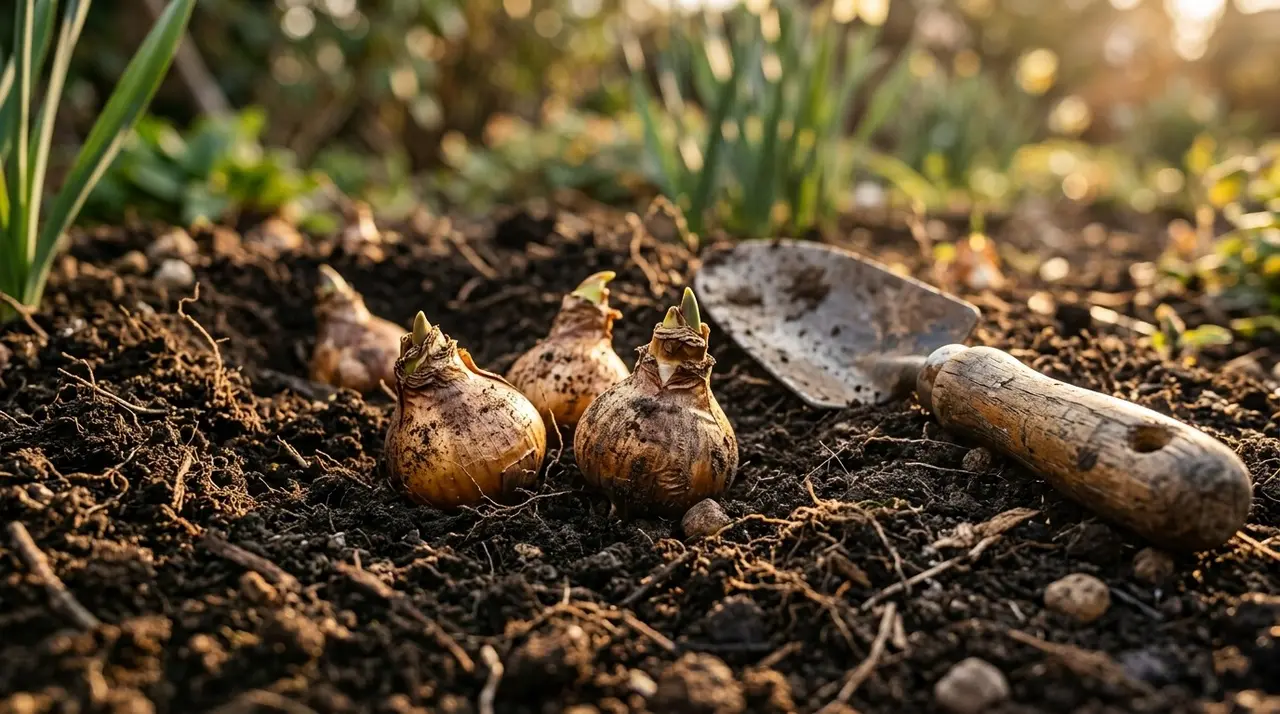
Daffodils are the easiest entry point to your spring garden because most wildlife leaves them alone. The bulbs carry lycorine, a bitter alkaloid, and University of New Hampshire Extension says daffodils are usually safe from wildlife without any added protection. Call them resistant rather than immune, though. Voles will take them when food runs short, and squirrels still dig up fresh plantings out of curiosity about turned soil. University of Missouri Extension puts the base of the bulb about six inches below the surface, six inches apart, pointed end up. Measure to the base of the bulb, not the top. That's the detail people get wrong.
Mid-September Into October
If you're in the upper Midwest or northern New England, University of Minnesota Extension puts your window at mid-September through mid-October, with zone 3 at the earlier end. The goal is six to eight weeks of root growth before the ground freezes solid. Plant too late and the bulb never roots properly, which shows up in spring as a weak bloom or nothing at all.
Mid Country from East to West
Chicago, Cincinnati and Kansas City all sit in USDA plant hardiness zone 6b and Denver in 6a, so late September into mid-October works for all four. Boston is warmer than people expect at 7a, and Nashville is 7b, so both can run warm into late October. Look up your own zone on the USDA plant hardiness map because these lines often cut straight through metro areas — Chicago's northwest side is in zone 6a, and parts of Kansas City read 7a.
Tulips are the one bulb worth deliberately delaying. University of Minnesota Extension says to plant them as late as you can because they root fine in cold ground and waiting until the soil hits that same 50 to 55 degrees reduces the rot problems that take out early plantings. Watch soil temperature rather than the calendar, because frost is only a rough proxy for what's happening down where the bulb sits.
The small bulbs are the ones that actually shorten winter. Snowdrops are the earliest of all and routinely flower straight through late snow, with crocus close behind. Both finish most of their growth before the trees leaf out. They're cheap enough to buy by the hundred, and they look right scattered in a lawn rather than lined up in a bed. In zones 3 and 4, expect them in March or April rather than February.
Garlic follows the identical timeline and goes in the ground the same weekend. Plant individual cloves two inches deep, pointed end up, four to six inches apart, then mulch heavily. Cornell Cooperative Extension calls for four to eight inches of straw in cold climates, which is what actually carries the crop through a zone 3 or 4 winter.
Hyacinths have the strongest scent of the common spring bulbs, which makes them worth putting near a door or a path rather than out in a flower bed. Alliums work the other end of the calendar. Iowa State University Extension puts the big ones like Purple Sensation and Gladiator at mid-May into June, with drumstick allium carrying into summer. They're what keeps the bed from going blank between the tulips and the perennials.
A single variety garden will bloom for about two weeks. To get that six weeks of April color, mid and late varieties should go in together — snowdrops and crocus first, then early daffodils, then mid-season tulips, then alliums to close things out. Order across all of those categories in one pass, because the whole point of fall planting is that you only do this once.
Almost everyone plants in tidy single-file rows. Bulbs read as natural when they're clustered instead, and University of Missouri Extension recommends groups of three to a dozen bulbs of one variety for the best effect. A technique garden designers use: toss a handful gently onto the bed and plant them roughly where they land.