
Carl P. Leubsdorf: Wide open Democratic field looks toward 2028
When progressive Democrats measured the standing of potential 2028 candidates at the recent Crooked Con gathering, they listed 27 names. The leaders were two who may well not run – Georgia Sen. Jon Ossoff and New York Rep. Alexandria Ocasio-Cortez. The following weekend, when a more centrist Democratic faction held what it called the What’s Next meeting, the participants showcased nearly a ...
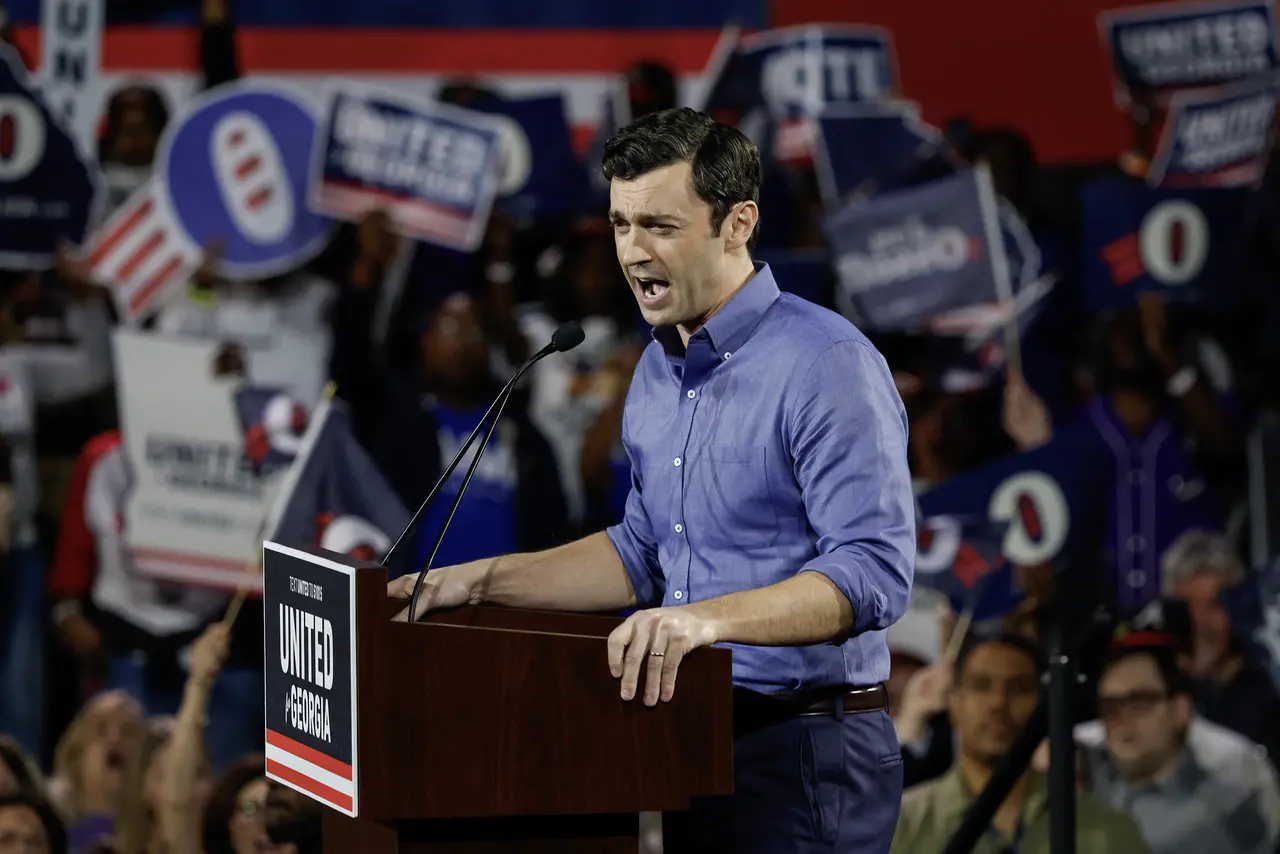
Jon Ossoff speaks during a midterm election rally at the Cobb County Convention Center on Saturday, Oct. 17, 2026, in Atlanta.
Erik S. Lesser/AFP/Getty Images North America/TNS
When progressive Democrats measured the standing of potential 2028 candidates at the recent Crooked Con gathering, they listed 27 names. The leaders were two who may well not run – Georgia Sen. Jon Ossoff and New York Rep. Alexandria Ocasio-Cortez.
The following weekend, when a more centrist Democratic faction held what it called the What’s Next meeting, the participants showcased nearly a dozen of the same prospective 2028 candidates.
Those numbers give some sense of where things stand as the Democrats turn their attention from their stunning 2026 victories to what looms as a complex, two-year quest to regain the presidency.
While their goal is clear, the leader they will choose to get there is not.
In 2020, a record total of 29 Democrats sought their party’s nomination, ultimately won by Joe Biden. But an even larger field is possible in 2028 in what looks like the most open Democratic race since 1976.
That was the year the Democrats nominated – and elected -- a hitherto little known former Georgia governor named Jimmy Carter, who barely registered in single digits before the year’s nominating contests began.
With a clearer strategy than his rivals and a single-minded focus, Carter parlayed triumphs in the leadoff Iowa caucuses and New Hampshire primary into unstoppable momentum for the nomination. That November, he edged President Gerald Ford for the Democrats’ only victory in the six elections between 1964 and 1992.
Given how President Donald Trump seems determined to double down on the unpopular course that led to his party’s 2026 defeats, the Democrats are optimistic that this year’s result will prove the precursor of 2028 success – if they don’t screw it up. But a lot will depend on whom they choose as nominees — and how they do it.
Two factors will inevitably affect the course of the race: a significantly revised 2028 Democratic primary calendar — with South Carolina and Nevada slotted ahead of New Hampshire — and the candidate debates that have not yet been scheduled.
Surprisingly, no prospective aspirant has yet announced their candidacy. But California Gov. Gavin Newsom, one of the likeliest candidates, announced he would decide in early January 2027 if he will run. His second term as governor ends on January 4.
Meanwhile, draft committees have been formed for two Progressive favorites, Ocasio-Cortez, who is weighing whether to seek the presidency or challenge Senate Minority Leader Chuck Schumer, for his New York Senate seat, and Rep. Ro Khanna of California, who seems likely to run.
Several other major party figures – including several recently re-elected governors – have also signaled the likelihood of 2028 White House bids.
South Carolina Rep. James Clyburn, the most powerful Democrat in the state that will hold the first primary, said he received phone calls the day after the election from four prospective candidates but declined to identify which ones.
Previously he mentioned phone conversations with Illinois Gov. JB Pritzker, Arizona Sen. Mark Kelly and Pennsylvania Gov. Josh Shapiro. He also mentioned campaigning with Georgia Sen. Raphael Warnock, Maryland Gov. Wes Moore and Kentucky Gov. Andy Beshear and conversations with Ossoff, though the Georgia senator says he won’t run.
Pritzker, who spent millions to bolster Democratic candidates in battleground states while sweeping to a third term in Illinois, issued a 75-page, 200-point plan of proposals that Democrats could enact with their new congressional majorities.
“I believe that on Day One — and I literally mean Day One — that they should begin to introduce legislation. ... I’m looking for very quick action,” he told NBC News.
Other Democrats announced – or have already published – autobiographical books with their political histories and ideas.
Moore, declining to promise he would serve out his new four-year term and parrying questions about the presidency by saying he “wasn’t thinking about anything else,” announced the forthcoming publication of a book entitled “Repair: Healing a Divided Nation.”
Former Transportation Secretary Pete Buttigieg, an unsuccessful 2020 aspirant, said he was “more inclined than not” to run and announced he is publishing a book entitled “Next.”
Several other Democrats have previously published books, including Govs. Newsom, Shapiro and Beshear; Sens. Chris Murphy of Connecticut, Cory Booker of New Jersey’ and Warnock, defeated 2024 Democratic nominee Kamala Harris, and former Chicago Mayor and White House Chief of Staff Rahm Emanuel.
Beshear, current chair of the Democratic Governors Association, has already run afoul of the kind of problem that can damage a presidential bid. Some Hispanic Democrats felt he should have allocated more DGA campaign funds to Gina Hinojosa’s underdog campaign for governor of Texas.
“It just felt that he’s not taking Latinos seriously, and they’re not taking Latinos seriously as a voting bloc in the Democratic Party,” Texas Rep. Sylvia Garcia said. “And if that’s the case, then he is going to have a Latino problem in 2028.”
Hispanic clout in the nominating process has increased because Nevada, which is nearly 30 percent Hispanic, will hold the second primary, and New Mexico, which is nearly 50%, the fourth.
Every Democratic hopeful is likely to face similar political pressures in what looms as an obstacle course of interest groups – even before they reach the primaries starting in 14 months.
For the next few months, the 2028 race may take second billing to the efforts by the new Democratic congressional majorities to challenge Trump. But that will change dramatically when the prospective nominees begin to challenge one another.
_____
_____