
British Treasury chief John Healey faces a fine balancing act when he delivers his first budget statement, with the economic backdrop made more difficult as a result of the turmoil caused by the Iran war

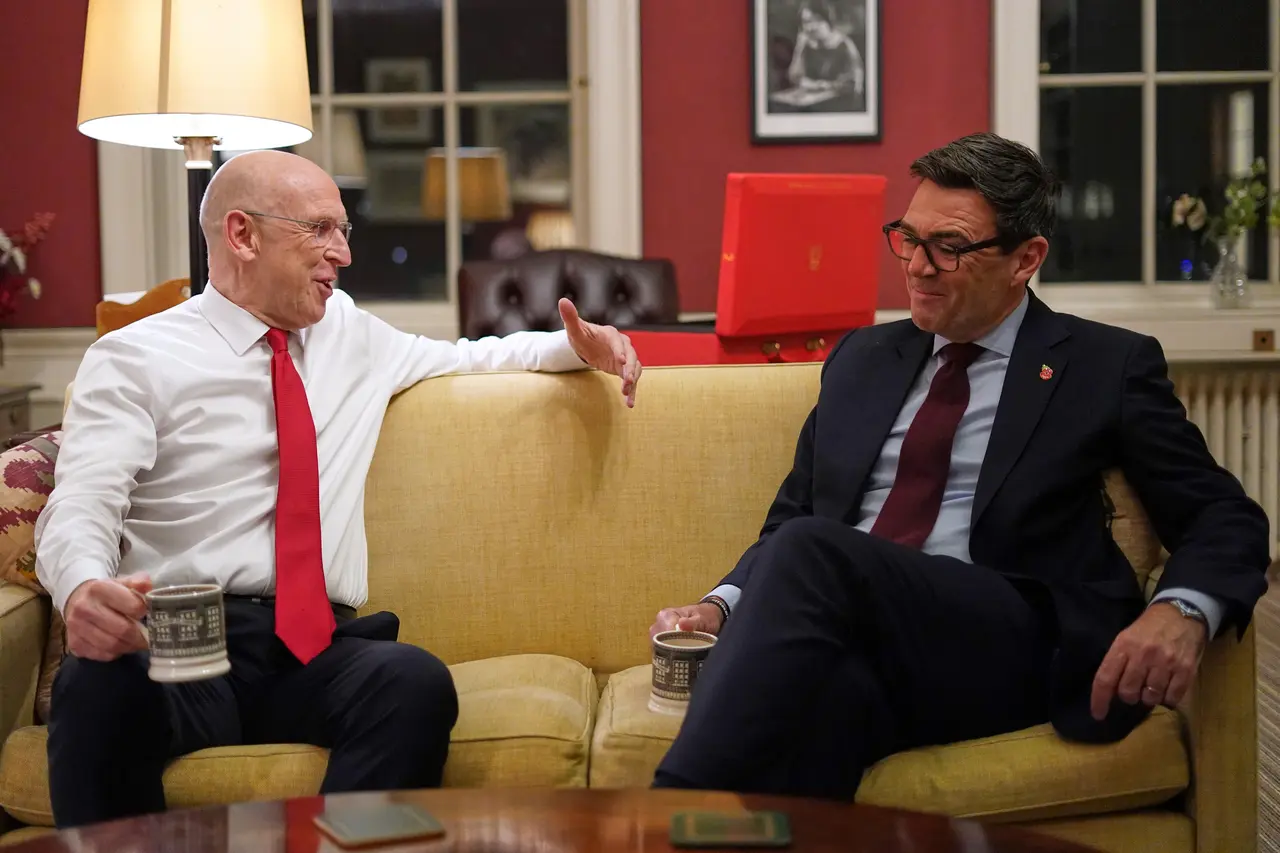
Britain's Prime Minister Andy Burnham, right, and Chancellor of the Exchequer John Healey meet ahead of the UK budget at 11 Downing Street in London, Monday, Oct. 26, 2026. (AP Photo/Alberto Pezzali, Pool)
LONDON (AP) — British Treasury chief John Healey faces a fine balancing act when he delivers his first budget statement Wednesday, with the economic backdrop made more difficult as a result of the turmoil caused by the Iran war.
Healey, who was appointed Chancellor of the Exchequer in July when Andy Burnham became prime minister, takes center stage when he stands up in the House of Commons in what is arguably Parliament's key set-piece of the calendar.
Even though the British economy has been more resilient than anticipated this year and has grown strongly, the problem is that the money just isn’t there for Healey to enact many of the Labour government's ambitions on restoring the health of the country's public services.
The U.K.’s economy has been hit — like others — by the inflation generated by the Iran war and the ensuing bottlenecks in the Strait of Hormuz, which have squeezed global oil and gas supplies.
Inflation in the U.K. has risen to a near one-year high of 3.5% as the Iran war continues to ratchet up fuel prices, and is expected to go higher in coming months. As a result, the Bank of England is expected to raise interest rates soon, which will further raise the costs to the government of servicing the debt.
Budget expected to be relatively low-key
As a result, Healey’s budget is expected to be relatively low-key, especially at a time when bond markets are fretting over debt levels around the world. France has been in the spotlight recently following a wave of protests that have exposed the parlous state of its finances.
...
Britain's Prime Minister Andy Burnham, right, and Chancellor of the Exchequer John Healey meet ahead of the UK budget at 11 Downing Street in London, Monday, Oct. 26, 2026. (AP Photo/Alberto Pezzali, Pool)
Matthew Amis, an investment director at Aberdeen Investments, said a “dull budget” could well be rewarded in the financial markets by lower government borrowing costs, which could in the longer run free up extra resources to plow into schools, hospitals and the military, for example.
“The one note of caution is that international investors are very quick to punish countries with a weak fiscal story. Just ask France,” he said.
Healey has said focus will be on cost of living
In his few comments ahead of the budget, Healey has said he will aim to give businesses and families “some breathing space” from the upward march in the cost of living. These could include measures to cushion the blow from higher energy prices.
Burnham has also made pledges about reducing, and even eradicating, homelessness, improving care for the elderly and meeting NATO targets on defense spending.
One source of revenue is expected to come from the banks, which have benefited from higher interest rates. A higher surcharge on their profits is anticipated. Another revenue source may come from higher taxes on the gambling sector.
Debt remains the main constraint
The main problem facing Healey is the same as that which confronted his predecessor Rachel Reeves, who was Chancellor after Labour returned to power in a landslide election victory — the country's debt mountain.
Even though the trajectory of the public finances was recently given a nod of approval from the International Monetary Fund, the U.K.’s debt has passed 3 trillion pounds ($4 trillion) for the first time ever, requiring 8% of government spending to service it.
...
Britain's Prime Minister Andy Burnham, right, and Chancellor of the Exchequer John Healey meet ahead of the UK budget at 11 Downing Street in London, Monday, Oct. 26, 2026. (AP Photo/Alberto Pezzali, Pool)
Anything said on defense will be noteworthy
There will be particular interest on what Healey says on defense, as he quit as defense secretary earlier this year in protest at the lack of money being provided, a move that heaped pressure on Burnham’s predecessor, Keir Starmer.
Paying for those measures would require him to find the money from somewhere else — tax rises or spending cuts — if he is to fend off nervous bond market investors.