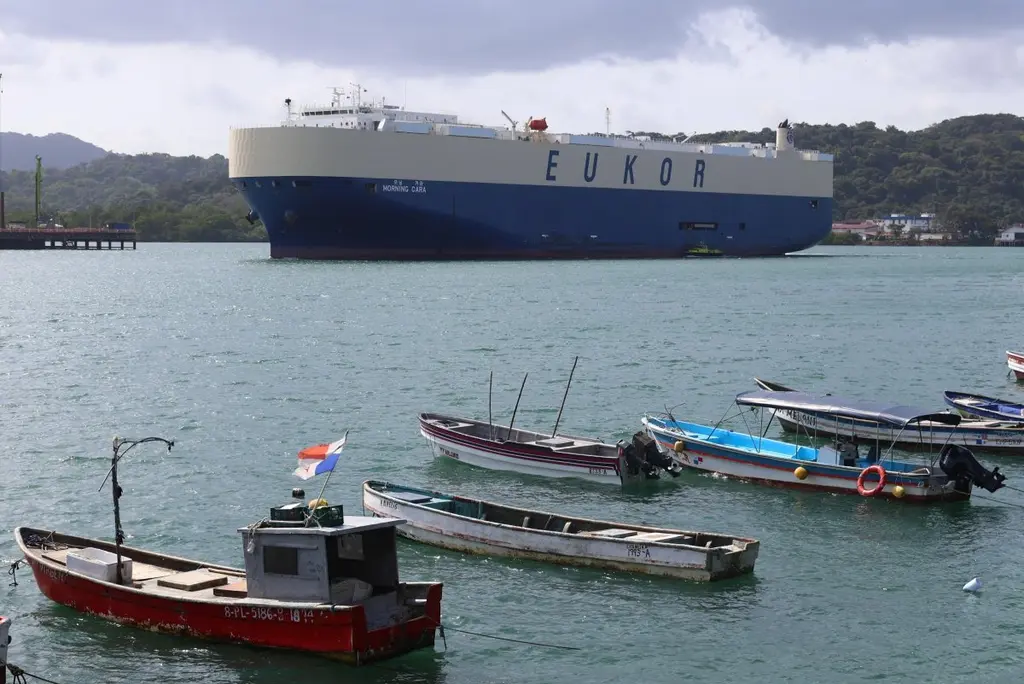

Panama cuts movements through canal due to El Niño-linked water shortage
Low rainfall caused by El Niño was blamed for a decision to cut vessel numbers permitted to transit the Panama Canal each day by more than a tenth.
Aug. 21 (UPI) -- The Panama government blamed low rainfall caused by El Niño for a decision to cut the number of vessels permitted to transit the 51-mile-long Panama Canal by more than 11%, despite being in the middle of the wet season.
Shipping lines were notified by the Panama Canal Authority on Thursday that as of Sept. 15, it was slashing the number of daily ship movements through the canal from 36 to 32 to ensure there was no disruption to traffic and to conserve water for human consumption.
The authority said the step was necessary "to support the long-term sustainability of transit operations," even though it had already implemented other water-saving measures and the rainy season had finally arrived.
With the sea-warning El Niño weather cycle expected to be one of the most intense on record, Britain's Met Office said Central America, along with topical South America and countries in the western Pacific, were at significant risk of low rainfall in this year's wet season.
With vessels already lining up to transit the canal, in some cases for weeks, fears were growing of a knock on impact from the delays and extra costs on goods prices, including fuel and medicine.
One container ship reportedly paid $4 million to jump to the front of the line.
San Francisco-based freight-forwarding firm Flexport, which had 30 containers on the ship, told CNN that the delays at the Pacific end were the longest in three months when there was significant backlog due to a surge in demand from maritime traffic displaced by the closure of the Strait of Hormuz.
"The ripple effects are significant through supply chains and all the way to consumer prices at stores," said Benjamin Gedan, senior fellow and director of the Latin American program at Stimson Center in Washington.
The canal relies on fresh water from Lake Gatun to feed 12 sets of locks that use water compartments to move vessels in water compartment up or down as they navigate the topography of the Panama Isthmus.
Extreme drought during El Niños in 2023 and 2024, forced Panama to impose deep cuts in the number of ships transiting daily -- 24 compared with 36 in normal times -- after water levels in Lake Gatun's water level retreated to historic lows.