
South Korea proposes dropping 'main enemy' label for North Korea
South Korea's Unification Ministry unveiled a blueprint for improving inter-Korean relations Wednesday that includes dropping the term "main enemy" in reference to North Korea.
SEOUL, Aug. 5 (UPI) -- South Korea's Unification Ministry unveiled a blueprint for improving inter-Korean relations Wednesday that includes dropping the term "main enemy" in reference to North Korea as part of a broader effort to ease tensions on the Peninsula.
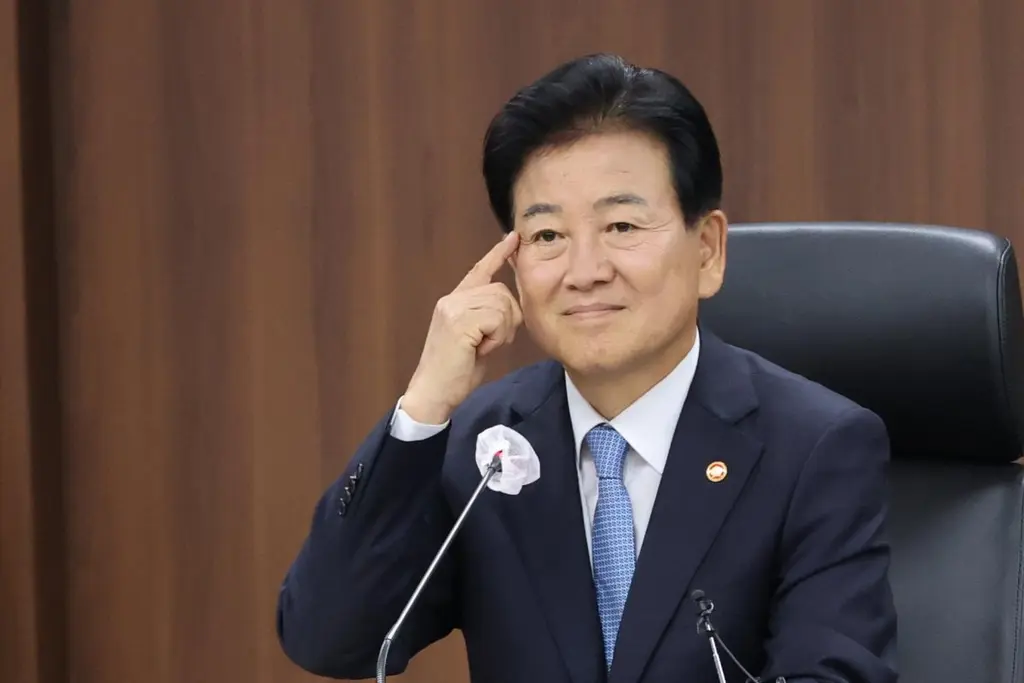
Unification Minister Chung Dong-young briefed President Lee Jae Myung and presented the ministry's work plan for the second half of 2026 at the presidential Blue House on Wednesday morning.
The plan calls for referring to North Korea by its official name, the Democratic People's Republic of Korea, as well as replacing terms that incite confrontation or hostility, such as "main enemy."
South Korea has traditionally referred to its northern neighbor as "North Korea" rather than by its official name, reflecting Seoul's position under the 1991 Inter-Korean Basic Agreement that the two Koreas are not separate states.
The Lee administration has pushed to restore inter-Korean dialogue and has pursued a series of confidence-building measures aimed at easing tensions with the North, including restricting activist groups from sending anti-North Korean propaganda leaflets across the border.
North Korea has shown little interest in Seoul's overtures, however, and recently revised its constitution to remove references to reunification with South Korea. Pyongyang has also continued to expand its nuclear and ballistic missile programs despite international sanctions and repeated calls for denuclearization.
The ministry's plan outlines a framework for "peaceful coexistence" that includes establishing what it calls a "two-state relationship oriented toward unification," while leaving the question of eventual unification to future generations.
Initiatives include restoring the 2018 inter-Korean military agreement, which was suspended in 2024 amid rising tensions between Seoul and Pyongyang. The agreement established buffer zones along the border and included measures such as removing some guard posts inside the Demilitarized Zone and banning live-fire exercises in certain areas.
The blueprint outlines a "peace-led" approach to denuclearization that would prioritize securing an initial halt to North Korea's nuclear program while working to revive U.S.-North Korea summit diplomacy. It calls for rallying international support ahead of this year's U.N. General Assembly and Asia-Pacific Economic Cooperation summit as Lee seeks to position South Korea as a "pacemaker" for renewed diplomacy on the Korean Peninsula.
It also envisions expanding civilian engagement with North Korea by supporting private contacts, facilitating sanctions exemptions for humanitarian and other projects, and encouraging sports, cultural, academic and religious exchanges.
The plan would revise rules governing the Inter-Korean Cooperation Fund to expand support for border-region projects and other initiatives aimed at reviving cross-border exchanges after years of inactivity.
The ministry said it would also continue efforts to transform the DMZ into a center for peace and tourism by restarting the long-stalled restoration of the Gyeongwon railway line, expanding access to DMZ Peace Trails and increasing rail service for tourists to the border.
"Peaceful coexistence on the Korean Peninsula is the only path forward," the ministry said. "It will improve the lives of the people, serve the national interests of both South and North Korea, and contribute to peace and stability in the region and the international community."