
Will backlash to data centers, Flock cameras impact NC’s US Senate race?
RALEIGH, N.C. — The spread of large-scale data centers and Flock surveillance cameras has triggered backlash in North Carolina, with both candidates in the state’s hotly contested U.S. Senate race speaking out and facing questions about the issues. But that doesn’t mean they’re likely to become decisive issues on Election Day. A growing number of North Carolina municipalities, including the ...
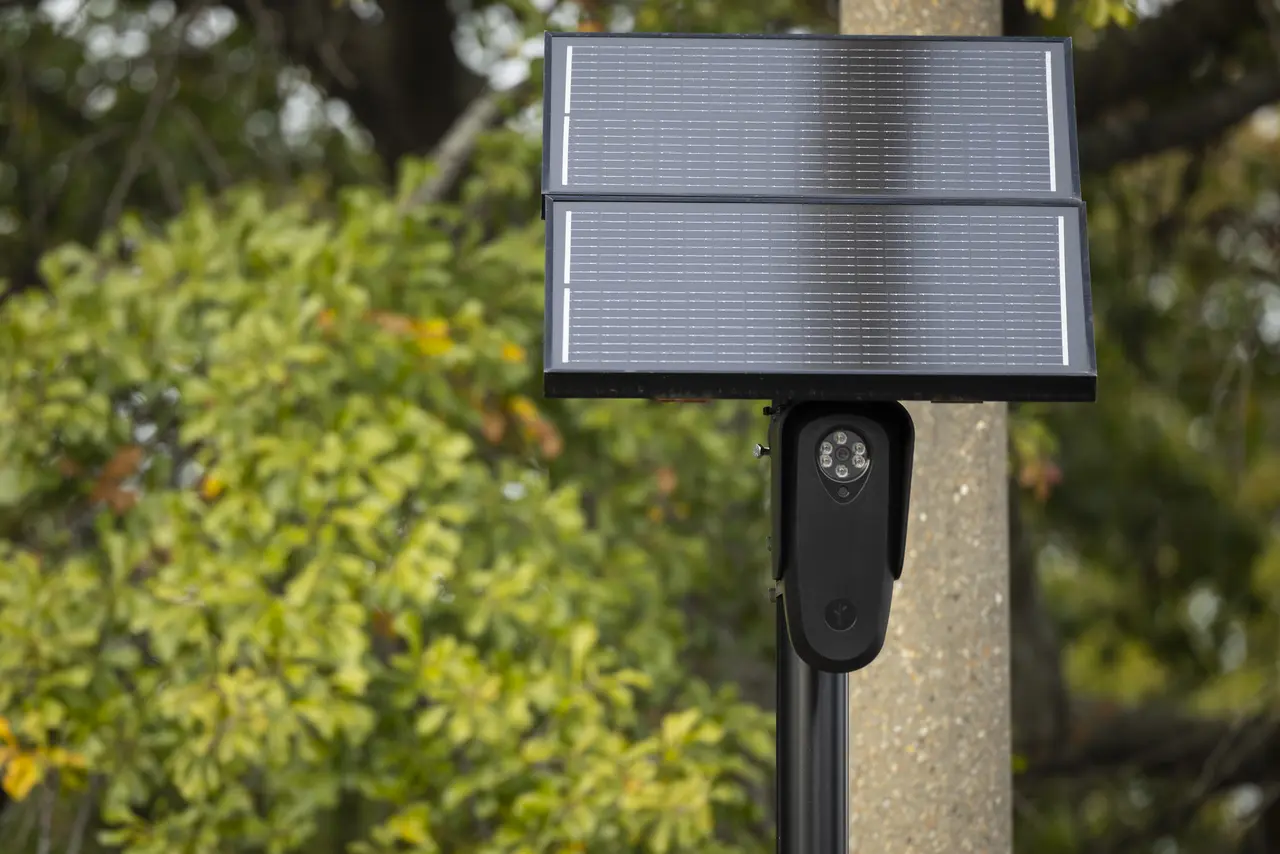
Flock Safety camera along St. Paul's Boulevard in Norfolk, Va., on Nov. 19, 2024.
Billy Schuerman/The Virginian-Pilot/TNS
RALEIGH, N.C. — The spread of large-scale data centers and Flock surveillance cameras has triggered backlash in North Carolina, with both candidates in the state’s hotly contested U.S. Senate race speaking out and facing questions about the issues.
But that doesn’t mean they’re likely to become decisive issues on Election Day.
A growing number of North Carolina municipalities, including the city of Charlotte, have enacted temporary moratoriums on new data centers as they weigh how to handle the facilities in the long term. Also, backlash has grown in recent months against Flock Safety’s automatic license plate readers.
The latest polling shows some bipartisan unity in the opposition to both issues. North Carolina’s U.S. Senate hopefuls, former Democratic Gov. Roy Cooper and former Republican National Committee Chairman Michael Whatley, have started to talk about their takes about each on the campaign trail.
The connection between the opposition to data centers and broader economic concerns could be a factor in the Senate race, Elon University political science professor Jason Husser said. But he’s skeptical it will be a big enough issue for enough voters to make a noticeable difference come November.
“I don’t expect that there’s very many voters who are going to decide ‘here’s who I want to represent the state in Washington’ based on data centers alone as an issue,” said Husser, the director of the Elon University Poll. “It’s certainly an emotional issue for people who are involved with it, but I don’t know that we’ve seen any evidence that this is going to be a single issue like gun control or abortion might be.”
Growing opposition to data centers, Flock cameras
Technological advancements, including the artificial intelligence boom, have sparked a surge in proposed data centers that are often larger than older facilities and closer to populated areas.
Residents in Charlotte and beyond have raised concerns about what that means for the environment and energy costs. The Charlotte City Council joined a growing list of North Carolina communities hitting pause on new facilities this summer, and it is weighing extending that moratorium.
A July Elon University poll found 53% of North Carolinians asked said they’d oppose a large data center being built in their community. Just 22% of respondents said they’d support a large data center, and 26% said they were unsure.
Opponents outnumbered supporters across races, gender, age ranges and political affiliation, according to the Elon poll. But there was still “some partisan differences in opposition to data centers,” Husser noted.
“Overall, a plurality of Democrats, Independents, and Republicans are opposed to data centers if they were to be proposed in their local community,” he said. “However, opposition is higher among Democrats and Independents than Republicans.”
There’s less data available about how North Carolina voters feel about Flock cameras, which have been in the news in recent years and months after cases of law enforcement allegedly misusing data collected by the cameras. An internal investigation into misuse in Mooresville released in August found several policy violations.
Organizations ranging from the American Civil Liberties Union to the libertarian Cato Institute have raised privacy concerns about the cameras.
Where Roy Cooper, Michael Whatley stand on data centers, Flock cameras
Cooper’s campaign website includes a pledge to “make sure data centers pay the full cost of all the power they use and prevent costs from being passed on to consumers.” His site also says that “local communities should be fully involved in any decision made about potential data centers in their neighborhoods.”
Asked if Cooper supports moratoriums or bans on new data centers, campaign spokesman Jordan Monaghan told The Charlotte Observer the candidate “believes local communities must have the final say on new projects coming to their area which includes local moratoriums.”
In an August interview with Fox News, Whatley said “opposition to data centers isn’t organic” and “is being ginned up.” But he also said in the same interview that “you’ve got to make absolutely sure that there’s not going to be a disparate impact on the community when it comes to water, when it comes to traffic, when it comes to electricity.”
He told Fox News it makes sense to have tax breaks for data centers but not subsidies.
The Republican believes data centers should “pay their own way” and that counties and towns should “decide what gets built in their communities,” campaign spokesman DJ Griffin told the Observer.
“That means Big Tech builds or buys every megawatt it needs and covers every dime of the grid upgrades to deliver it, with zero costs shifted onto residential ratepayers. It means no special subsidies and no sweetheart deals cut over the heads of taxpayers,” Griffin said in a statement.
Asked about Cooper’s views on Flock cameras, Monaghan said the former governor “has real concerns” the cameras “have been used to invade people’s privacy and have led to arrests of innocent citizens and he supports requiring court oversight, including warrants to access them.”
“Roy believes it’s important for law enforcement to have the best tools to catch criminals and keep people safe, and he supports putting clear safeguards and privacy protections in place to ensure these incidents do not occur and allowing local communities to have a say on their use,” Monaghan said in a statement.
Whatley’s campaign did not address his views on Flock cameras in its response to questions from the Observer for this article.
Will data centers, Flock cameras sway voters in NC Senate race?
Husser noted that while opposition to controversial technological issues may be growing, polling also shows “a large number of people” remain unsure about data centers.
Cooper’s relatively sizable lead over Whatley may also dilute the impact of voters’ views on data centers and Flock cameras, Husser said. Recent polls show the Democrat with anywhere from a 4 to 13% lead.
“If this race was super tight, like we’ve seen in historical races, where the goal was trying to pick up 500 extra voters here or 500 there, then we would see very directed messages attached to data centers totally micro-targeted down to specific demographics,” Husser said.
_____