
Why American Airlines bets on Latin America growth as it chases Delta, United
DALLAS — American Airlines is betting big on the one part of its business where it thinks it can widen its lead on United and Delta: Latin America and the Caribbean. Last month, American, which operates its central hub at DFW International Airport, disclosed record quarterly revenue of $16.7 billion but a net income of just $71 million. That still trailed United and Delta, which posted net ...
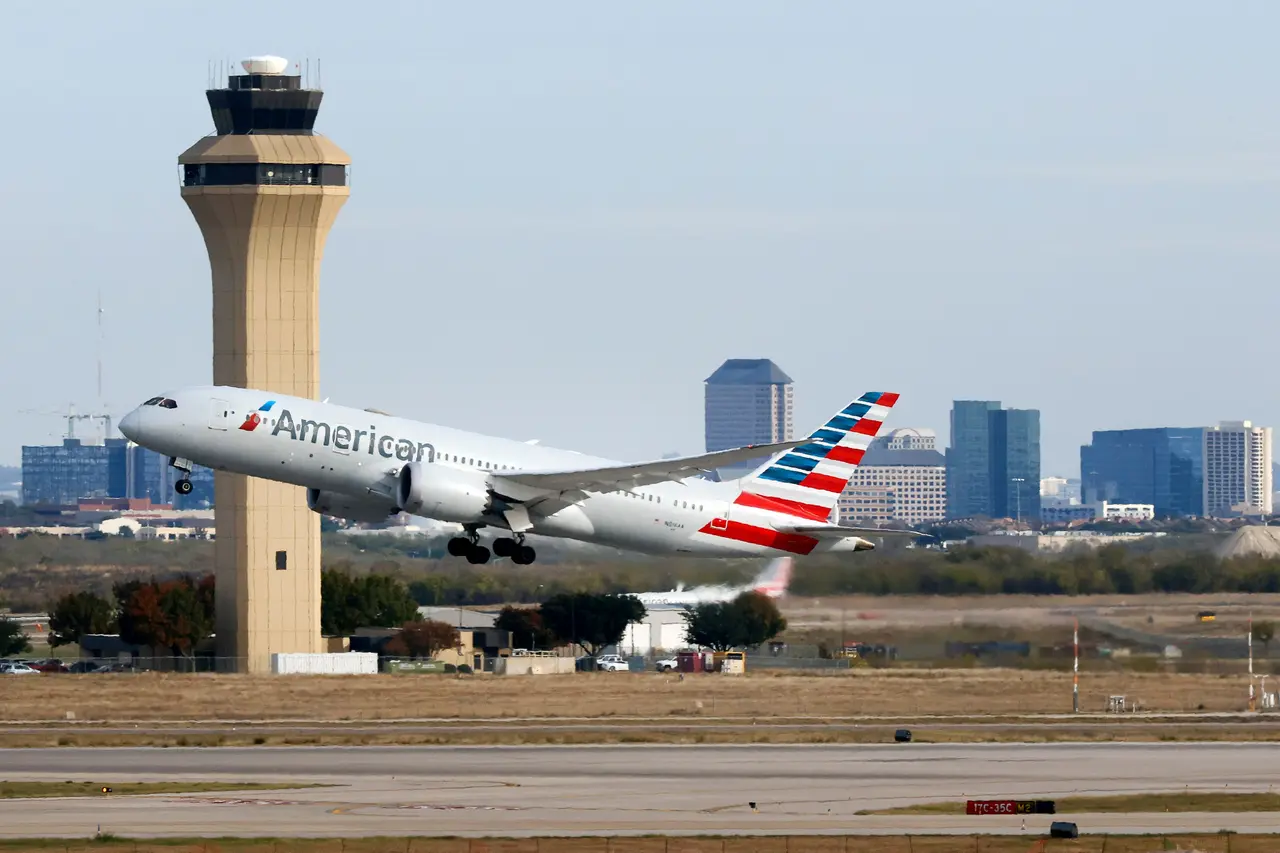
An American Airlines jet takes off past the control tower at DFW Airport on Nov. 27, 2023.
Tom Fox/The Dallas Morning News/TNS
DALLAS — American Airlines is betting big on the one part of its business where it thinks it can widen its lead on United and Delta: Latin America and the Caribbean.
Last month, American, which operates its central hub at DFW International Airport, disclosed record quarterly revenue of $16.7 billion but a net income of just $71 million. That still trailed United and Delta, which posted net incomes of $805 million and $1.6 billion, respectively.
As the Fort Worth carrier continues its quest to close the revenue gap between its Chicago and Atlanta-based counterparts, it is expanding to serve more than 100 destinations in Mexico, Latin America and the Caribbean by year's end — a robust network where chief commercial officer Nat Pieper believes the airline's strategy has taken hold.
"Truthfully, the previous teams that I've played on, Northwest, Delta, Alaska, even Oneworld, not really a lot of presence in Latin America," Pieper said in an exclusive interview with The Dallas Morning News. "So it's been as much of a learning exercise for me as anything, and I've been really pleased with what I've discovered, and digging into not only route profitability, but entity and competitive presence."
Data shows that investments in those regions could be coming at the right time. Travel demand to Latin America and the Caribbean increased 0.72 percentage points this summer in comparison to last summer, one of the strongest demand growths among worldwide regions, according to a June report from Data Appeal.
American's dominance in Latin America and the Caribbean is the result of decades of network development in Miami, where it is the dominant carrier. This month the airline will fly more than 20,000 flights at MIA, accounting for nearly 70% of the airport's traffic, according to Cirium. American is investing $1 billion for improvements at that hub.
"In any competitive business, but certainly in ours, you really want to identify where are your strategic advantages," Pieper said. "Where are the places that you can further your advantage over your competitors and establish presence in markets that makes it hard for others to replicate?"
"We've got Miami service to the top 36 South Florida to short-haul MCA markets. We're at 47 of the top 50, so pretty good coverage on that front. But we're always looking at what that next market would be," he said. "But again, with the [Embraer] 175's, with Miami's favorable geography, you can try new markets without a lot of risk, and that's something that again, in a market leadership position, you want to be able to do."
This month, American will operate more than 12,600 flights to Latin America and the Caribbean, according to data from aviation analytics firm Cirium. That dwarfs United, which is scheduled for just over 8,400 and Delta which has nearly 5,200 flights on the schedule to those regions. But the other two airlines dwarf American in traffic to and from Europe and Asia.
United is operating over 6,400 flights between the U.S. and Europe in August, while Delta is operating 5,900. Meanwhile, American comes in at a little more than 4,450, Cirium data showed. In Asia, American won't crack more than 500 flight operations this month, while United will operate more than 2,400 flights and Delta more than 1,000, according to Cirium data.
"Of all the international geographies that American Airlines serves, the Caribbean and Latin America have historically been its strongest and the airline keeps investing in new routes to new markets, beefing up frequencies to existing markets, and they do that because the region is successful, said Henry Harteveldt, president and founder of Atmosphere Research Group.
American's advantage in Latin America wasn't built overnight. The airline's presence in the region stretches back decades, beginning with service between Dallas and Mexico City more than 80 years ago using Douglas DC-3 aircraft.
It expanded rapidly after acquiring Trans Caribbean Airways in 1971 and again in the late 80s after it began service to Venezuela and used routes purchased from Eastern Airlines to expand its reach to dozens of cities in the Caribbean and South Central America.
Those strategic decisions then laid the groundwork for the competitive landscape today, when American operates a broader network than any competitor U.S. airline to Latin America and the Caribbean.
"When an airline is heavily identified with a geographic region, the mindset is ... look for flights on that airline first," said Harteveldt. "It can help create loyalty. It can help win corporate business accounts because ... that airline is going to go there unless it doesn't."
American's network has already grown this year with the addition of service to Maracaibo, Venezuela last month. American will be the first U.S. airline to restore Haiti flights with service between Miami and Cap-Haitien starting in November.
"The MCLA (Mexico, Caribbean, Latin America) network, clearly is for us, twice as big as either of our competitors," said Pieper. "It really is an entity for us. It's about 13%, 14% of our total capacity. So that's material. Lots of different airplane types, as we talked about. It's a core part of where we think we can win."
During peak times, American operates nearly 400 daily departures out of Miami, according to Pieper. The airline serves 166 destinations from Miami, 85 domestic and 81 international, he said.
"What's interesting is with across those 100 destinations, we've really got three buckets," Pieper said.
"We've got international markets certainly tailored towards commercial activities. Think Rio, Sao Paolo, Buenos Aires. Then you've [got] destinations that are really just served by communities ... based in Miami. And then the third bucket, think your traditional Caribbean or Mexico. So truly leisure markets and that's pretty consistent with the yields as you would expect."
American supports its Miami gateway by helping funnel passengers to Latin America and the Caribbean through its hubs in DFW, Phoenix and Charlotte. Much of Delta and United's service to those regions comes from their respective hubs in Atlanta and Houston.
Each has said previously that they serve more than 50 destinations in the region. Dallas-based Southwest Airlines also offers a limited schedule to those regions.
"Miami is clearly the epicenter of our MCLA network, obviously super important hub for us, but it's really a broad American strategy," said Pieper. "We serve one of the at least one market in the MCLA arena from every one of our hubs. So it's a breadth thing as much as it is depth as well."
Yet competitor airlines like Jetblue are increasing service to both Latin America and the Caribbean, making it pivotal that American defends its market position. The region is American's biggest international presence and where it maintains an international lead over Delta and United, who are stronger in Europe and Asia.
"American has pulled back its transatlantic routes," Harteveldt said. "It has never really been a player in Asia. It has a limited amount of service to the South Pacific and to Africa. But the one region that for more than 45 years has been a star in the American ... galaxy has been Latin America."
But customers seem to be responding to American's Latin America investments. In the second quarter of 2026, passenger unit revenue, money made for each seat flown over one mile, for the Latin America sector spiked 6.6% in comparison to the second quarter of 2025, the airline previously said.
Following Latin America's unit revenue surge in the second quarter, Pieper told The News that the "third quarter looks even better."
"I just think the combination of what we have in Miami, Dallas, Phoenix, and then the history that American has flying to Latin America. There's no better place for Latin America than Miami and both [the] geography, history and makeup of the people there. So I think we've got the jewel and something we need to keep investing in."