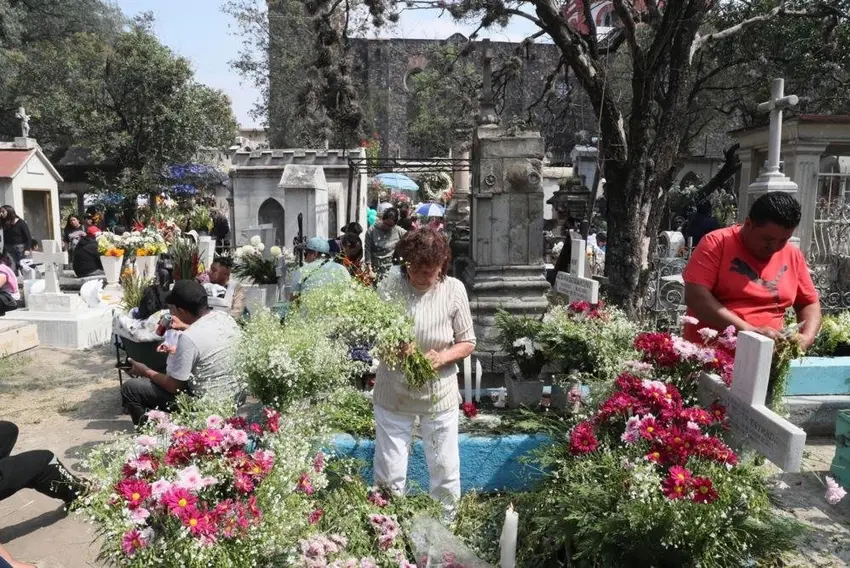

In Mexico, Michoacan expects 1 million visitors for Day of the Dead
More than 1 million visitors are expected to travel to Mexico's Michoacan state for this year's Day of the Dead season, larger than las year.
Sept. 30 (UPI) -- More than 1 million visitors are expected to travel to Mexico's Michoacan state for this year's Day of the Dead season, as officials prepare more than 700 cultural, religious and tourism activities across one of the country's most internationally recognized destinations for the holiday.
Federal Tourism Secretary Josefina Rodríguez Zamora and Michoacan Tourism Secretary Roberto Monroy García announced the projection Tuesday while presenting the state's program for the celebrations, which will run Oct. 23 to Nov. 2.
The more than 700 activities will be spread across Michoacan's seven tourism regions and include cemetery vigils, processions, altars and offerings, artisan fairs, traditional food, workshops and other cultural events.
The projection represents a sharp increase from last year's expectations. Michoacan tourism officials anticipated some 420,000 tourists and visitors during the 2025 Night of the Dead celebrations.
Day of the Dead is observed across Mexico around Nov. 1 and 2 as families remember deceased relatives and loved ones, often preparing altars with photographs, candles, marigolds, food and other offerings and gathering at cemeteries.
UNESCO recognizes Mexico's Indigenous festivities dedicated to the dead as Intangible Cultural Heritage of Humanity. The tradition combines Indigenous beliefs and rituals with Catholic observances introduced following the Spanish conquest.
Michoacan holds a particularly prominent place in the celebration, especially among Indigenous Purepecha communities around Lake Patzcuaro, where the observance is traditionally known as Noche de Animas, or Night of the Souls.
Families gather in cemeteries and prepare offerings for deceased relatives, while communities around Patzcuaro, Tzintzuntzan and other parts of the lake region preserve traditions that have made Michoacan one of Mexico's best-known destinations during the holiday.
Officials said this year's expanded program is intended to encourage visitors to experience more than the traditional Nov. 1 and 2 cemetery vigils.
"We want people to experience not only the vigil, but also the marigold harvest, artisan workshops, traditional cooking, monumental altars, the decoration of graves, toys and handicrafts," Monroy told UnoTV.
The program includes 17 artisan workshops in communities, including Patzcuaro, Tzintzuntzan, Ihuatzio, Santa Fe de la Laguna and Capula, where visitors can learn traditional techniques directly from local craftspeople.
Other events include the National Artisan and Cultural Catrina Fair in Capula, a Nov. 1 Catrinas and Catrines parade through downtown Morelia, the Festival of Candles in Uruapan and a nighttime canoe route called "El Camino de las Animas," or "The Path of the Souls," through the springs of Uranden.
Day of the Dead has also become an important period for Mexico's tourism industry.
Mexico's Tourism Ministry estimated that more than 1.6 million tourists stayed in hotels nationwide from Oct. 27 through Nov. 2 during the 2025 celebrations, up 2.3% from the previous year. International travelers accounted for 27% of the total, while 73% were domestic tourists.
Michoacan authorities are also preparing a security and civil protection operation covering Morelia, the Lake Patzcuaro region and the state's seven tourism regions.
State police will work alongside the National Guard, Mexican Army and civil protection personnel, with additional patrols planned on roads and in areas expected to draw the largest crowds.