
'Russia is killing us': 20M Ukrainians could flee to Europe
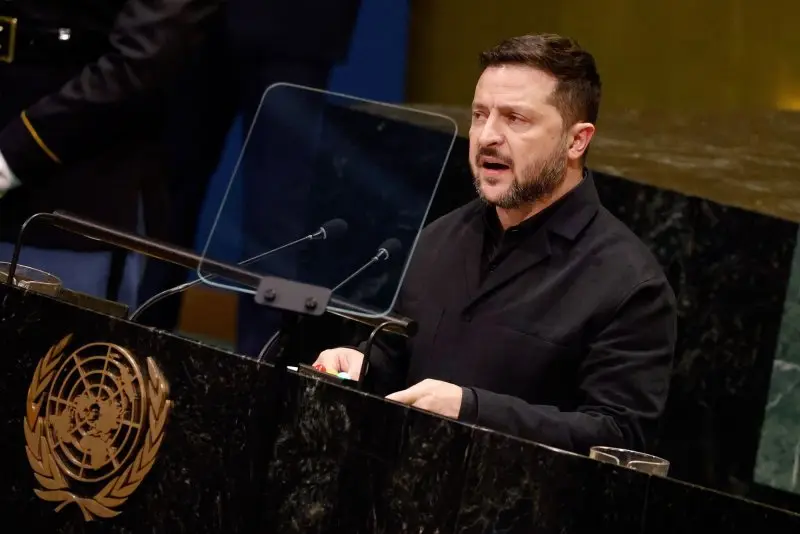
As many as 20 million Ukrainians could be displaced throughout Europe if the country is defeated, President Volodymyr Zelensky said Friday.
As many as 20 million Ukrainians could be displaced throughout Europe if the country is defeated, President Volodymyr Zelensky said Friday. Photo by Peter Foley/UPI UPI
Oct. 16 (UPI) -- As many as 20 million Ukrainians could be displaced throughout Europe if the country is defeated by invading Russian forces, President Volodymyr Zelensky said Friday.
Speaking to reporters, Zelensky said his people were being "pushed" out of Ukraine while the Russians "don't want to stop."
"Russia is killing us," he said at a summit of European Union leaders.
As of August, at least 4.43 million people had fled the war in Ukraine and were living as refugees in Europe, according to Eurostat. Most refugees relocated to Germany, Poland and Czechia.
Ukrainians returning home face few options in finding adequate shelter, as the country struggles with damaged housing and unaffordable utilities due to repeated attacks on energy infrastructure.
"For millions of Ukrainians, the challenge is no longer simply whether they can return home," said Arthur Erken, International Organization for Migration's regional director for Europe and Central Asia, in a statement.
"It is whether they can remain there safely and right now the conditions are making it difficult."
Of the people who have returned home, 1.45 million live in frontline districts, IOM data shows.
At least 75% of people returning to frontline rural areas need support with materials to repair damaged walls, while two-thirds lack roofing materials and insulation.
Last winter, 32% of households were able to heat their homes adequately, according to IOM.
Nearly 60% of households reduced how much they heated their homes to save money.
"With winter approaching, the window to act is narrowing," Erken said. "Less than 7% of IOM's Ukraine Crisis Response Plan for 2026 has been funded, severely limiting the assistance available ahead of winter.
"Additional support is critical now, before winter conditions deepen existing needs and put more families at risk of displacement."