

7 Women’s History Icons You Should Know
Throughout history, women have been the silent architects of change, often overlooked but undeniably influential. Icons in women's history stand as pillars of inspiration, breaking barriers, and reshaping societal norms. From trailblazers in politics and science to champions of civil rights and feminism, these figures have left an indelible mark on the world.
Swipe ahead to discover their empowering narratives.
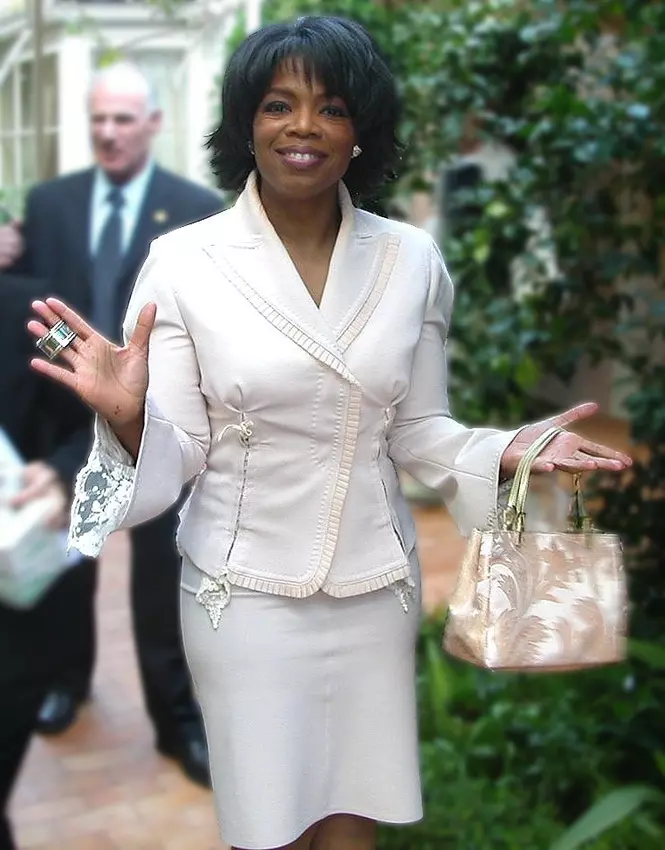
Oprah Winfrey
Oprah Gayle Winfrey was born on January 29th, 1954, in Kosciusko, Mississippi then raised in Milwaukee. Winfrey moved around the country a little bit before settling in Chicago where her television career began. She made a name for herself through her work on AM Chicago – a low-rated, half-hour morning talk show. The first episode aired in January 1984 and within months it overtook TV veteran Phil Donahue's show as the highest-rated morning program in the city. Shortly after in 1986, she signed a syndication deal, lengthened the show to one hour, and changed the name to, The Oprah Winfrey Show.
Photography: Wikimedia Commons/Alan Light
Oprah continues to chase success and create opportunities for those coming up behind her. She has her own production company, Harpo Studios, and in 2011, she founded the internationally syndicated television network, OWN. The network features many up-and-coming actors, writers and producers; giving them all a strong start for their careers. Winfrey also legitimizes numerous authors by featuring them in Oprah’s Book Club. A seal of approval from Oprah is typically a one-way ticket to stardom and success as many people have come to trust her judgment.
Photography: Wikimedia Commons/INTX: The Internet & Television Expo
She gives back to communities, both in the United States and abroad. In 2004, Winfrey opened the Oprah Winfrey Leadership Academy for Girls in Meyerton, South Africa. She made a whopping $40 million investment into starting the school.
Among all her accomplishments Winfrey is best known for her revolutionary daytime talk show, The Oprah Winfrey Show, which ran from 1986 until 2011. As a host, she grew into more of a spiritual leader than a TV host. Winfrey captured an audience of more than 22 million people on her way to becoming one of the most well-revered personalities in TV history.
Photography: Wikimedia Commons/Lawrence Jackson
Hillary Clinton
When Hillary Clinton ran for President of the Unites States in 2016, she was the first woman ever chosen as a major party candidate. As First Lady of the United States, Clinton was the first to have had a professional career and a postgraduate degree beforehand, as well as the first to have an office in the West Wing.
Photography: HillaryClinton.com
Despite her loss in the general election, Clinton's candidacy symbolized a milestone in the fight for women's representation in the highest echelons of power. Post-election, she continues to be an influential figure, advocating for various causes and cementing her legacy as a trailblazer in American politics.
Photography: Instagram/@hillaryclinton
Armed with her professional experience and education, Clinton played a very important role in her husband, President Bill Clinton’s, administration. Among her notable contributions are her leadership of the Task Force on Health Care Reform, helping to pass the Children’s Health Insurance Program and working on the Adoption and Safe Families Act. She went on to enjoy a successful career in the U.S. Senate and in 2009, President Barack Obama appointed her the 67th United States Secretary of State. @credit Photography: Instagram/@hillaryclinton
Serena Jameka Williams is a retired American professional tennis player regarded as one of the best players ever. She was rated #1 in singles by the Women's Tennis Association for 319 weeks, including a joint record, for 186 consecutive weeks atop the rankings. Williams has transformed women's tennis since the 1990s with her 23 Grand Slam victories.
Photography: Wikimedia Commons
Williams fought her way to the top of the Olympic podium four times. She won two Olympic gold medals in the doubles event alongside her sister Venus in Sydney and Beijing in 2000 and 2008. She shone brightest during the 2012 London Olympics where she won her first gold medal in the singles event and when she was eight weeks along, she won her record-breaking 23rd Grand Slam singles championship at the 2017 Australian Open.
Photography: Wikimedia Commons
Her extraordinary accomplishments and off-court success have made her one of the world's most powerful voices for women's issues. Williams collaborated with UNICEF in 2006 to visit Ghana and help the country's health program. As a UNICEF Goodwill Ambassador ambassador in 2011, she championed the UNICEF Schools for Africa project.
Photography: Wikimedia Commons
On top of her victories, Williams has received major endorsement agreements from companies like Nike, Kraft Foods, Subway, and others. Williams revealed in the Vogue story announcing her retirement that she'd begun investing in startup firms almost a decade prior to her retirement, and plans to continue through her venture capital firm, Serena Ventures. In 2022, the firm secured $111 million in outside funding, and 78% of its current portfolio is businesses created by women and people of color.
Photography: Wikimedia Commons
Selena
Selena Quintanilla was born on April 16, 1971, in Lake Jackson, Texas. Her father Abraham recognized her talent early on and formed the band Selena y Los Dinos, with Selena serving as the lead vocalist. Singing in both English and Spanish, she quickly gained popularity within the Tejano music scene, setting the stage for a groundbreaking career. By the late 1980s, Selena had won the Tejano Music Award for Female Vocalist of the Year for nine consecutive years. Albums such as Ven Conmigo and Entre A Mi Mundo, were commercial successes that solidified her status as the "Queen of Tejano." Selena's ability to blend genres and her energetic performances brought Tejano music to mainstream American radio.
Selena's impact transcended music — she quickly became a fashion icon and a role model for young women. She launched her own clothing line and boutique, Selena Etc., that showcased her unique style and entrepreneurial spirit. Selena's success in male-dominated industries highlighted her versatility and paved the way for future female artists. In 1992, Selena married Chris Pérez, the lead guitarist of her band. Their love story captivated fans, adding a personal dimension to Selena's public persona. She continued to break records, with her album "Amor Prohibido" becoming one of the best-selling Latin albums in the United States.
Selena's life was tragically cut short on March 31, 1995, when she was murdered by Yolanda Saldívar, the president of her fan club. Her death shocked the world and those events soon immortalized her as a cultural legend. Her legacy lives on through the Selena Foundation that helps children in need, and annual events like Fiesta de la Flor. Her music continues to resonate with new generations, a testament to her timeless appeal and the impact she made in her short life. Selena's story is not just one of talent and tragedy but of resilience and the enduring power of love.
Katharine Hepburn
Katharine Hepburn was an American actress whose career spanned more than 60 years. During the 20th century, she became the societal epitome of the “modern woman.” Hepburn was outspoken, assertive and fiercely independent. She wore trousers before they were fashionable for women and chose to live alone after her split from husband Spencer Tracy — something many women at the time wouldn’t dare to do.
Photography: Wikimedia Commons
From an early age, Hepburn was taught to exercise her freedom of speech and to debate any topic she desired. Her mother was an active member of the Connecticut Woman Suffragette Association. Hepburn often went to “Votes for Women” demonstrations with her.
Photography: Wikimedia Commons
Hepburn won four Academy Awards, the record number for a performer, and received 12 Oscar nominations, a number only surpassed by Meryl Streep. One of her most iconic roles was as Jo March in the 1933 version of “Little Women.” After appearing in the commercially unsuccessful “Bringing Up Baby” alongside Cary Grant, Hepburn took her future into her own hands, buying out her contract with RKO Radio Pictures and purchasing the rights to “The Philadelphia Story,” which she then sold on the condition she was its star. She appeared in 44 feature films, eight television movies and 33 plays during her 66-year career.
Photography: Wikimedia Commons