
Iran and Israel trade fire then halt after Trump intervenes
BEIRUT — Israel and Iran suspended military attacks on each other Monday, heeding President Donald Trump’s call to end a flare-up that threatened derail a brittle two-month ceasefire and engulf the Middle East in all-out conflict once again. Iran’s military said in a statement on Iranian state media that it had “delivered a painful response” to Israel’s attacks on Lebanon. “Accordingly, the ...
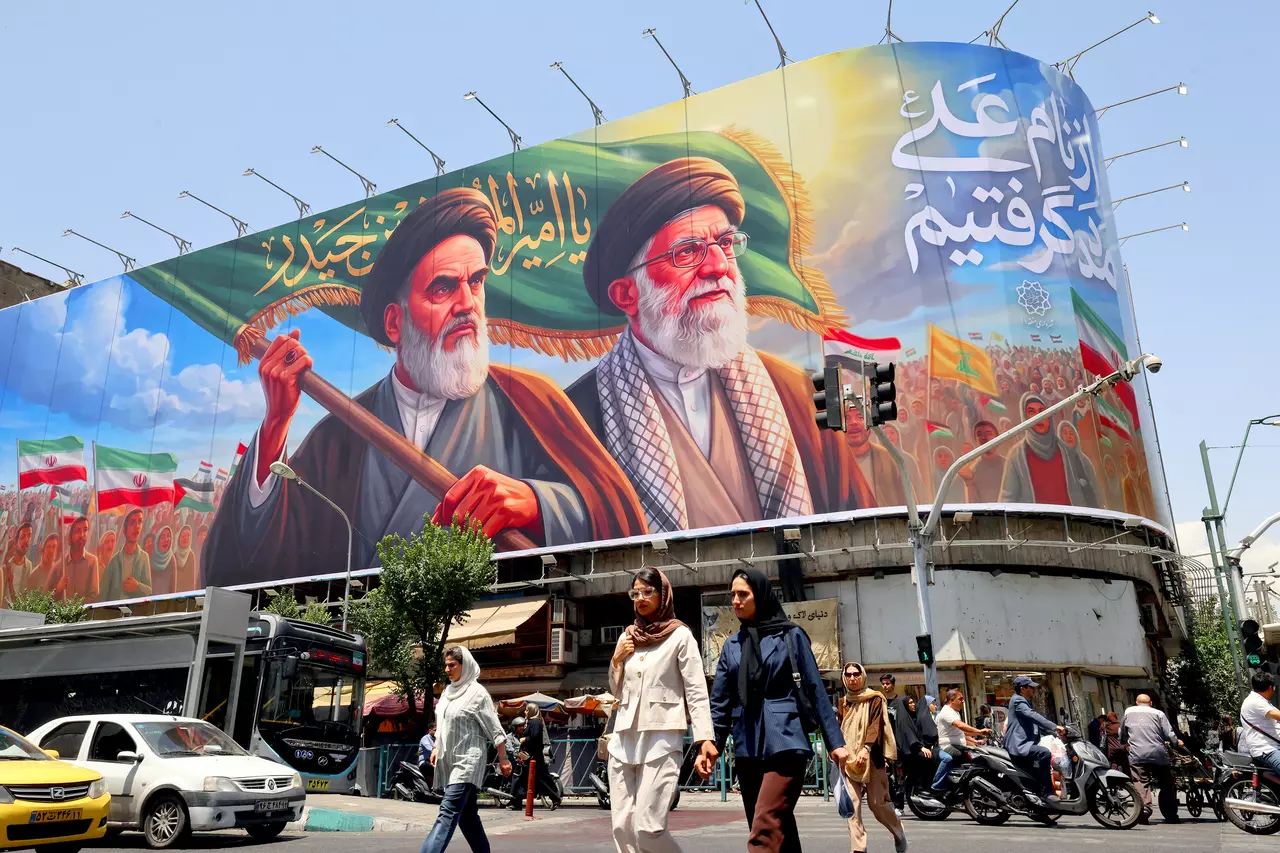
People cross the street past a large billboard showing portraits of Iran's late supreme leader, Ayatollah Ruhollah Khomeini, left, and slain supreme leader Ayatollah Ali Khamenei in central Tehran on June 8, 2026.
Atta Kenare/Getty Images North America/TNS
BEIRUT — Israel and Iran suspended military attacks on each other Monday, heeding President Donald Trump’s call to end a flare-up that threatened derail a brittle two-month ceasefire and engulf the Middle East in all-out conflict once again.
Iran’s military said in a statement on Iranian state media that it had “delivered a painful response” to Israel’s attacks on Lebanon.
“Accordingly, the operations of the armed forces are hereby halted,” the statement said. But it added that “if the aggressions and evils continue, including in southern Lebanon, much more severe and crushing measures will be on the way.”
Israel too said it would cease attacks on Iran, with Israeli Prime Minister Benjamin Netanyahu saying in a televised address that if Iran “makes the mistake and returns to attacking us, we will respond with force.”
The tit-for-tat attacks, which involved at least 30 ballistic missiles launched on Israel and dozens of Israeli airstrikes on Iran, threatened to widen the scope of a conflict that has already killed and wounded thousands, displaced more than a million people and rattled economies across the globe.
“Israel and Iran must immediately stop ‘shooting.’ ” wrote Trump early Monday on his social media platform, Truth Social.
Later, he wrote, “Both sides, Israel and Iran, are looking to do an immediate CEASEFIRE!”
“Final negotiations on ‘Peace’ are proceeding, subject to ignorance or stupidity getting in its way. The Blockade will remain in place, and in full force and effect, until a ‘Final Deal’ is reached. Things should move quickly.”
Yet it appears likely Iran and Israel will again be on a collision course over Lebanon.
In his address, Netanyahu said the Israeli military will continue attacking in Lebanon.
“Over the past day, Iran and Hezbollah tried to impose a new equation on us. That equation is intolerable and completely unacceptable to me. They thought they could launch attacks from Lebanon and Iran against Israel and that we would not act,” he said.
“That did not happen, and it will not happen.”
Over the last two months of the ceasefire, Trump repeatedly claimed he was on the verge of signing a deal with Iran, despite repeated confrontations that underscored the fragility of the truce.
The latest escalation came after Israel attacked the suburbs of Lebanon’s capital Beirut on Sunday in what it said was a targeted strike against Hezbollah.
In recent days, Iran conditioned a ceasefire agreement with Israel and the U.S. on a cessation of hostilities across all fronts, including Lebanon, threatening it would respond to any Israeli action on the Lebanese capital. Israel rejects linking both battlefields, and insists on having a free hand to attack Hezbollah.
A number of U.S.-brokered ceasefires between the Lebanese and Israeli governments — but without Hezbollah involvement — failed to stop most of the fighting, with Israeli warplanes pounding wide swaths of Lebanon’s south while Hezbollah launched drones and missiles on northern Israel. Nevertheless, the Lebanese government has rejected being included in Iran’s negotiations with the U.S.
By Sunday night, Iran’s threats came to pass with several waves of Iranian ballistic missiles, which caused no injuries and were the first Tehran had fired at Israel since a ceasefire took hold in April. Iran’s military said the fusillade was a warning. But Israel said it would retaliate.
Trump initially downplayed the Iranian attack on Sunday, saying in an interview with the Financial Times that Iran’s barrage was “not going to have any impact on the deal” and telling the Axios news site that he would talk to Israeli Prime Minister Benjamin Netanyahu to halt any Israeli response.
“He won’t have any choice,” Trump said in a phone interview with the Financial Times, referring to Netanyahu having to accept any deal the U.S. negotiates with Iran.
“I call the shots. I call all the shots. He doesn’t call the shots,” Trump said.
Yet by the early morning Monday, dozens of Israeli warplanes were striking western and central Iran. They hit a petrochemical complex in Mahshahr in southwestern Iran, and waged extensive strikes on “strategic defense systems,” according to Israeli military statements, in what observers said was a prelude to a wider offensive. Residents in Tehran, Isfahan, Tabriz and Shiraz reported powerful explosions.
The Israeli military said in a statement it expected several days of fighting with Iran but was prepared for a prolonged campaign. It said the strikes on Iran were conducted by Israel on its own, but that they had been done in “full coordination” with U.S. Central Command, which also helped in intercepting Iranian missiles launched at Israel.
But that distinction appeared to matter little to Iran’s foreign ministry spokesperson, Esmail Baghaei, who said in a news conference Monday that the U.S held direct responsibility for recent ceasefire violations and Israel’s action “cannot be looked at in isolation from the U.S.”
“No one believes the Israeli regime would take any action without coordination with the United States,” he said.
“The U.S. bears responsibility for the Israeli regime’s aggression, and it will also be responsible for the consequences of any escalation in tensions.”
Iran launched additional barrages throughout Monday, targeting Israeli airbases in Nevatim and Tel Nof and a petrochemical plant in Haifa, according to a statement from Iran’s Revolutionary Guard Corps. It added Israel was engaging in “a dangerous game by targeting civilian and oil infrastructure — a game that will now encompass all regional energy targets, with global economic consequences resting on America.”
The renewed hostilities also saw Yemen’s Houthis — who receive support from Iran and Hezbollah, and are part of a regional network of Iran-backed factions called the “Axis of Resistance” — enter the fray with a pair of ballistic missiles lobbed at Israel. The Israeli military said one of the missiles was intercepted; the second fell short of Israel.
Houthi spokesman Brig. Gen. Yahya Sarea confirmed the attack in a televised statement Monday, and said Israeli maritime navigation in the Red Sea would be targeted.
During the Gaza war, the Houthis attacked commercial shipping in the Red Sea — including ships with no link to Israel — to pressure Israel into lifting its blockade on the enclave.
But, unlike Hezbollah, which attacked Israel on March 2, three days after the U.S. and Israeli campaign on Iran, the Houthis had refrained from helping their ally, until Monday.
Their involvement now raises the specter of another squeeze on energy markets already beleaguered by closures on the Strait of Hormuz and which have relied on the Red Sea as an alternative passageway for energy supplies, especially for those from Saudi Arabia.
If the Houthis closed the Bab Al-Mandab Strait, it would all but paralyze commercial flows.
Oil prices spiked in the wake of the exchanges, with Brent Crude rising 5% to hit $98 a barrel, before deflating once more.
Monday’s strikes are the most serious breakdown in a ceasefire marred by repeated fighting between Israel and Hezbollah, and clashes between the U.S. and Iran. But up until Sunday there was no direct confrontations between Israel and Iran since the ceasefire took hold.
In recent weeks, Lebanon proved to be a particularly sensitive flashpoint, with Israel continuing attacks in southern Lebanon and its ground troops systematically razing towns and villages. At Trump’s urging, Beirut remained out of bounds, but Israeli military leaders said they would hit the capital if Hezbollah attacked northern Israel.
But that equation proved untenable for Iran.
“Iran’s attack in defense of Lebanon was not merely a military response; rather, it was the formal declaration of a strategic doctrine,” said Sadegh Larijani, who chairs Iran’s Expediency Council, an advisory body to the Iranian Supreme Leader.
Referring to the attack Iran launched Sunday, he said, “This action sent a clear message that if one of the sides of the axis of resistance is attacked, it will result in a response beyond geographical borders and will change the equations of the region.”
In Israel, the drawdown of hostilities places additional pressure on Netanyahu, whose political base has repeatedly excoriated him as not doing enough to combat Hezbollah while being too weak to stand up to Trump. Many in Israel view a peace deal without regime change in Iran as a strategic failure; one that is likely to restrain Israel’s ability to attack Hezbollah.
In his address, Netanyahu took pains to highlight his willingness to confront Trump.
“Israel has every right to self-defense, and we will exercise that right whenever necessary. I say this to you, dear citizens of Israel, just as I say it in my good conversations with my friend President Trump,” he said.
That he launched strikes on Iran in defiance of Trump may win him points ahead of an uphill election fight. Yet it is unlikely to endear him to Trump, who recently scolded Netanyahu during a phone call last week and called him “crazy.”
Iran, meanwhile, believes it came away stronger after the clash.
Mohammad Bagher Ghalibaf, Iran’s parliamentary speaker and top negotiator, said Tehran’s action “upended the equation of a ceasefire on paper only with repeated violations on the ground.”
“So long as you lack a genuine willingness to build trust, Iran’s response will remain the same.”