
U.S. sanctions 21 people, 25 firms tied to Sinaloa Cartel
The U.S. Treasury Department said it has sanctioned 21 people and 25 companies it identified as leaders or facilitators of the Sinaloa Cartel,.
Sept. 30 (UPI) -- The U.S. Treasury Department sanctioned 21 people and 25 companies it identified as leaders or facilitators of the Sinaloa Cartel, targeting family, financial and business networks tied to one of the group's main factions.
The Treasury's Office of Foreign Assets Control, or OFAC, said Monday that the sanctions target a network linked to Los Mayos, a Sinaloa Cartel faction led by Ismael Zambada Sicairos, also known as "Mayito Flaco." The network includes members of his inner circle and leaders of cells based in Tijuana.
Zambada Sicairos, a son of longtime Sinaloa Cartel leader Ismael "El Mayo" Zambada, is a Mexican and U.S. citizen who was born in Anaheim, Calif. The Treasury identified him as the "undisputed leader of Los Mayos" and said he took his father's place after the elder Zambada was captured in July 2024.
In 2021, Zambada Sicairos attempted to conceal his family ties to the cartel by seeking a legal name change in the United States to Fernando Sicairos Aispuro. OFAC said Mayito Flaco has been "a key figure in Sinaloa Cartel operations for the past two decades under the tutelage of his father."
The sanctions, imposed under U.S. authorities aimed at combating international drug trafficking, target institutional protection and money-laundering networks that the Treasury Department says enable the Sinaloa Cartel to operate along Mexico's northern border.
Among those sanctioned is Carlos Alberto Torres Torres, the former husband of Baja California Gov. Marina del Pilar Ávila. U.S. authorities accused Torres Torres of narcotics-related corruption, alleging he used his political influence to facilitate cartel operations and protect the organization from prosecution in the Mexicali and Tijuana areas.
The sanctions also target Los Mayos' operational structure, including Juan José Ponce, known as "El Ruso," and brothers Alfonso and René Arzate, known as "Aquiles" and "La Rana," respectively. The State Department's Narcotics Rewards Program is offering up to $5 million for information leading to the arrest of those individuals.
OFAC also blocked 25 business entities suspected of serving as fronts for money laundering, with a particular focus on companies in the energy and real estate sectors.
The businesses span industries including hotels, currency exchanges, private security, wealth management, gas stations, entertainment and organic products. OFAC said they are controlled or directed by financial and political operators who have also been sanctioned.
As a result of the sanctions, all property and interests in property belonging to the designated individuals and entities that are in the United States or under the possession or control of U.S. persons are blocked.
U.S. citizens and companies are also generally prohibited from conducting financial or commercial transactions with the designated individuals and entities.
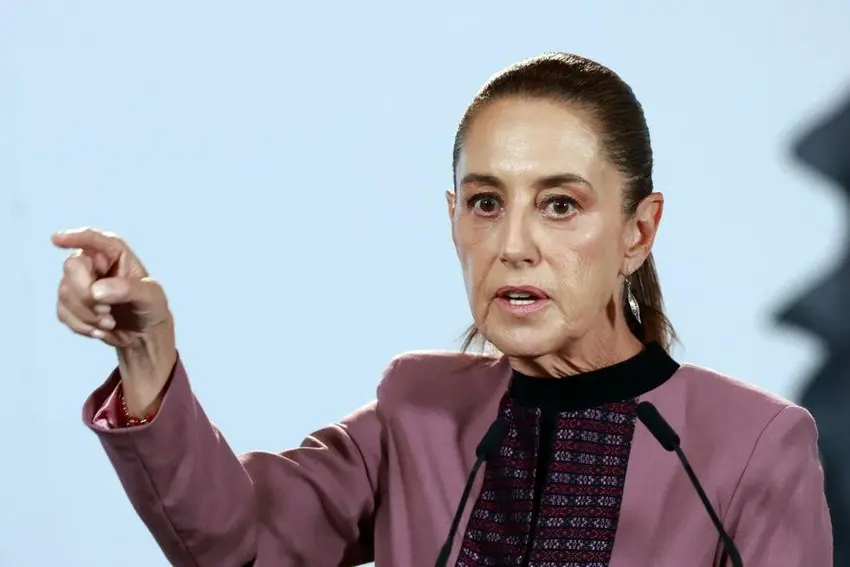
After OFAC's announcement, Mexican President Claudia Sheinbaum said Wednesday that Mexico's Financial Intelligence Unit, known by its Spanish acronym UIF, had temporarily frozen bank accounts belonging to those targeted within the Mexican financial system.
Sheinbaum said some of the people sanctioned by the Treasury Department already were the subjects of investigations by Mexico's Attorney General's Office.
OFAC said the action is part of Washington's strategy to disrupt the financial flows that sustain drug trafficking organizations and their networks.